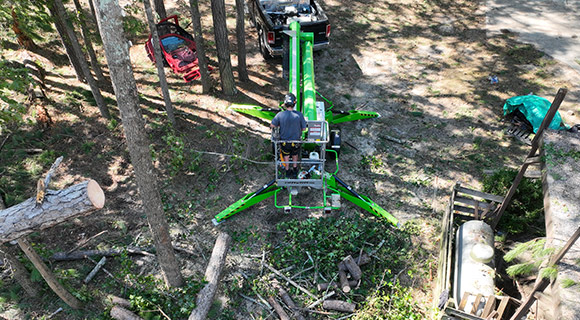
Tag: Understory Tree Roswell

  • Best Hedges for Privacy in Roswell, Georgia

    Best Hedges for Privacy in Roswell, Georgia

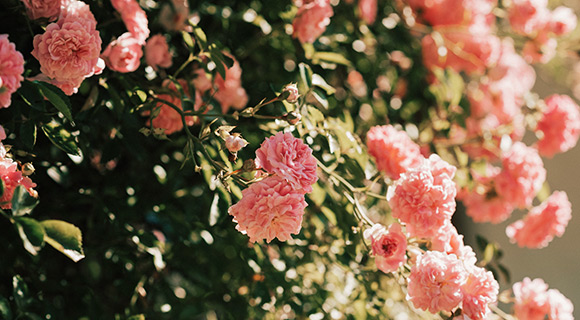
    Creating privacy around your home should provide peace and beauty without creating endless maintenance problems. Unfortunately, many homeowners choose hedge species that grow poorly in North Georgia, require excessive pruning, or fail after only a few years. Selecting hedge varieties suited to Roswell’s climate helps create a dense, attractive privacy screen that adds curb appeal and increases property value.

    Greens and Trees Roswell Ga gathered information on privacy hedge selection, planting requirements, long-term maintenance, pruning schedules, fertilization, and professional arborist services. This guide highlights three hedge species that perform exceptionally well in Roswell, Georgia, explains how to care for each one, and outlines when professional tree care becomes necessary.

    Key Takeaways for Best Privacy Hedges in Roswell, Georgia
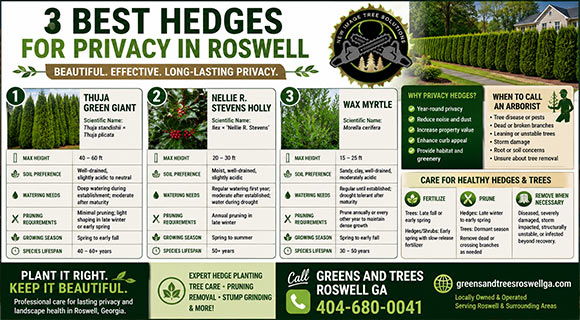
    infographic best privacy hedges roswell georgia

    Choosing a privacy hedge involves much more than selecting a fast-growing shrub. Climate, sunlight, soil drainage, mature size, maintenance requirements, and long-term health all influence how well a hedge performs. Roswell experiences warm, humid summers, mild winters, and moderate rainfall, making many evergreen hedge species excellent choices for year-round screening.

    Evergreen hedges remain popular because they provide privacy in every season. Unlike deciduous plants that lose leaves in the wintertime, evergreen species shield you from unwanted views while reducing traffic noise and improving landscape appearance.

    Proper spacing remains one important factor many homeowners overlook. Planting shrubs too closely restricts air circulation, increases the potential for disease, and creates unnecessary competition for water and nutrients. Following recommended spacing allows each shrub to mature naturally while forming a dense living wall over time.

    Soil preparation also contributes significantly to long-term success. Most hedge species perform best in well-drained soil enriched with organic matter. A professional soil evaluation can identify nutrient deficiencies before planting begins, allowing amendments that encourage healthier root development.

    Routine maintenance keeps privacy hedges attractive and healthy. Seasonal pruning encourages fuller branching while removing damaged or diseased growth. Fertilization during appropriate growing periods promotes vigorous foliage without encouraging weak growth.

    Monitoring for insect activity and disease remains equally important. Early detection allows minor problems to receive treatment before they spread throughout a hedge row.

    Finally, working with an experienced arborist provides valuable guidance whenever shrubs show declining health, unusual discoloration, storm damage, or structural concerns. Professional evaluations help homeowners preserve valuable landscape investments while avoiding unnecessary plant removal.

    1. Thuja Green Giant

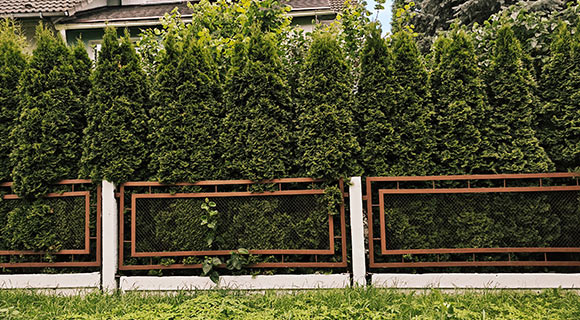
    thuja green giant best privacy hedges roswell georgia

    Scientific Name: Thuja standishii × Thuja plicata

    Thuja Green Giant remains a popular privacy hedge throughout Roswell because it grows quickly while maintaining dense evergreen foliage.

    Maximum Height – 40 to 60 feet
    Soil Preference – Well-drained soil
    Slightly acidic to neutral pH – Adaptable to clay when drainage improves
    Watering Needs – Deep watering during establishment (Weekly watering during dry periods
    Moderate moisture after maturity)
    Pruning Requirements – Minimal pruning. Light shaping during late winter or early spring helps maintain its desired appearance.
    Growing Season – Active growth occurs during spring through early fall.
    Species Lifespan – 40 to 60 years or longer with proper care.

    2. Nellie R. Stevens Holly
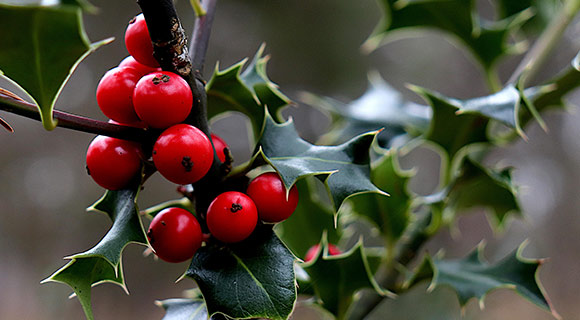
    nellie r stevens holly best privacy hedges roswell georgia

    Scientific Name: Ilex × ‘Nellie R. Stevens’

    This evergreen holly provides excellent privacy while producing glossy green foliage and attractive red berries.

    Maximum Height – 20 to 30 feet
    Soil Preference – Moist, well-drained soil
    Slightly acidic soil – Rich organic matter
    Watering Needs – Regular watering during the first growing season (Moderate watering after establishment), then requires additional irrigation during drought.
    Pruning Requirements – Annual pruning during late winter maintains dense branching and desired height.
    Growing Season – Strong growth begins during spring and continues through summer.
    Species Lifespan – 50 years or longer under favorable growing conditions.

    3. Wax Myrtle
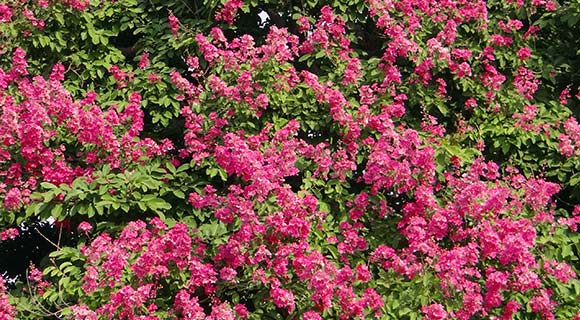
    wax myrtle best privacy hedges roswell georgia

    Scientific Name: Morella cerifera

    Wax Myrtle performs exceptionally well throughout Georgia because it tolerates varying soil conditions while growing rapidly.

    Maximum Height – 15 to 25 feet
    Soil Preference – Sandy soil, clay soil, well-drained locations (Requires moderately acidic soil)
    Watering Needs – Regular watering until established, drought-tolerant after maturity, supplemental watering during prolonged dry weather
    Pruning Requirements – Prune annually or every other year to maintain dense screening and desired shape.
    Growing Season – Spring through early fall.
    Species Lifespan – 30 to 50 years with routine maintenance.

    When Should You Call an Arborist?
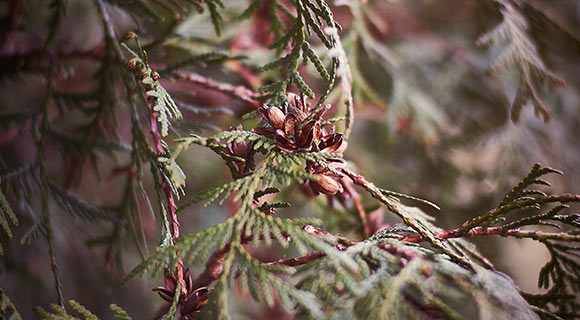
    diseased evergreen best privacy hedges roswell georgia

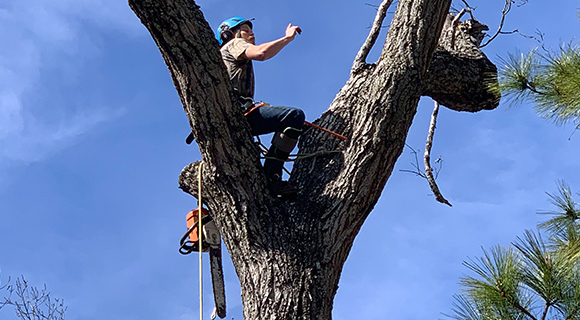
    Professional arborists provide valuable expertise beyond tree removal.

    Schedule an arborist consultation when you notice:

    • Dead branches
    • Yellowing foliage
    • Sudden leaf loss
    • Leaning trees
    • Root damage
    • Storm damage
    • Insect infestations
    • Fungal growth
    • Cracked trunks
    • Poor hedge growth

    Arborists evaluate plant health, identify disease, recommend treatments, and determine whether pruning or removal provides the safest solution.

    Early diagnosis frequently prevents minor issues from becoming expensive landscape problems.

    When Trees, Shrubs, and Plants Should Be Fertilized

    Healthy landscapes benefit from scheduled fertilization based on plant species and soil conditions.

    General recommendations include:

    Trees – Fertilize in late fall or early spring if soil testing identifies nutrient deficiencies.
    Shrubs and Privacy Hedges – Apply slow-release fertilizer during early spring before vigorous new growth begins.
    Flowering Plants – Many flowering shrubs benefit from balanced fertilizer shortly before spring growth starts.

    Professional soil testing helps determine precise nutrient needs while preventing unnecessary fertilizer applications.

    When Trees, Shrubs, and Plants Should Be Pruned
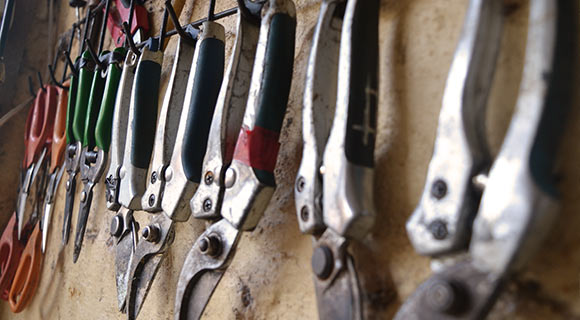
    pruning equipment best privacy hedges roswell georgia
    best roswell georgia privacy hedges pruning equipment

    Routine pruning encourages healthy growth while improving appearance.

    Typical pruning schedules include:

    Evergreen hedges – Late winter through early spring
    Shade trees – Dormant season
    Dead branches – Remove immediately
    Storm-damaged limbs – Remove promptly
    Crossing branches – Prune whenever discovered

    Proper pruning also improves airflow and sunlight penetration, reducing disease pressure.

    When Trees or Shrubs Should Be Removed
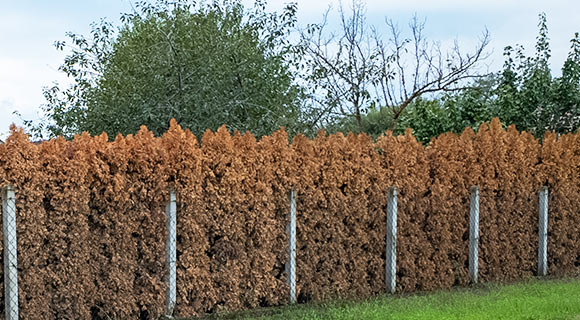
    diseased and dying best privacy hedges roswell georgia

    Removal sometimes becomes necessary despite excellent maintenance.

    Common reasons include:

    Disease

    Examples include:

    • Oak Wilt
    • Root Rot
    • Fire Blight
    • Phytophthora Root Disease
    • Structural Problems
    • Major trunk cracks
    • Severe lean
    • Root failure
    • Hollow trunks
    • Storm damage

    Insect Infestations

    Examples include:

    • Emerald Ash Borer
    • Southern Pine Beetle
    • Scale insects causing severe decline

    Professional evaluations determine whether treatment remains practical or removal provides better long-term safety.

    Call Greens and Trees Roswell Ga 404-680-0041

    best privacy hedges roswell georgia

    Whether you need privacy hedge installation, tree pruning, shrub maintenance, land clearing, emergency tree removal, stump grinding, or a certified arborist consultation, Greens and Trees Roswell Ga together with New Image Tree Solutions, provides dependable professional tree care throughout Roswell and surrounding communities.

    Experienced crews evaluate every landscape carefully before recommending pruning, fertilization, treatment, or removal. Their goal remains protecting healthy trees while improving safety, appearance, and long-term landscape value.

    Services include:

    • Privacy hedge installation
    • Tree pruning
    • Tree removal
    • Shrub trimming
    • Hedge maintenance
    • Fertilization programs
    • Arborist consultations
    • Stump grinding
    • Emergency storm cleanup
    • Plant health evaluations

    For a free estimate or professional consultation, call Greens and Trees Roswell Ga at 404-680-0041.

    Privacy Hedges in Roswell, Georgia

    Selecting appropriate privacy hedges can dramatically improve both appearance and functionality throughout your landscape. This guide introduced three outstanding hedge species for Roswell, Georgia, including Thuja Green Giant, Nellie R. Stevens Holly, and Wax Myrtle. It also explained each plant’s growing requirements, maintenance needs, lifespan, fertilization schedules, pruning recommendations, and situations when professional arborist assistance becomes important.

    Homeowners who choose suitable hedge species and provide routine maintenance enjoy year-round privacy, healthier landscapes, improved curb appeal, increased property value, and fewer long-term maintenance problems. Regular inspections and professional tree care also help identify concerns early before they become expensive repairs or replacements.

    Choosing unsuitable plants, delaying maintenance, or ignoring declining tree and shrub health can lead to poor growth, disease, insect infestations, privacy gaps, and costly landscape replacement. Investing in proper plant selection and professional care helps create a beautiful, healthy landscape that serves your property for decades.

    Greens and Trees Roswell Ga

     RoswellGA 
    (404) 680-0041
  • How To Repair Muddy Spots in Your Landscape

    How To Repair Muddy Spots in Your Landscape

    Muddy spots can quickly turn a beautiful yard into a frustrating mess. Standing water, slippery ground, dead grass, and damaged plants can make outdoor spaces less enjoyable and reduce curb appeal. Fortunately, understanding why muddy areas develop and learning how to repair them can help property owners restore healthy, attractive landscapes while preventing future drainage problems.

    Greens and Trees Roswell Ga gathered information about repairing muddy spots in your landscape to help homeowners identify underlying causes and select effective solutions. The information in this article explains how muddy areas form, practical repair methods, maintenance recommendations, and situations when professional arborist services may be necessary.

    Key Takeaways for Repairing Muddy Spots in Your Landscape

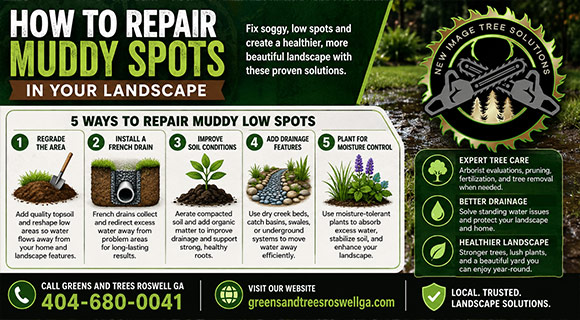
    information about repairing muddy spots on your landscape

    Muddy low spots develop when water accumulates faster than the soil can absorb it. Poor drainage, compacted soil, heavy foot traffic, improper grading, clogged drainage systems, and excessive irrigation are common contributors. Once water collects in a low area, grass roots often weaken and die, leaving bare soil exposed to even more erosion and saturation.

    One important step toward correcting muddy areas is identifying the source causing excess moisture. Some properties experience drainage issues due to the natural terrain; others develop problems from landscape changes, construction projects, or aging drainage infrastructure. Understanding the root cause helps ensure repairs provide long-term results rather than temporary improvements.

    Adding soil and regrading affected sections can often eliminate shallow depressions where water gathers. Proper grading encourages water movement away from structures, patios, walkways, and planting beds. In many situations, small elevation adjustments dramatically improve drainage performance.

    Drainage improvements may also be necessary. French drains, catch basins, dry creek beds, and drainage pipes help redirect water away from problem areas. These systems can significantly reduce standing water while protecting grass, shrubs, and nearby tree roots.
    Improving soil structure is another effective solution. Compacted clay soils commonly found throughout many Georgia landscapes absorb water slowly. Aeration, organic matter additions, and soil amendments improve infiltration rates and encourage healthier root development.

    Ground cover plants can help stabilize damp areas. Certain ornamental grasses, moisture-tolerant perennials, and erosion-control plants help absorb water while reducing soil displacement during heavy rain events. Establishing healthy vegetation often improves landscape appearance and functionality.

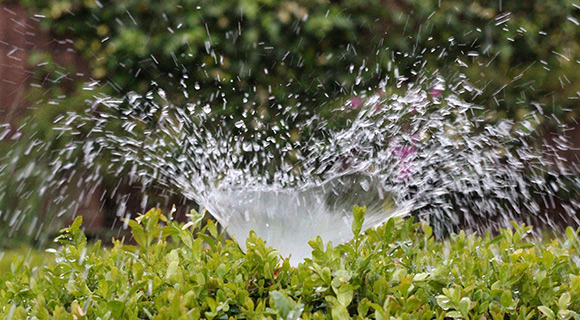
    Property owners should also evaluate irrigation practices. Overwatering contributes to muddy conditions and may create unnecessary stress on trees, shrubs, and turfgrass. Adjusting watering schedules based on seasonal conditions helps maintain appropriate soil moisture levels.

    Tree roots can occasionally influence drainage patterns. Large roots may redirect runoff or create uneven surfaces that contribute to low spots. Conversely, damaged trees or declining root systems may lead to erosion and soil movement. Professional arborist evaluations help determine whether trees are contributing to landscape drainage challenges.

    Regular maintenance prevents many muddy spot issues. Cleaning drainage systems, maintaining healthy turf, pruning vegetation, and monitoring landscape changes help identify concerns before they become costly repairs.

    By combining proper drainage, healthy soil management, appropriate plant selection, and professional guidance when necessary, homeowners can successfully restore muddy landscape areas and enjoy healthier outdoor environments year-round.

    How Do Muddy Spots Form?

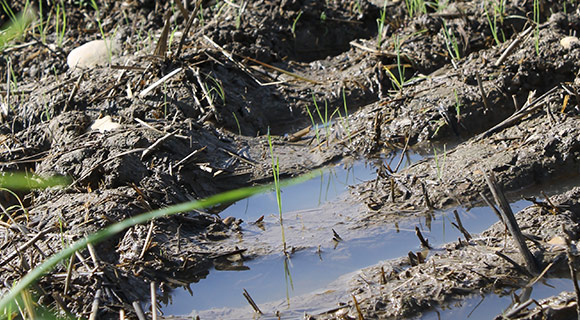
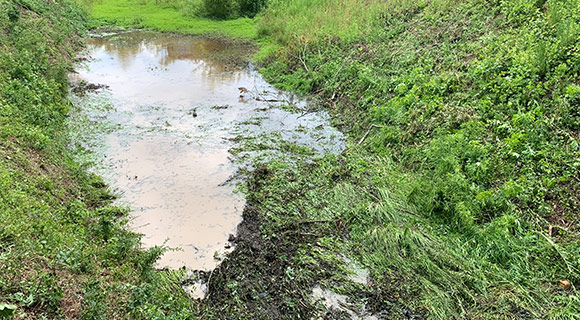
    repairing low muddy spots on your landscape

    Several factors can contribute to muddy low spots within a landscape:

    • Poor Drainage – Improper grading prevents water from flowing away naturally. Rainwater accumulates in depressions, creating saturated soil conditions.
    • Compacted SoilHeavy foot traffic, vehicles, construction equipment, and dense clay soils reduce pore space within soil. Water remains near surface level rather than infiltrating underground.
    • Excessive Irrigation – Overwatering lawns and planting beds can overwhelm soil absorption capacity and create chronically wet conditions.
    • Roof Runoff – Downspouts that discharge water directly into landscape beds often create muddy areas near foundations and walkways.
    • Tree and Root Activity – Large roots can alter water flow patterns, and declining root systems may contribute to erosion and soil settling.

    5 Ways To Repair Muddy Low Spots in a Landscape

    1. Regrade the Area

    Adding quality topsoil and reshaping terrain is often the simplest solution. Regrading helps eliminate depressions where water naturally collects. Water should gently flow away from structures and landscape features.

    2. Install a French Drain

    French drains use perforated piping surrounded by gravel to collect and redirect excess water. This method works particularly well for persistent drainage issues.

    3. Improve Soil Conditions

    Core aeration, compost incorporation, and soil amendments improve drainage and increase water infiltration. Healthier soil supports stronger root growth and reduces muddy conditions.

    4. Add Drainage Features

    Dry creek beds, catch basins, swales, and underground drainage systems can efficiently move water away from saturated areas while enhancing landscape appearance.

    5. Establish Moisture-Tolerant Plants

    Certain plants thrive in damp conditions and help stabilize soil. Deep-rooted vegetation absorbs excess moisture while reducing erosion.

    When Should a Property Owner Call an Arborist?

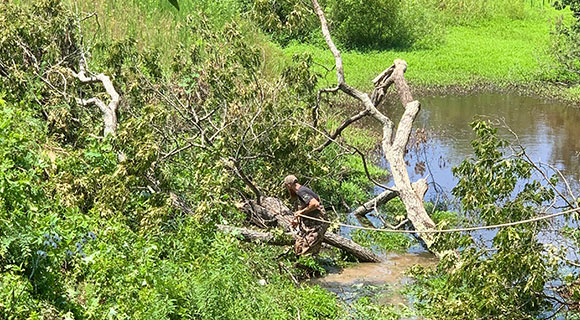
    repairing muddy spots on your landscape call an arborist

    Professional arborists should be contacted when:

    • Trees show signs of decline near muddy areas
    • Root systems appear exposed or damaged
    • Soil erosion threatens tree stability
    • Standing water remains near mature trees
    • Construction or grading may affect tree health
    • Large roots appear to contribute to drainage concerns
    • Property owners are unsure whether tree removal is necessary

    Arborists evaluate tree health, root conditions, soil quality, and drainage patterns, and recommend solutions that protect valuable landscape assets.

    When To Fertilize Trees, Shrubs, and Plants

    Most trees and shrubs benefit from fertilization during early spring and fall. These periods support healthy root development and seasonal growth. Soil testing provides valuable information regarding nutrient deficiencies and helps prevent over-fertilization.

    Flowering plants, ornamental shrubs, and landscape beds may require customized fertilization schedules depending on species, soil conditions, and growth objectives.

    When To Prune Trees, Shrubs, and Plants

    Pruning schedules vary based on plant type:

    • Deciduous trees are often pruned during dormant winter months.
    • Spring flowering shrubs are typically pruned shortly after blooming.
    • Summer flowering shrubs are frequently pruned during late winter or early spring.
    • Dead, damaged, or hazardous branches should be removed whenever identified.
    • Proper pruning improves appearance, promotes healthy growth, and reduces safety risks.

    When Removal May Be Necessary

    Tree, shrub, or plant removal may be appropriate when:

    • Severe disease cannot be corrected
    • Structural defects create safety concerns
    • Roots damage hardscapes or utilities
    • Dead vegetation affects landscape health
    • Overcrowding limits growth potential

    Professional evaluations help determine whether preservation or removal provides the best outcome.

    Call Greens and Trees Roswell GA 404-680-0041

    repairing muddy spots on your landscape

    Muddy landscape areas often indicate larger drainage, soil, or vegetation concerns that require professional attention. Greens and Trees Roswell Ga together with New Image Tree Solutions, provides landscape assessments, drainage solutions, tree care services, pruning, fertilization, and removal services designed to improve landscape health and appearance. Whether your property has standing water, unhealthy trees, compacted soil, or recurring drainage problems, experienced professionals can identify causes and recommend effective solutions. Call Greens and Trees Roswell at 404-680-0041 to schedule an evaluation and start restoring your landscape.

    Fixing Muddy Landscape Spots

    Repairing muddy spots begins with identifying drainage problems, improving soil conditions, correcting grading issues, installing appropriate drainage systems, and selecting plants suited for moisture conditions. Readers also learned how muddy areas form, when arborist services may be needed, and proper timing for fertilization, pruning, and vegetation removal.

    Taking corrective action can create healthier lawns, stronger trees, improved drainage performance, enhanced curb appeal, and more enjoyable outdoor living spaces. Well-maintained landscapes are easier to manage and better equipped to withstand changing weather conditions.

    Ignoring muddy areas can lead to erosion, plant health decline, turf damage, standing water, increased maintenance expenses, and potential safety hazards. Addressing these issues early helps protect landscape investments and prevents larger problems from developing over time.

    Greens and Trees Roswell Ga

     RoswellGA 
    (404) 680-0041
  • Summer Landscape Soil Requirements

    Summer Landscape Soil Requirements

    Summer heat can quickly damage lawns, shrubs, flower beds, and trees when soil conditions are poor or improperly maintained. Many property owners notice dry patches, poor plant growth, yellowing leaves, compacted ground, or excessive moisture loss during warmer months without fully understanding why these problems develop. High temperatures, heavy foot traffic, drought conditions, and poor drainage can weaken landscape soil and create unhealthy growing environments for trees and plants. Understanding how to prepare and maintain soil during summer can help homeowners protect their landscapes and encourage healthier long-term growth.

    Greens and Trees Roswell Ga gathered information about summer soil preparation, fertilization methods, aeration practices, mulching strategies, earthworm activity, and tree canopy benefits to help property owners maintain healthy landscapes during hot weather. This article explains several important ways to improve landscape soil for summer months, when to contact an arborist, and when trees, shrubs, and plants should be fertilized, pruned, or removed.

    Key Takeaways for Summer Landscape Soil

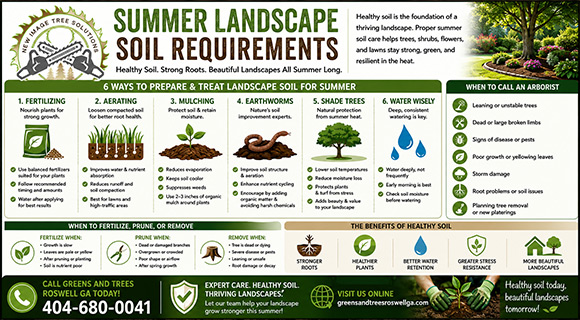
    requirements for landscape soil infographic

    One major takeaway is that healthy soil creates a strong foundation for every successful landscape. Trees, shrubs, flowers, and turfgrass rely on nutrient-rich soil with proper drainage, balanced moisture levels, and sufficient oxygen availability. Summer heat can rapidly dry compacted or nutrient-deficient soil, causing stress throughout entire landscapes.

    Another important takeaway involves soil aeration. Compacted soil prevents water, oxygen, and nutrients from reaching root systems efficiently. Aeration loosens dense ground and improves root development, particularly in lawns and heavily trafficked areas. Summer soil that receives proper aeration generally retains moisture more effectively while supporting stronger plant growth.

    Mulching also provides major benefits during hot weather. Organic mulch helps regulate soil temperatures, reduce evaporation, suppress weeds, and improve moisture retention near roots. Proper mulch placement around trees and planting beds can significantly reduce drought stress during extended heat periods.

    Fertilization plays another critical role in summer landscape health. Trees, shrubs, and lawns require balanced nutrients to support healthy growth and resist environmental stress. However, over-fertilizing during extreme heat may damage roots or stimulate excessive growth that becomes vulnerable during drought conditions. Property owners should follow seasonal fertilization recommendations appropriate for local soil conditions and plant species.

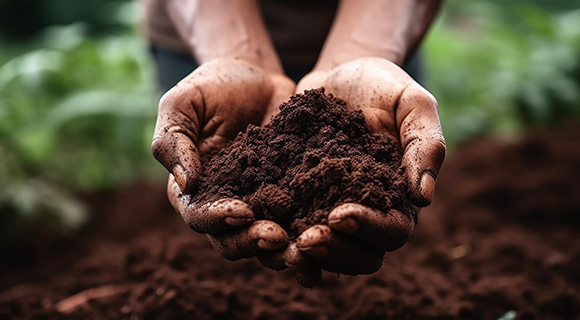
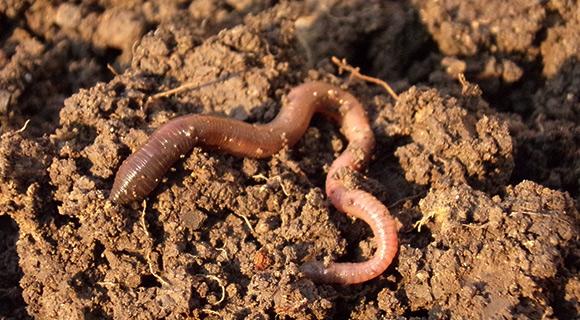
    Earthworms contribute valuable natural benefits to the soil in the landscape as well. Their movement improves soil structure, drainage, and nutrient distribution. Healthy earthworm populations often indicate biologically active soil with strong organic content and improved root support.

    Shade trees provide natural protection against extreme summer heat by lowering soil temperatures and reducing direct sunlight exposure. Landscapes with mature shade trees often retain moisture more effectively and experience lower stress levels during prolonged hot weather.

    Finally, professional arborist evaluations can help identify underlying tree health issues before serious decline occurs. Trees suffering from drought stress, disease, structural weakness, or root damage may require pruning, fertilization, treatment, or removal to maintain landscape safety and health.

    Why Summer Soil Preparation Matters

    requirements for vibrant summer landscape soil

    Summer weather places considerable stress on landscapes. High temperatures increase evaporation rates, dry soil rapidly, and limit moisture availability near root systems. Compacted or nutrient-deficient soil struggles to support healthy plant growth during these challenging conditions.

    Healthy soil helps landscapes by:

    • Retaining moisture
    • Supporting root growth
    • Improving nutrient absorption
    • Encouraging beneficial microorganisms
    • Reducing erosion
    • Enhancing drainage

    Without proper summer preparation, landscapes may experience declining health, poor growth, and increased vulnerability to disease or pests.

    Fertilizing Landscape Soil

    requirements for landscape soil fertilizer

    Fertilization helps replenish nutrients consumed by trees, shrubs, flowers, and turfgrass throughout the growing seasons.

    Benefits of Fertilization

    • Improved root development
    • Healthier foliage growth
    • Increased drought resistance
    • Better disease tolerance
    • Enhanced soil fertility

    Summer Fertilization Tips

    • Use balanced fertilizers appropriate for soil conditions
    • Avoid overfertilizing during extreme heat
    • Water thoroughly after application
    • Follow professional recommendations for timing and dosage

    Trees and shrubs often benefit from slow-release fertilizers that provide nutrients gradually during warmer months.

    Aerating Soil During Summer

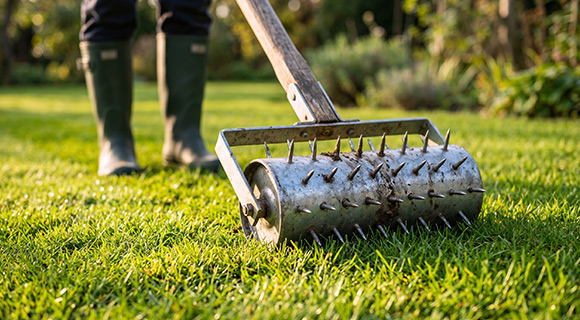
    aeration for landscape soil

    Soil compaction remains a common problem in residential and commercial landscapes. Foot traffic, vehicles, and heavy equipment compress soil particles and reduce oxygen flow near roots.

    Benefits of Aeration

    • Improved water penetration
    • Better oxygen circulation
    • Stronger root development
    • Reduced runoff
    • Increased nutrient absorption

    Signs Soil Needs Aeration

    • Standing water after rainfall
    • Hard compacted ground
    • Thin turfgrass growth
    • Poor drainage
    • Weak plant development

    Professional aeration services can significantly improve landscape performance during summer heat.

    Using Mulch To Protect Soil

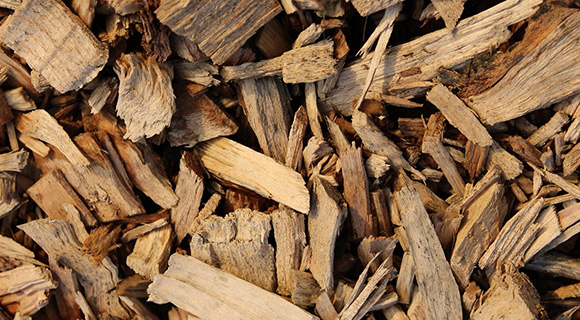
    mulch requirements for landscape soil

    Mulch serves as an important protective barrier for soil and root systems.

    Benefits of Mulching

    • Moisture retention
    • Weed suppression
    • Reduced soil temperature fluctuations
    • Improved soil quality over time
    • Reduced erosion

    Proper Mulch Practices

    • Apply mulch evenly around trees and planting beds
    • Avoid excessive mulch depth
    • Keep mulch away from direct trunk contact
    • Refresh mulch periodically as material decomposes

    Organic mulch materials gradually improve soil quality as they break down naturally.

    Earthworms and Soil Health

    earthworm requirements for landscape soil

    Earthworms provide valuable natural soil improvement through tunneling and decomposition.

    Benefits of Earthworms

    • Increased soil aeration
    • Improved drainage
    • Better nutrient cycling
    • Enhanced microbial activity
    • Stronger soil structure

    Healthy earthworm populations often indicate biologically active soil conditions that support strong plant growth.

    Encouraging Earthworm Activity

    • Reduce chemical overuse
    • Add organic material to the soil
    • Maintain proper moisture levels
    • Avoid excessive soil disturbance

    Natural soil ecosystems contribute significantly to long-term landscape health.

    Using Shade Trees To Reduce Heat Stress

    shade tree requirements for landscape soil

    Shade trees help protect landscapes from extreme summer temperatures.

    Benefits of Shade Trees

    • Lower soil temperatures
    • Reduced evaporation
    • Improved moisture retention
    • Enhanced outdoor comfort
    • Protection for turfgrass and shrubs

    Landscapes with mature tree canopies often experience healthier soil conditions during prolonged heat exposure.

    Recommended Shade Tree Maintenance

    • Inspect trees regularly
    • Prune dead limbs
    • Monitor root health
    • Evaluate structural stability
    • Maintain healthy canopy growth

    Healthy shade trees provide long-term environmental and landscape benefits.

    When To Call an Arborist

    arborist services requirements for landscape soil

    Professional arborists should evaluate trees whenever structural concerns or health problems appear.

    Contact an Arborist If You Notice:

    • Dead branches
    • Leaning trees
    • Fungal growth
    • Bark splitting
    • Sparse canopy growth
    • Root damage
    • Sudden leaf discoloration
    • Storm-related damage

    Arborists can diagnose problems accurately and recommend treatment, pruning, cabling, or removal when necessary.

    Call Greens and Trees Roswell Ga 404-680-0041

    requirements for landscape soil

    Greens and Trees Roswell provides professional tree care, landscape maintenance, pruning, soil improvement, and arborist services for residential and commercial properties throughout Roswell and surrounding communities.

    Services may include:

    • Tree inspections
    • Soil evaluations/Testing
    • Fertilization programs
    • Tree pruning
    • Emergency removals
    • Storm cleanup
    • Landscape maintenance

    Professional tree and landscape care helps improve your property’s appearance while protecting its long-term plant health.

    When To Have Trees, Shrubs, and Plants Fertilized, Pruned, or Removed

    care for landscape soil

    Seasonal maintenance improves landscape safety and plant performance.

    Trees and Shrubs May Need Fertilization When:

    • Growth appears weak
    • Leaves become discolored
    • Soil lacks nutrients
    • Drought stress develops

    Pruning May Be Necessary For:

    • Dead branches
    • Overgrown canopies
    • Poor airflow
    • Storm-damaged limbs
    • Structural imbalance

    Removal May Be Necessary For:

    • Severe disease
    • Extensive insect infestations
    • Root failure
    • Dangerous leaning
    • Hollow trunks
    • Irreversible storm damage

    Removing hazardous trees can help protect homes, vehicles, and surrounding landscapes from major damage.

    Summer Landscape Soil

    This article explained several important summer landscape soil requirements and how property owners can improve soil health through fertilization, aeration, mulching, earthworm activity, and shade tree management. You learned how summer heat affects soil conditions, when to contact an arborist, and when trees or shrubs may require pruning, treatment, or removal.

    Proper summer soil preparation can improve plant health, strengthen root systems, reduce drought stress, and create healthier landscapes throughout warmer months. Landscapes supported by healthy soil generally experience stronger growth, improved appearance, and greater resistance to environmental stress.

    Ignoring soil maintenance and tree care during summer can lead to declining plant health, severe drought stress, poor drainage, weakened root systems, and increased risk of disease or tree failure. Untreated landscape problems may eventually require expensive repairs, removals, or complete landscape replacement.

    Greens and Trees Roswell Ga

     RoswellGA 
    (404) 680-0041
  • 3 Small Trees for Compact Roswell Landscapes

    3 Small Trees for Compact Roswell Landscapes

    Limited yard space can create a real challenge for homeowners wanting shade, beauty, and structure without overwhelming their property. Large trees can crowd foundations, interfere with utilities, and require constant maintenance (incorrect species selection can lead to root damage or canopy overgrowth). Knowing which small trees thrive in compact landscapes can help you avoid costly mistakes and create a balanced outdoor space that remains manageable and visually appealing.

    Greens and Trees Roswell gathered information about small tree species suitable for compact Roswell landscapes to help property owners make informed planting decisions. This article outlines three ideal tree options, detailing growth habits, maintenance needs, and potential risks so you can confidently choose trees that enhance your property without creating long-term issues.

    Key Takeaways for Small Tree Species in Compact Roswell Yards

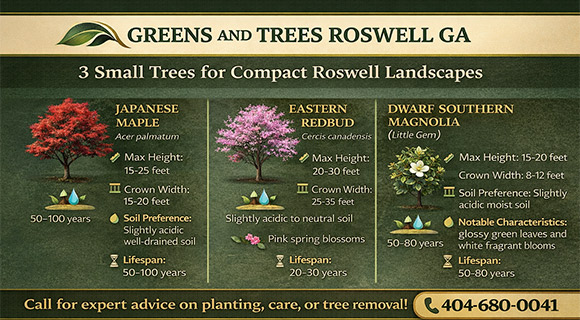
    infographic 3 small tree species for roswell ga compact properties

    Choosing appropriate trees for compact yards requires careful evaluation of growth characteristics, soil compatibility, and maintenance demands. Small trees provide visual interest and environmental benefits without overwhelming limited space, but selecting the wrong species can lead to overcrowding, root intrusion, or structural conflicts.

    One key takeaway is that mature size matters more than initial planting size. Many homeowners choose young trees without considering eventual height or canopy spread. Even trees labeled as small can exceed expectations if not properly maintained. Understanding mature dimensions helps ensure adequate spacing from structures, driveways, and utility lines.

    Soil conditions in Roswell also influence tree performance. Most residential areas feature clay-based soils with moderate drainage. Selecting species that tolerate slightly acidic to neutral pH levels improves establishment and long-term health. Amending soil during planting can enhance root development, but species selection remains the primary factor in success.

    Maintenance requirements vary significantly between species. Some trees require minimal pruning and naturally maintain a compact form, while others demand regular shaping to prevent overcrowding. Property owners should consider the time and cost associated with upkeep before planting. Trees with strong branch structure and slower growth rates often perform better in confined areas.

    Disease resistance and pest tolerance are equally important. Trees prone to fungal infections or insect infestations may struggle in the humid Georgia climate. Selecting resilient species reduces the need for chemical treatments and ongoing intervention. Monitoring for early signs of stress, such as leaf discoloration or branch dieback, allows for timely corrective action.

    Proper placement enhances both aesthetics and functionality. Trees should complement existing landscape design while providing shade, privacy, or seasonal interest. Strategic positioning can reduce energy costs by shading structures during summer while allowing sunlight penetration in cooler months.

    Finally, professional guidance ensures optimal results. Arborists can evaluate site conditions, recommend suitable species, and provide ongoing care strategies. Investing in expert advice at the planting stage prevents future complications and maximizes the long-term value of landscape improvements.

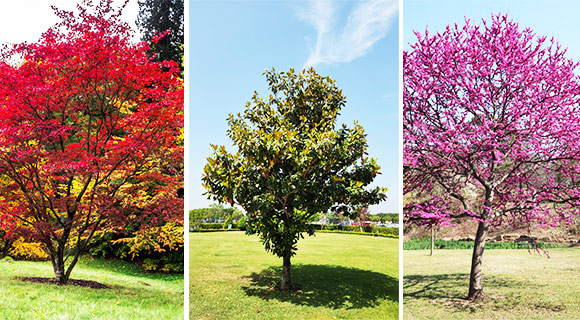
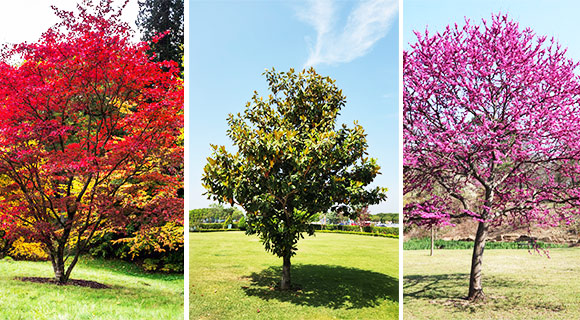
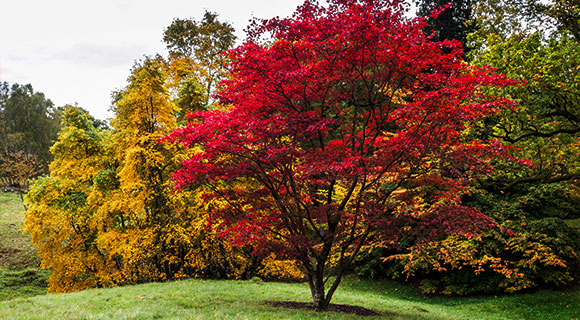
    1. Japanese Maple

    3 small tree species for roswell ga compact properties Japanese maple

    Scientific Name: Acer palmatum
    Maximum Height: 15 – 25 feet
    Typical Crown Width: 15 – 20 feet
    Preferred Soil Type and pH: Well-drained loamy soil with slightly acidic pH between 5.5 and 6.5
    Pruning Requirements: Minimal pruning needed – remove dead or crossing branches during the dormant season
    Evergreen or Deciduous: Deciduous

    Notable Characteristics: Japanese Maple is highly valued for its delicate foliage and vibrant seasonal color. Leaves display shades ranging from deep red to bright green, depending on cultivar. Its graceful branching pattern makes it ideal for focal points in small yards.

    Lifespan: 50 – 100 years with proper care

    Disease and Pest Problems: Susceptible to root rot in poorly drained soil. Aphids and scale insects may occasionally appear. Leaf scorch can occur during extreme heat or drought conditions.

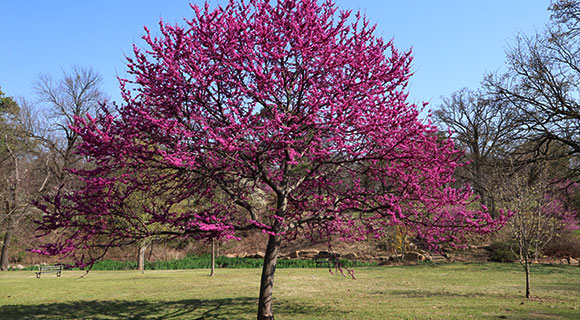
    2. Eastern Redbud

    3 small tree species for roswell ga compact properties eastern redbud

    Scientific Name: Cercis canadensis
    Maximum Height: 20 – 30 feet
    Typical Crown Width: 25 – 35 feet
    Preferred Soil Type and pH: Adaptable to various soils, including clay – prefers slightly acidic to neutral pH between 6.0 and 7.0
    Pruning Requirements: Light pruning required to maintain structure and remove weak branches
    Evergreen or Deciduous: Deciduous

    Notable Characteristics: Eastern Redbud produces striking pink-to-purple blooms in early spring before leaves emerge. Heart-shaped leaves provide soft texture throughout the growing season. This tree works well as an ornamental accent in compact spaces.

    Lifespan: 20 – 30 years

    Disease and Pest Problems: Prone to canker diseases and verticillium wilt. Proper watering and pruning help reduce stress-related issues.

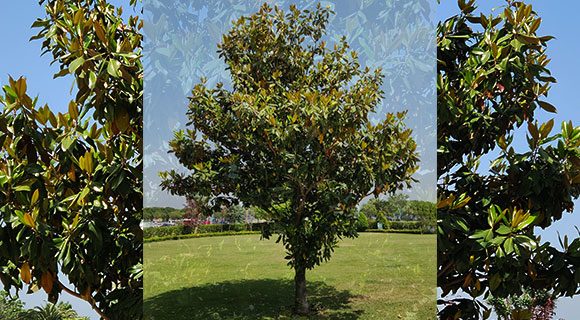
    3. Dwarf Southern Magnolia

    3 small tree species for roswell ga compact properties southern magnnolia

    Scientific Name: Magnolia grandiflora ‘Little Gem’
    Maximum Height: 15 – 20 feet
    Typical Crown Width: 8 – 12 feet
    Preferred Soil Type and pH: Moist well-drained soil with slightly acidic pH between 5.0 and 6.5
    Pruning Requirements: Minimal pruning – occasional shaping to maintain compact form
    Evergreen or Deciduous: Evergreen

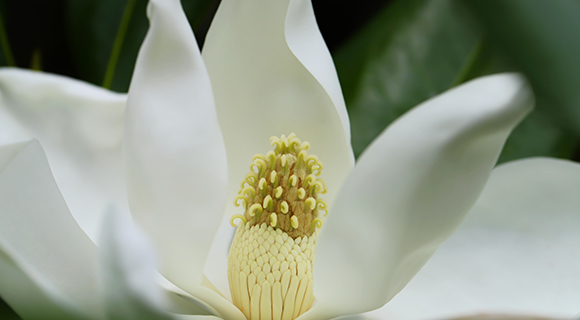
    Notable Characteristics: This compact magnolia offers glossy green leaves and fragrant white blooms. Its narrow growth habit makes it ideal for tight spaces or privacy screening.

    3 small tree species for roswell ga compact properties magnnolia grandiflora flower

    Lifespan: 50 – 80 years

    Disease and Pest Problems: Generally resistant, but may experience scale insects or leaf spot. Good airflow reduces disease risk.

    Call Greens and Trees Roswell Ga 404-680-0041

    3 small tree species for roswell ga compact properties

    Professional evaluation becomes essential when tree health, placement, or maintenance needs exceed typical homeowner knowledge. Greens and Trees Roswell Ga together with New Image Tree Solutions, provides expert arborist services, including tree selection, planting guidance, pruning, and removal.

    You should call when:

    • Trees show signs of disease, such as discoloration or dieback
    • Branches grow too close to structures or power lines
    • Root systems begin affecting foundations or walkways
    • Storm damage compromises stability
    • You need help selecting trees for a limited space

    Arborists assess soil conditions, structural integrity, and overall health to recommend appropriate solutions. This ensures trees remain safe, healthy, and well-suited to your landscape.

    When to Have Trees, Shrubs, and Plants Fertilized, Pruned, or Removed

    3 small tree species for roswell ga compact properties pruning trimming and removal

    Proper maintenance timing plays a critical role in plant health and landscape performance.

    Fertilization
    Fertilize during early spring or late fall when roots actively absorb nutrients. Avoid over-fertilization, which can stress plants and encourage weak growth.

    Pruning
    Prune during the dormant season for most species to promote healthy growth. Remove dead or damaged branches immediately, regardless of the season. Light shaping throughout the growing season may be necessary for ornamental trees.

    Removal
    Removal becomes necessary when:

    • The tree shows extensive disease that cannot be treated
    • Structural damage creates a safety hazard
    • Root systems cause property damage
    • The tree outgrows its available space
    • Infestation spreads beyond control

    Timely removal prevents further damage and allows replacement with more suitable species.

    Small Trees for Compact Landscapes

    This article explored three small tree species well-suited for compact Roswell landscapes, including Japanese Maple, Eastern Redbud, and Dwarf Southern Magnolia. You learned how each tree grows, what conditions it prefers, and how to manage potential risks related to disease, pests, and maintenance. Understanding these factors allows for informed decisions that support both aesthetics and functionality.

    Applying this knowledge leads to a well-balanced landscape that enhances property value while remaining easy to maintain. Proper tree selection, placement, and care create a visually appealing environment that thrives in limited space without causing structural or maintenance challenges.

    Ignoring these considerations can result in overcrowded landscapes, unhealthy trees, and costly repairs. Poor species selection often leads to excessive pruning, disease issues, or premature removal, reducing long-term value and increasing frustration for property owners.

    Greens and Trees Roswell Ga

     RoswellGA 
    (404) 680-0041
  • Tree and Landscape Watering Tips

    Tree and Landscape Watering Tips

    Avoid browning grass, wilted shrubs, or declining trees, assuming that heat or seasonal change caused the problem. In many cases, improper watering is the culprit of these issues. Too little water causes dehydration and root stress, while too much suffocates roots and encourages disease. Understanding correct watering techniques can prevent expensive landscape damage and help property owners maintain vibrant lawns, thriving shrubs, and strong trees.

    greensandtreesroswellga.com gathered information about effective watering practices for grass, shrubs, plants, and trees along with guidance about when professional assistance becomes necessary. Information in this article explains how to recognize signs related to improper irrigation, outlines best watering strategies for various landscape elements, and identifies situations when professional arborist assistance may protect long term plant health.

    Key Takeaways for Tree and Landscape Watering

    information watering tips for trees and landscapes

    Proper watering practices play a critical role in maintaining strong landscapes. Grass, shrubs, plants, and trees depend on consistent moisture levels to support root development and nutrient absorption. When watering habits remain balanced and appropriate for local soil conditions, landscapes grow healthier and require fewer costly repairs.

    Morning irrigation represents one important principle for successful watering. Early watering sessions allow soil to absorb moisture before heat increases evaporation rates. This approach maximizes efficiency and ensures roots receive adequate hydration. Evening watering often creates excessive moisture within foliage and soil surfaces, encouraging fungal development that can harm plants.

    Deep watering methods also strengthen landscape resilience. Shallow watering encourages roots to remain near the soil surface, where temperature fluctuations and drought conditions quickly cause stress. Slow irrigation sessions allow moisture to reach deeper layers where roots can expand and stabilize plants. Deep root systems help trees and shrubs withstand storms and dry periods.

    Mulch plays another important role in water management. Organic mulch surrounding trees and garden beds helps regulate soil temperature while slowing evaporation. Mulch layers also suppress weeds that compete for valuable water and nutrients. Landscapes with proper mulch coverage typically maintain healthier root environments throughout seasonal changes.

    Monitoring rainfall represents another essential step for maintaining balanced moisture levels. Many irrigation systems continue operating after heavy rain events, causing soil saturation. Adjusting watering schedules based on rainfall prevents root suffocation and reduces the risk associated with fungal disease development.

    Property owners should remain alert for warning signs indicating watering problems. Yellow leaves, drooping branches, brittle grass, and mold growth near the soil surface often reveal an irrigation imbalance. Recognizing these symptoms early helps property owners change watering schedules before long-term damage occurs.

    Professional arborists offer valuable expertise when tree health concerns arise. Certified specialists evaluate soil moisture levels, root conditions, pest activity, and structural stability. Arborists also recommend pruning, fertilization, or removal when plant decline threatens surrounding landscapes or structures.

    Balanced watering combined with professional maintenance ensures landscapes remain healthy and visually appealing. Grass stays green, shrubs flourish, and trees develop strong structural integrity capable of supporting long life spans.

    Best Watering Practices for Grass, Plants, Shrubs, and Trees

    watering practices pro tips for trees and landscapes

    Proper watering involves more than simply turning on a sprinkler. Timing, duration, and soil conditions all influence plant health.

    Water early during morning hours

    Early morning watering allows the soil to absorb moisture before sun intensity increases. Midday watering causes rapid evaporation while evening watering encourages fungal growth.

    Deep watering encourages strong roots

    Frequent shallow watering creates weak root systems. Grass, shrubs, and trees benefit from slower deep watering sessions that penetrate the soil several inches below the surface.

    Adjust watering based on soil type

    Clay soil retains water longer while sandy soil drains quickly. Clay landscapes require less frequent watering, while sandy conditions may require additional irrigation sessions.

    Use drip irrigation when possible

    Drip systems deliver water directly into root zones, reducing waste and limiting evaporation. Shrubs, trees, and garden beds respond well to targeted irrigation methods.

    Monitor rainfall

    Heavy rain reduces the need for additional watering. Property owners should adjust irrigation systems accordingly to avoid over-saturation.

    Mulch improves water retention

    Organic mulch surrounding trees and shrubs helps maintain moisture levels while protecting roots from temperature extremes.

    Consequences of Underwatering

    underwatered greens watering tips for trees and landscapes

    Underwatering causes serious stress within plant structures. Grass may appear dry and brittle while shrubs begin dropping leaves prematurely. Trees suffering drought stress often display curled leaves, thinning canopies, and branch dieback.

    Extended periods without adequate moisture weaken natural defense systems. Stressed trees become vulnerable to insects and disease organisms that normally would not pose serious threats.

    Root systems shrink during drought conditions, reducing the ability to absorb nutrients. Eventually, structural integrity declines and large limbs may fail during storms.

    Consequences of Overwatering

    flooded overwatered watering tips for trees and landscapes

    Many landscapes suffer damage caused by excessive irrigation. Saturated soil blocks oxygen flow into root systems. Roots require oxygen to survive and absorb nutrients.

    Overwatered landscapes often develop fungal diseases that attack roots and stems. Yellowing leaves, slow growth, and mold growth near the base of plants signal water-related problems.

    Standing water near trees can eventually cause root rot, which may lead to tree instability and sudden failure. Maintaining balanced moisture levels prevents these issues.

    When Property Owners Should Call an Arborist

    watering tips for trees and landscapes

    Professional arborist assistance becomes important when trees display symptoms related to stress or decline. Warning signs may include:

    These conditions may indicate disease, internal decay, or structural weakness.

    Property owners uncertain about their tree’s health should call Greens and Trees Roswell Ga for an evaluation. Certified arborists can assess root health, soil conditions, and canopy structure (while recommending solutions such as pruning, fertilization, pest treatment, or removal when necessary).

    Fertilizing, Pruning, and Removing Landscape Plants

    pruning and care watering tips for trees and landscapes

    Watering alone does not guarantee plant health. Landscapes require periodic maintenance to remain strong and balanced.

    Fertilization

    Trees, shrubs, and plants benefit from nutrient supplementation during active growth periods. Soil testing helps determine the correct fertilizer composition and application timing.

    Pruning

    Regular pruning removes dead or damaged branches while encouraging healthy growth patterns. Proper pruning also improves air circulation and sunlight penetration within plant canopies.

    Plant Removal

    Certain conditions require removal rather than treatment. Examples include:

    • Severe root rot caused by prolonged saturation
    • Advanced trunk decay from fungal infection
    • Insect infestations like bark beetles disrupting vascular systems
    • Storm-damaged trees presenting safety hazards

    Removing compromised plants prevents property damage and protects surrounding vegetation.

    Professional arborists will evaluate a tree’s structural stability before recommending removal.

    Landscape Watering Tips

    In this article, readers learned how proper watering practices influence landscape health. Information explaining correct irrigation timing, deep watering benefits, soil considerations, and warning signs related to overwatering or drought stress. This guide also outlined situations when professional arborist assistance becomes necessary and when fertilization, pruning, or plant removal may protect a landscape.

    Following these watering principles produces healthier grass, vibrant shrubs, and stronger trees capable of thriving throughout changing seasons. Balanced irrigation encourages deeper root systems, reduces disease risk, and helps landscapes withstand environmental stress while maintaining an attractive appearance.

    Ignoring best watering practices often leads to declining landscapes, costly tree damage, and increased risk associated with falling branches or unstable trees. Without proper moisture management and professional oversight, plants weaken, diseases spread, and property owners face expensive repairs that could have been avoided through proactive landscape care.

    Sources:
    site.extension.uga.edu/lincoln/the-goldilocks-dilemma-watering-your-landscape
    ucanr.edu/blog/over-fence-alameda-county/article/watering-landscape-trees-and-shrubs-good-and-bad

    Greens and Trees Roswell Ga

     RoswellGA 
    (404) 680-0041
  • Soil Health and Testing

    Soil Health and Testing

    Struggling gardens, thinning lawns, and declining trees often create frustration for property owners who invest time and money without seeing lasting results. Yellowing leaves, weak root systems, and slow growth typically originate from one hidden issue beneath the surface. Understanding soil health and testing methods solves this pain point by revealing what plants need to thrive and how to correct imbalances before damage spreads.

    greensandtreesroswellga.com gathered information about soil composition, nutrient balance, testing options, and professional guidance that supports strong grass, plants, shrubs, and trees. This article explains soil components, testing techniques, and practical steps you can take to protect landscapes and plant health.

    Key Takeaways for Healthy Soil and Testing

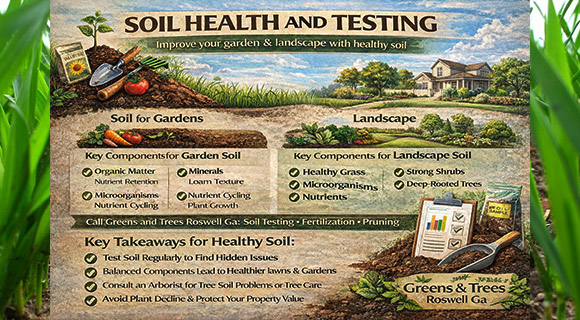
    professional soil testing and health information

    Healthy soil serves as a foundation for every successful landscape and garden. Balanced components support growth, resilience, and long-term vitality.

    1. Organic matter improves structure, nutrient retention, and moisture balance. Regular compost additions enhance soil life and plant performance.
    2. Mineral balance determines drainage and aeration. A loamy texture supports roots while preventing waterlogging or drought stress.
    3. Microorganisms play a critical role in nutrient cycling. Healthy soil biology improves disease resistance and root strength.
    4. Nutrient balance prevents deficiencies and excesses. Soil testing guides precise fertilization and reduces waste.
    5. Garden soil demands frequent monitoring due to intensive planting. Landscape soil requires stability and deep nutrient access for trees and shrubs.
    6. Testing reveals hidden issues before symptoms appear. Laboratory analysis provides clear guidance for corrective action.
    7. Professional support adds value. Arborists and landscape experts address complex soil and plant interactions effectively.

    Ignoring soil health leads to declining plants, increased costs, and safety risks. Proactive care protects property value and ecosystem balance.

    Core Components of Healthy Soil

    professional soil bacteria testing and health

    Healthy soil functions as a living system rather than simple dirt. Each component plays a specific role in supporting plant growth, water management, and nutrient availability.

    • Organic matter fuels soil life and improves structure. Decomposed leaves, compost, and plant material increase nutrient retention while improving moisture balance. Higher organic content supports root expansion and beneficial microbial activity.
    • Minerals such as sand, silt, and clay determine texture. A balanced texture allows proper drainage while retaining moisture. Sandy soil drains quickly but lacks nutrients, while clay holds water yet restricts oxygen. Loam blends these qualities for ideal growing conditions.
    • Soil microorganisms include bacteria, fungi, and beneficial microbes. These organisms break down organic material and convert nutrients, making them available to plants. Healthy microbial populations strengthen root systems and improve disease resistance.
    • Nutrients such as nitrogen, phosphorus, potassium, calcium, magnesium, and micronutrients support plant development. Balanced nutrient levels prevent deficiency symptoms and reduce stress during seasonal changes.

    Soil structure and aeration influence oxygen flow and root penetration. Compacted soil restricts roots and limits water infiltration. Proper structure allows roots to grow deeply and absorb resources efficiently.

    Healthy Soil for Garden Spaces

    professional garden soil testing and health

    Garden soil requires consistent attention due to frequent planting cycles and nutrient demand. Vegetables, flowers, and herbs draw heavily from soil reserves.

    Organic matter remains vital for gardens. Compost additions replenish nutrients and support moisture retention. Gardens benefit from a loose structure that allows root crops and flowering plants to expand freely.

    Nutrient balance matters greatly in garden settings. Nitrogen supports leafy growth, phosphorus strengthens roots, and potassium improves flowering and fruit development. Soil testing guides fertilizer selection and application timing.

    pH levels also influence garden success. Many vegetables prefer slightly acidic to neutral soil. Testing prevents nutrient lockout caused by improper pH.

    Healthy Soil for Landscape Areas

    professional landscape soil testing and health

    Landscape soil supports lawns, shrubs, and trees over long periods. Stability and deep nutrient access remain priorities.

    Grass thrives in soil with a balanced texture and steady nutrient availability. Compacted soil leads to thinning turf and weed invasion. Aeration improves oxygen flow and root strength.

    Shrubs depend on consistent moisture and micronutrient availability. Organic matter around root zones improves resilience during drought or heat stress.

    Trees require deep, well-structured soil. Healthy soil supports anchoring roots and nutrient uptake across large root zones. Poor soil conditions weaken trees and increase the risk of storm damage.

    How to Test Your Soil

    professional soil testing and health analysis

    Soil testing provides clear insight into nutrient levels, pH, and organic content. Basic test kits available through garden centers offer quick results for pH and major nutrients.

    For deeper analysis, laboratory testing delivers detailed recommendations. Property owners can send samples to cooperative extension services or university labs. Georgia residents often rely on the University of Georgia Extension soil testing services for comprehensive analysis.

    Sampling requires consistency. Collect soil from multiple areas within a garden or landscape zone. Mix samples and follow lab instructions carefully to ensure accurate results.

    Testing every one to three years supports informed decisions and prevents over-fertilization.

    When to Call an Arborist

    Trees showing decline, dieback, leaning, or pest activity require professional evaluation. Soil problems often contribute to tree stress and instability.

    Call this arborist when roots appear exposed, soil remains compacted, or drainage issues persist. Arborists assess soil conditions alongside structural health and recommend corrective action.

    Construction activity also warrants arborist involvement. Soil disturbance damages roots and alters drainage patterns. Early intervention prevents long-term decline.

    Why Call Greens and Trees Roswell Ga 404-680-0041

    professional soil testing and health

    Greens and Trees Roswell Ga together with New Image Tree Solutions, provides expert assessment across soil health, plant care, and tree management. Local knowledge supports tailored recommendations based on regional soil conditions and climate.

    A professional evaluation identifies underlying issues rather than surface symptoms. This approach saves time, reduces unnecessary treatments, and protects landscape investment.

    When to Fertilize, Prune, or Remove Plants

    professional soil testing and health nitrogen

    Fertilization is best after soil testing confirms nutrient needs. Applying fertilizer without testing may cause an imbalance and runoff.

    Pruning supports plant structure and health when timed correctly. Dead, damaged, or diseased growth should be promptly removed.

    Removal becomes necessary when plants decline beyond recovery or pose safety risks. Poor soil conditions often contribute to irreversible damage.

    Professional Soil Testing

    This article explored the fundamentals of soil health, testing methods, and practical steps that support thriving gardens and landscapes. Readers learned how soil components influence plant success and when professional guidance matters.

    Applying this knowledge delivers strong results. Healthy soil supports vigorous growth, improved resilience, and reduced maintenance costs.

    Neglecting soil health leads to ongoing frustration, plant loss, and expensive corrective measures. Understanding soil remains essential for lasting landscape success.

    Sources:
    gaswcc.georgia.gov/agricultural-conservation-programs/soil-health
    mosh.umn.edu/principles

    Greens and Trees Roswell Ga

     RoswellGA 
    (404) 680-0041

  • Spring Tree and Shrub Care

    Spring Tree and Shrub Care

    Are you ready to get your brittle and dry landscape in shape for the coming growing season? Understanding proper spring tree and shrub care eliminates confusion, helping protect landscape investments while setting plants up for strong seasonal performance.

    greensandtreesroswellga.com gathered information about seasonal tree and shrub preparation, arborist-guided care strategies, and common mistakes that limit plant health during early spring. This guidance provides you with practical steps that support safe growth, reduce risk, and improve landscape appearance through informed decisions.

    Preparing Trees and Shrubs for Spring Growth

    spring bark inspection for trees and shrubs

    Spring preparation begins with careful observation. Inspect bark condition, branch structure, bud development, and soil moisture. Winter damage often shows through cracked bark, dieback, or broken limbs. Early identification allows targeted action before stress spreads.

    Soil assessment plays a significant role. Compacted ground restricts root expansion and water movement. Light aeration near root zones improves oxygen flow and nutrient access. Mulch application helps regulate temperature and moisture, yet depth matters. Apply mulch in a shallow ring away from trunks to avoid rot and pest attraction.

    Hydration supports early growth. Trees and shrubs require steady moisture during bud break, yet saturated soil invites root decline. Slow deep watering encourages deeper root development while limiting surface evaporation.

    Fertilization should follow plant needs rather than routine habits. Spring feeding supports growth when nutrients match species requirements. Soil testing clarifies deficiencies and prevents overfeeding, often resulting in weak growth and pest pressure.

    Actions to Avoid During Late Winter and Early Spring

    spring pruning for trees and shrubs

    Some actions cause more harm than benefit during seasonal transitions. Heavy pruning during early spring can remove energy-storing branches and limit flowering potential. Pruning decisions should align with species timing and health conditions.

    Avoid excessive fertilizer use. Rapid nutrient release can stimulate premature growth before roots are ready for it. This imbalance increases stress vulnerability during temperature swings.

    Refrain from piling mulch against stems or trunks. Moisture trapped near the bark leads to decay and insect problems. Proper spacing protects plant structure while still offering soil protection.

    Delaying removal for damaged limbs poses safety concerns. Broken branches can fall during storms, causing injury or property damage. Prompt professional assessment reduces risk.

    When to Call an Arborist

    spring arborist care for trees and shrubs

    An arborist brings specialized knowledge for complex situations. Call an arborist when trees show extensive dieback, leaning, fungal growth, or insect activity. Structural weakness is often concealed beneath bark, requiring trained evaluation.

    Storm-related damage demands professional review. Arborists assess stability, determine pruning needs, and recommend removal when hazards appear. Early intervention limits liability and preserves valuable specimens.

    Disease symptoms such as leaf discoloration, premature drop, or oozing sap require expert diagnosis. Arborists identify pathogens and apply targeted treatments that general care cannot resolve.

    Why Call Greens and Trees Roswell Ga (404) 680-0041
    spring care for flowering trees and shrubs

    Greens and Trees Roswell Ga together with New Image Tree Solutions, delivers arborist-led services focusing on plant health, safety, and long-term performance. Their team evaluates trees and shrubs utilizing science-based methods rather than guesswork. This approach ensures accurate diagnosis and appropriate care plans.

    Their experience with regional soil conditions and climate patterns allows precise timing for pruning, fertilization, and removal. Property owners gain peace through proactive management rather than reactive repairs.

    Safety remains a priority. Proper equipment and training reduce risk during pruning or removal activities. Greens and Trees Roswell Ga protects surrounding structures, landscapes, and people during every project.

    Timing Fertilization, Pruning, and Removal

    spring fertilizing for trees and shrubs

    Fertilization is ideal for early spring. This is when roots activate and nutrient uptake increases. Apply balanced products after a soil assessment to avoid imbalance. Slow-release options support steady growth.

    Pruning timing varies by species. Many shrubs benefit from light shaping after blooming, while structural tree pruning often works best before foliage returns. Avoid aggressive cuts that may weaken the structure.

    Removal becomes necessary when trees decline beyond recovery or pose safety risks. Early spring allows efficient removal before full canopy development, reducing disruption.

    Key Takeaways for Spring Tree and Shrub Care

    spring care for trees and shrubs

    Spring care requires intention rather than habit. Observation forms a foundation for all actions. Evaluate plant condition before making decisions. Early detection allows correction before stress escalates.

    1. Water management supports recovery after winter dormancy. Consistent moisture encourages root activity while preventing saturation-related decline. Adjust schedules based on rainfall and soil type.
    2. Mulch application offers benefits when used correctly. Maintain shallow depth and proper spacing. This practice stabilizes soil temperature and moisture while preventing decay.
    3. Fertilization works best through informed planning. Soil testing guides nutrient selection and rate. Balanced feeding strengthens growth without encouraging weak development.
    4. Pruning decisions influence structure and health. Strategic cuts improve airflow, light penetration, and strength. Avoid excessive removal during early growth stages.
    5. Arborist involvement adds expertise for complex issues. Professional evaluation prevents costly mistakes and improves outcomes for mature trees and valuable shrubs.
    6. Greens and Trees Roswell Ga provides reliable guidance through trained teams and region-specific knowledge. Their services combine safety, efficiency, and long-term planning.
    7. Spring preparation influences performance through summer and beyond. Proper care improves resilience against pests, disease, and severe weather.

    Ignoring preparation often leads to decline. Weak growth attracts insects, increases breakage risk, and reduces landscape appeal. Preventive action protects both plants and property value.

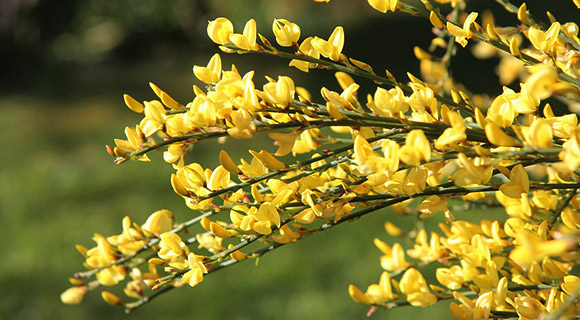
    spring care for trees and shrubs yellow blossoms

    Tree and Shrub Spring Readiness

    This article outlines practical strategies for spring tree and shrub care, covering preparation steps, actions to avoid, arborist involvement, and service benefits through Greens and Trees Roswell Ga. Readers learned how informed decisions improve plant health and safety.

    Applying these practices will result in stronger growth, improved appearance, and reduced risk during storm seasons. Professional support ensures accuracy and long-term success across landscapes.

    Failing to follow proper spring care often leads to declining trees, increased hazards, and higher future costs. Proactive management prevents these outcomes and preserves healthy landscapes.

    Sources:
    yardandgarden.extension.iastate.edu/how-to/proper-time-prune-trees-and-shrubs
    purdue.edu/fnr/extension/spring-tree-preparations

    Greens and Trees Roswell Ga

     RoswellGA 
    (404) 680-0041
  • Best Mulch for Trees, Shrubs, and Gardens

    Best Mulch for Trees, Shrubs, and Gardens

    Are you tired of spreading material around trees and garden beds without understanding how mulch type, depth, and timing influence landscape health? Knowing how mulch supports roots, moderates temperature swings, and reduces moisture loss gives you control over long-term landscape success, helping avoid costly tree and plant decline.

    greensandtreesroswellga.com gathered information on mulch selection, application methods, and arborist-backed landscape practices that support trees, shrubs, and garden plants through seasonal changes. This guide explains popular mulch options, practical uses, and when professional guidance becomes essential for long-term plant vitality.

    Why Mulch Matters for Trees, Shrubs, and Gardens

    mulch for landscape gardens

    Mulch works as a protective layer that shields soil from extreme temperatures, heavy rain impact, and evaporation. Around trees and shrubs, mulch stabilizes moisture levels while discouraging competing weeds. In garden beds, it improves soil structure over time and supports beneficial organisms that enrich root zones.

    Proper mulch application also reduces erosion and minimizes compaction caused by foot traffic or rainfall. When applied correctly, mulch creates a buffer that allows root systems to expand without stress.

    Organic Mulch Options

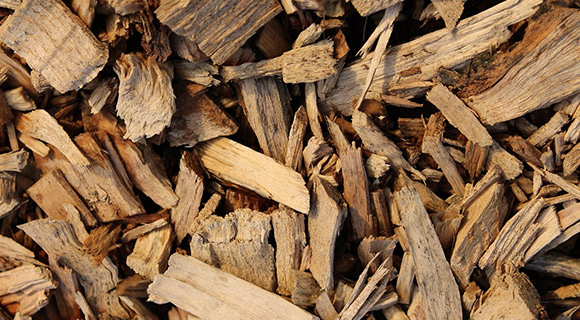
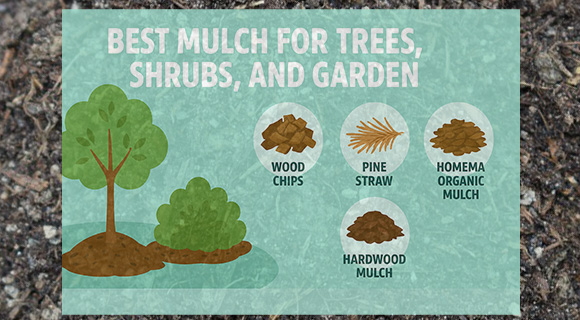
    1. Wood Chips and Bark Mulch

    chip and bark mulch for landscapes

    Wood chips and shredded bark remain popular choices for trees and shrubs. These materials decompose slowly, making them ideal for long-term moisture retention and weed suppression. They also improve soil texture as they break down.

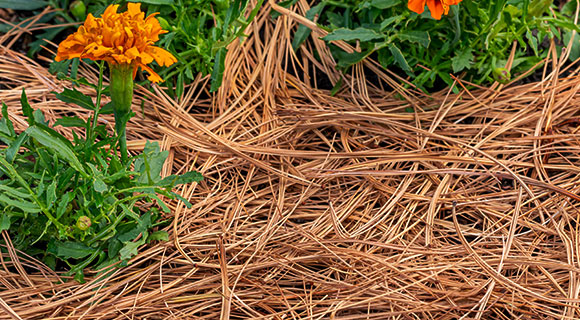
    2. Pine Straw

    pine straw mulch for landscapes

    Pine straw works well for acidic soil preferences, like azaleas and certain ornamentals. It allows water penetration while remaining lightweight and easy to refresh. Pine straw resists compaction and provides a clean, natural appearance.

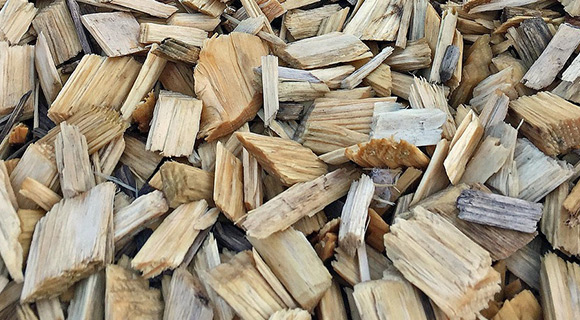
    3. Hardwood Mulch

    hardwood mulch for landscapes

    Hardwood mulch offers durability and visual appeal. It suits landscape beds where long-lasting coverage matters. As it decomposes, it adds organic matter that supports microbial activity.

    4. Homemade Organic Mulch

    organic homemade mulch for landscapes

    Homemade organic mulch offers a budget-friendly and sustainable option. This mulch can be created using shredded leaves, grass clippings, small twigs, untreated wood shavings, and garden trimmings. Combine materials in layers, allowing airflow to prevent matting. Avoid using diseased plants or invasive weeds.

    Leaves should be shredded before use (to avoid forming dense layers that block water). Grass clippings work best when mixed with drier materials to prevent odor buildup. Homemade mulch decomposes faster, so regular replenishment remains crucial.

    Inorganic Mulch Options

    gravel and stone mulch for landscapes

    Gravel and stone mulch provide decorative appeal and resist decomposition. These materials are suitable for areas where water pooling creates issues or where plantings require excellent drainage. Inorganic mulch reflects heat, so it works best away from tender roots or paired with drought-tolerant plants.

    Note: Landscape fabric combined with mulch can help in high-traffic areas. Proper installation remains critical to avoid root restriction.

    When to Call an Arborist

    diseased thinning and damaged leaning tree

    An arborist should be consulted when trees show signs such as thinning canopy, cracked bark, leaning trunks, or root exposure. Mulch misuse around tree bases can trap moisture, leading to decay. Arborists assess root flare exposure, mulch depth, and placement to prevent long-term damage.

    Professional guidance also becomes important after storms, construction activity, or visible pest activity. Arborists help determine whether pruning, soil improvement, or removal remains the safest option.

    Why Call Greens and Trees Roswell Ga 404-680-0041
    mulch for landscape shrubs gardens and trees

    Greens and Trees Roswell Ga together with New Image Tree Solutions, provides arborist-led assessments tailored to regional soil conditions and plant species. Their team evaluates mulch practices alongside pruning schedules and fertilization plans. This integrated approach ensures trees and shrubs receive care aligned with growth cycles rather than generic landscaping trends.

    Their services protect property safety (preserving plant health across seasons).

    Fertilizing, Pruning, and Removal Timing

    mulch and fertilizer for landscapes

    Mulch works best when paired with proper fertilization and pruning schedules. Fertilization supports nutrient uptake, especially where organic mulch breaks down slowly. Pruning should occur during dormant periods or after bloom cycles, depending on the species.

    Removal becomes necessary when trees show advanced disease, severe storm damage, or root failure that threatens structures. Early evaluation reduces emergency risks and property damage.

    Key Takeaways for Tree, Shrub, and Garden Mulch

    mulch information for landscapes

    Mulch selection influences soil health, root development, and long-term plant resilience. Organic options improve soil structure and moisture retention, while inorganic materials offer durability and drainage control. Wood chips and bark mulch support trees and shrubs by decomposing slowly and enhancing microbial activity. Pine straw suits specific plant types (offering easy maintenance). Homemade organic mulch is flexible and sustainable when made with proper materials and balanced composition.

    Correct application matters as much as material choice. Mulch should be spread evenly, avoiding direct contact with tree trunks or shrub stems. Excess depth can restrict airflow and promote decay, while insufficient coverage limits benefits. Seasonal replenishment ensures continued protection during temperature fluctuations.

    Arborist involvement remains critical when uncertainty arises. Professionals assess soil conditions, root health, and environmental stress factors that mulch alone cannot resolve. Calling Greens and Trees Roswell Ga ensures decisions align with plant biology and safety standards rather than guesswork.

    Strategic fertilization, pruning, and removal complement mulching efforts. These practices support plant energy allocation, reduce disease risk, and prevent hazardous failures. Mulch remains one component within a complete landscape care plan that prioritizes long-term stability.

    Landscape Mulching

    In this article, you discovered how mulch supports trees, shrubs, and garden plants by regulating moisture, controlling temperature, and improving soil. It outlined organic, inorganic, and homemade mulch options while emphasizing proper application techniques.

    Using the right mulch improves plant health, reduces maintenance demands, and creates a resilient landscape that adapts to seasonal changes. Combined with arborist guidance, these practices lead to stronger growth and fewer long-term issues.

    Ignoring mulch selection and placement increases stress on plants, accelerates decline, and increases the risk of disease, pests, and root damage. Without informed decisions, property owners often face higher replacement costs and avoidable landscape failures.

    Sources:
    extension.umn.edu/news/mulching-101-secret-healthy-and-happy-garden
    extension.illinois.edu/sites/default/files/organic_mulches.pdf

    Greens and Trees Roswell Ga

     RoswellGA 
    (404) 680-0041

  • What To Do After the First Freeze

    What To Do After the First Freeze

    Are you scrambling to protect your lawn, garden, and trees from freezing weather? Knowing how to properly care for grass, shrubs, and trees after the first freeze not only protects your investment but also sets your property up for a healthy recovery when spring returns. Knowing what steps to take can prevent permanent damage, ensure plant survival, and keep your property looking its best through the colder months.

    greensandtreesroswellga.com gathered information about the essential steps property owners can take to protect landscapes after the first freeze. This includes practical advice on grass and plant protection, when to call an arborist, and how strategic fertilization, pruning, or removal can ensure that your property remains safe and healthy all winter long. With this expert guidance, you can take proactive measures to preserve tree and plant health while preventing costly replacements once the cold weather ends.

    Frost vs. Freeze

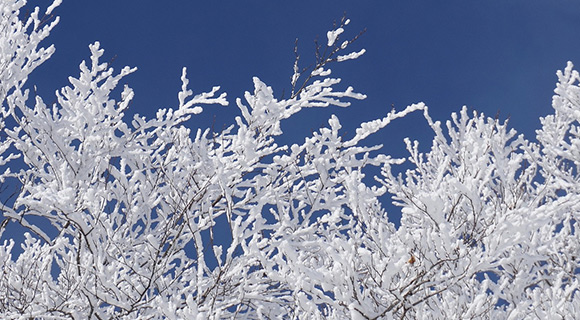
    frost and freeze protection frozen landscape

    Frost occurs when ice crystals form on the surface of foliage. This can happen when air temperatures are slightly above freezing, but the plant surface cools to the freezing point.  The National Weather Service issues frost advisories when temperatures are expected to be between 33 and 36°F.  Frosts generally cause minor damage but can cause severe damage to sensitive species, especially flowers and flower buds that have broken dormancy.

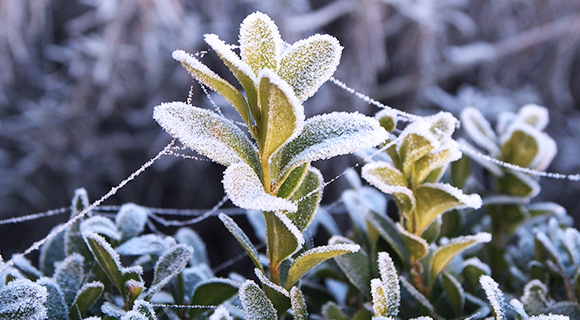
    frost and freeze protection frozen shrub

    A freeze is significantly more damaging than a frost. Freezes occur when the air and interior of the plant drop below 32°F.  During a freeze, plant cells freeze, damaging cellular tissue, turning brown or black, wilting, and/or collapsing.   

    There are two types of freeze events: advection and radiation. 

    • An advection freeze occurs when a dry, cold air mass settles into a region and it remains relatively windy.
    • A radiation freeze occurs during clear, calm nights.  During a radiation freeze, cold air remains at ground level while warm air “radiates” or escapes into the upper atmosphere.

    1. Assess the Impact of the Freeze

    After a freeze, inspect your property for visible signs of stress or damage. Frozen soil prevents roots from absorbing moisture, which can cause leaves to turn brown or brittle. Trees and shrubs may display cracked bark, and smaller plants may appear wilted or drooping. Resist the urge to prune or fertilize immediately – plants often need time to recover before their level of injury becomes visible.

    2. Protecting Landscape Grass

    frost and freeze protection landscape grass

    Grass is especially vulnerable after the first freeze. Property owners should avoid walking or driving across frozen lawns, as the blades can easily snap, leaving dead patches behind. If you haven’t already applied a winterizing fertilizer before the freeze, consider doing so on a day when the ground has thawed slightly. This helps strengthen roots for the months ahead and prepares your lawn to fully recover when warmer temperatures return.

    3. Shrub and Plant Care

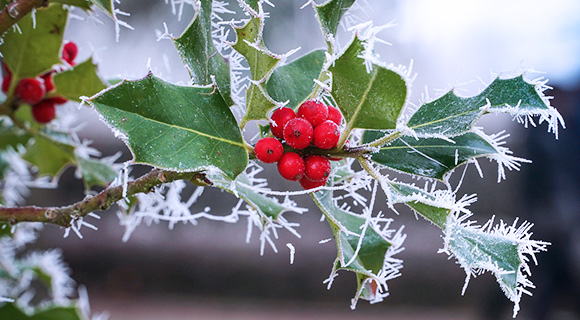
    frost and freeze protection foliage damage

    Many shrubs and flowering plants can survive moderate freezes if protected. Once the freeze has passed, gently water the soil during midday when temperatures are above freezing. Moist soil holds heat better than dry soil, which helps insulate roots. Adding mulch around the base of shrubs and plants can further regulate soil temperature and retain moisture. Avoid pruning right after the first freeze. Wait until late winter when plants are dormant to minimize stress and encourage healthy spring growth.

    4. Tree Protection and Maintenance

    Trees are often the most valuable part of a landscape, but also the most susceptible to damage from freezing temperatures. Cracked bark, frost splits, and brittle branches can pose safety hazards if left untreated. Tree wrapping or mulching around the base can help retain root warmth. Inspect limbs for cracking or splitting and mark any that appear unstable. This early detection can prevent property damage when ice or heavy winds follow.

    5. When to Call an Arborist

    An arborist should be called if you notice significant cracking, leaning trees, or large broken branches after a freeze. Certified arborists have the training and tools to assess structural stability and determine whether a tree can be saved or needs to be removed. They can also provide targeted pruning, preventing weakened branches from becoming hazards in winter storms. Arborists often use specialized equipment (cranes and aerial lifts) to safely remove dangerous limbs or trees that may threaten homes and utility lines.

    Why Call Greens and Trees Roswell Ga

    frost and freeze protection

    Greens and Trees Roswell Ga together with New Image Tree Solutions, is a trusted name in tree and landscape care, offering arborist-led services designed to protect both tree health and property safety. Their certified team specializes in post-freeze care, storm-damage prevention, and proactive maintenance that keeps your landscape thriving year-round. From professional pruning and fertilization to removal and stump grinding, the company offers free assessments and customized recommendations for every property. Homeowners and business owners alike rely on Greens and Trees Roswell Ga for reliable, knowledgeable care that combines safety, science, and sustainability.

    When to Prune, Fertilize, or Remove

    Pruning after the first freeze should occur once trees and plants are dormant – typically late winter. This timing minimizes sap loss and stress while promoting vigorous spring growth. Fertilizing during late winter or early spring supports recovery and new growth. Removal becomes necessary if trees are structurally compromised or if disease has spread beyond recovery. An arborist can help determine when removal is the safest and most cost-effective option.

    Key Considerations for The First Freeze and Winter

    frost and freeze protection information

    Successfully protecting your landscape after the first freeze requires understanding how cold temperatures affect plant structure and soil composition. During freezes, water inside plant cells expands, causing tissue damage that may not be immediately visible. To minimize long-term effects, property owners should maintain consistent soil moisture, avoid compacting frozen soil, and continue monitoring plant health throughout winter.

    1. Mulching remains one of the simplest and most effective steps you can take. A layer of mulch around trees and shrubs provides insulation against rapid temperature changes and helps retain soil moisture. Choose organic mulch such as wood chips or pine straw for optimal results. Additionally, wrapping young or thin-barked trees with burlap or tree guards can prevent frost cracks and sunscald, both common winter issues in Georgia’s fluctuating climate.
    2. Avoid fertilizing immediately after a freeze, as plants are not actively growing during cold months and cannot absorb nutrients efficiently. Premature fertilization can force growth that may later die back in freezing temperatures. Instead, plan fertilization for early spring once the risk of frost has passed.
    3. Tree and shrub pruning should focus on removing dead or broken branches that could cause damage during high winds or snow accumulation. Hiring an arborist for this work ensures precise cuts and balanced shaping, preserving both safety and aesthetics. For properties with mature trees near buildings or power lines, arborist-led inspections should be performed before major winter storms.
    4. Lastly, don’t overlook irrigation systems. Frozen pipes or sprinkler heads can lead to costly repairs. Ensure all lines are drained and insulated. By following these precautions, you can safeguard your landscape, reduce hazards, and maintain healthy growth well beyond winter.
    frost and freeze protection bush damage

    Winter Landscape Precautions

    In this article, you discovered how to assess freeze damage, protect grass and shrubs, maintain tree health, and determine when professional arborist services are necessary. You also learned practical strategies for pruning, fertilizing, and removing trees to protect your property from winter weather challenges.

    By taking these proactive measures, property owners can enjoy a landscape that not only survives winter but thrives in spring. Healthier grass, stronger roots, and safer trees all contribute to a more beautiful and valuable property.

    Failing to act after the first freeze can lead to long-term damage. Neglected trees may become unstable, plants can die from root exposure, and lawns may struggle to recover, requiring costly restoration. Protecting your property now ensures safety, beauty, and vitality through every season.

    Sources:
    fieldreport.caes.uga.edu/news/protect-plants-from-blast-of-cold-temperatures
    extension.umn.edu/planting-and-growing-guides/protecting-trees-and-shrubs-winter

    Greens and Trees Roswell Ga

     RoswellGA 
    (404) 680-0041
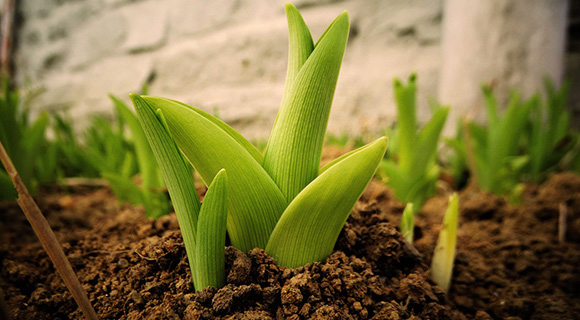
  • Prime Time to Fertilize Your Roswell, Georgia, Landscape

    Prime Time to Fertilize Your Roswell, Georgia, Landscape

    Are you dreaming about a lush, green lawn and thriving landscape, but struggling to find the right time or method to fertilize? Knowing when and how to fertilize ensures that nutrients reach roots when plants need them most (creating a balanced, healthy environment that supports vibrant color and sustained growth throughout the year).

    greensandtreesroswellga.com gathered information about fertilizer types, application methods, and seasonal timing specific to North Georgia’s soil and weather conditions. This guide explains the optimal time to fertilize lawns, shrubs, plants, and trees while outlining how to maximize results safely. You’ll also learn when to call an arborist, why professional care makes a difference, and how proper fertilization, pruning, and removal can protect and beautify your outdoor space year-round.

    Fertilizer Types

    granular fertilizer lawn shrubs and trees best time to fertilize

    Fertilizer comes in several forms, each designed to deliver essential nutrients like nitrogen (N), phosphorus (P), and potassium (K)—the building blocks of plant health. Understanding the differences between fertilizer types enables property owners to select the right product for their specific plants and soil conditions.

    • Granular Fertilizer – Granular fertilizers are dry pellets that provide a slow, consistent nutrient release. They’re ideal for lawns, shrubs, and trees that need steady nourishment over time. Granular types are easy to apply and work well when combined with regular watering.
    • Liquid Fertilizer – Liquid fertilizers deliver nutrients quickly, making them ideal for giving plants an immediate boost during active growth periods. They are often used for flowering plants and garden beds that require rapid nutrient uptake.
    • Organic Fertilizer – Derived from compost, manure, or bone meal, organic fertilizers enrich the soil naturally and improve its structure. They promote microbial activity and long-term health without harsh chemicals (though they tend to act more slowly than synthetic types).
    • Synthetic Fertilizer – Manufactured fertilizers provide precise nutrient ratios and quick results. While effective, they should be used carefully to avoid over-fertilizing, which can burn roots or contaminate nearby waterways.
    • Slow-Release Fertilizer – Designed for convenience, slow-release fertilizers deliver nutrients gradually over weeks or months, reducing the need for frequent applications. These are often used for trees, shrubs, and perennial landscapes.

    Soil and pH Testing

    soil and ph test lawn shrubs and trees best time to fertilize

    A soil and pH test is an essential first step before applying any fertilizer to your Roswell, Georgia, landscape. Without knowing your soil’s nutrient balance and acidity level, it’s impossible to choose the right fertilizer or apply it at the correct rate. Soil that’s too acidic or alkaline can block nutrient absorption, causing yellowing leaves, stunted growth, and weak root systems, even when you’ve properly fertilized. A soil test identifies levels of key nutrients such as nitrogen, phosphorus, and potassium while measuring pH to determine if your soil requires lime or sulfur adjustments.

    Property owners can easily have a soil and pH test performed through their local University of Georgia Cooperative Extension office. The process involves collecting small soil samples from several areas in your yard, mixing them together, and submitting the composite sample for laboratory analysis. Results typically include a detailed report with recommendations for fertilizer types, quantity, and application frequency. This ensures that your lawn, trees, shrubs, and garden plants receive the exact nutrients they need for strong, healthy growth. Investing in a soil test before fertilizing saves time, money, and effort while promoting a vibrant and resilient landscape throughout Roswell’s growing seasons.

    Best Time to Fertilize in Roswell, Georgia

    lawn shrubs and trees when to fertilize

    Roswell’s growing season stretches from early spring through late fall. However, timing fertilization around plant cycles and temperature changes is crucial. Applying fertilizer too early or too late can waste money, stress plants, and even harm the soil. Roswell’s warm climate and clay-heavy soil can make timing especially tricky, leaving property owners wondering why their efforts produce uneven growth, yellowing leaves, or patchy grass. Here’s how to schedule applications by landscape type:

    Grass and Lawns

    For warm-season grasses common in Roswell, such as Bermuda, Zoysia, and Centipede, the first fertilization should be late April or early May (once soil temperatures reach about 65°F). A second application in midsummer supports vigorous growth, and a final, lighter feeding in early September prepares the lawn for cooler weather. Avoid fertilizing dormant lawns during winter – nutrients won’t absorb effectively and may wash away with rain.

    Shrubs and Plants

    Most shrubs and ornamental plants benefit from fertilization in early spring before new growth appears. For flowering shrubs like azaleas and hydrangeas, a second application after blooming promotes root strength and future blossoms. Fall feeding should be minimal (plants begin slowing their nutrient uptake as temperatures drop).

    Trees

    Established trees often require less frequent fertilization, but younger or stressed trees may benefit from feeding in early spring or late fall. Apply fertilizer evenly under the canopy, extending to the dripline. Deep-root feeding by an arborist helps deliver nutrients to where roots absorb them.

    Garden Beds and Seasonal Plants

    Annuals and perennials thrive with consistent nutrients throughout their growing season. Begin fertilizing when new growth appears in spring and continue every 4 to 6 weeks until late summer. Organic options for garden beds keep soil balanced and healthy.

    When to Call an Arborist

    If trees show yellowing leaves, weak growth, or dead branches despite regular care, it may be time to call an arborist. A certified arborist can perform soil tests, diagnose nutrient deficiencies, and determine whether fertilization, pruning, or disease treatment is needed. Arborists are also essential when roots appear to be compacted or when construction near trees alters the soil.

    Professional assessments ensure your trees receive the correct treatment and prevent long-term damage from improper care.

    Why Call Greens and Trees Roswell Ga 404-680-0041
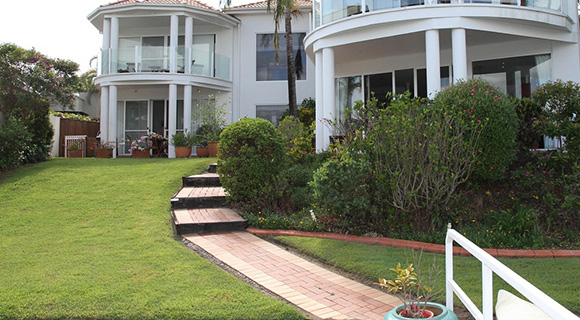
    Greens and Trees Roswell, Ga (together with New Image Tree Solutions) offers expert landscape care designed to enhance plant vitality and property aesthetics. Their team understands local soil composition, weather patterns, and nutrient requirements unique to Roswell. Whether you need lawn fertilization, deep-root feeding, or landscape management, their certified specialists ensure optimal results using safe, sustainable methods.

    roswell georgia lawn shrubs and trees best time to fertilize

    The company also provides tree pruning, removal, and restoration services, ensuring that every aspect of your property remains healthy and visually appealing. Regular maintenance through Greens and Trees Roswell Ga and New Image Tree Solutions extends plant life, prevents pest infestations, and enhances curb appeal.

    When to Fertilize, Prune, or Remove Trees and Shrubs

    • Fertilize – Apply nutrients during early spring growth or late fall dormancy, depending on species and soil condition. Avoid summer fertilization for cool-season plants to prevent stress.
    • Prune – Late winter through early spring is best for pruning dormant trees and shrubs. Remove dead or crossing branches to encourage new, healthy growth.
    • Remove – If trees display hollow trunks, extensive rot, or unstable roots, removal may be necessary for safety and landscape health.

    Regular observation and professional maintenance can prevent issues from escalating into costly damage.

    Key Considerations for Fertilizing Your Roswell, Georgia, Landscape

    natural compost lawn shrubs and trees best time to fertilize

    Successful fertilization depends on understanding soil health, plant species, and environmental conditions. Before applying any fertilizer, always begin with a soil test to measure nutrient levels and pH balance. Many Roswell lawns have clay-heavy soil that retains water and nutrients differently from sandy soil. Adjusting the fertilizer and quantity can make a significant difference.

    1. Have a soil and pH test conducted. This ensures that your lawn, trees, shrubs, and garden plants receive the exact nutrients they need for strong, healthy growth.
    2. Proper application matters just as much as timing. Distribute fertilizer evenly across lawns or under tree canopies, avoiding contact with trunks or stems. Over-application can lead to salt buildup, burning roots, and runoff that harms nearby waterways. Using a spreader for lawns and hand-application for garden beds helps achieve even coverage.
    3. Watering immediately after fertilization ensures nutrients penetrate the soil and reach roots. Deep watering promotes strong root systems, especially during dry Georgia summers. However, avoid fertilizing before heavy rainfall to prevent nutrient washout.
    4. Temperature also influences fertilizer effectiveness. Applying fertilizer during extremely hot or cold weather can stress plants and limit absorption. Spring and early fall provide the most favorable conditions for nutrient uptake.
    5. Finally, consider environmental sustainability. Choosing organic or slow-release options reduces runoff and supports soil biodiversity. Responsible fertilization protects not only your landscape but also local waterways and wildlife habitats.

    By paying attention to soil health, timing, and application techniques, Roswell homeowners can maintain lush, vibrant landscapes that thrive throughout changing seasons.

    When To Fertilize Your Landscape

    In this article, you discovered the best times and methods for fertilizing your Roswell, Georgia, landscape, the types of fertilizers available, and when to call a professional arborist for help maintaining lawns, trees, and shrubs.

    By following these guidelines, you’ll promote deep-root growth, improved color, and lasting plant health. Proper fertilization at the correct times ensures your landscape remains strong, beautiful, and resilient all year.

    Neglecting to fertilize or applying nutrients at the wrong time can lead to weak roots, pest infestations, and wasted resources. Without proper care, even the most carefully designed landscape can lose its vibrancy and structure.

    Sources:
    fieldreport.caes.uga.edu/publications/C1179/fertilizing-the-home-garden
    news.gatech.edu/features/2023/04/tech-lawn-and-garden-basic-lawn-care-tips

    Greens and Trees Roswell Ga

     RoswellGA 
    (404) 680-0041