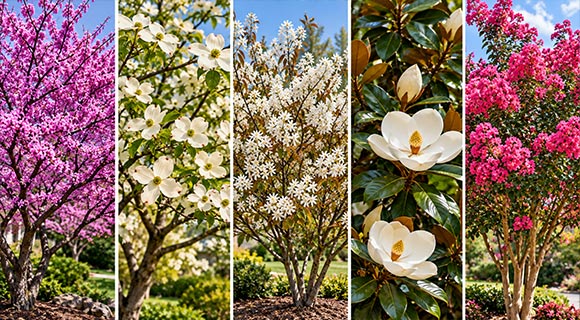
Choosing the right flowering tree for your Roswell landscape can beautify your landscape and increase your home’s curb appeal. Knowing which flowering trees are best suited for Roswell, along with their mature size, water requirements, pruning needs, and common problems, can guide property owners to make better planting decisions.
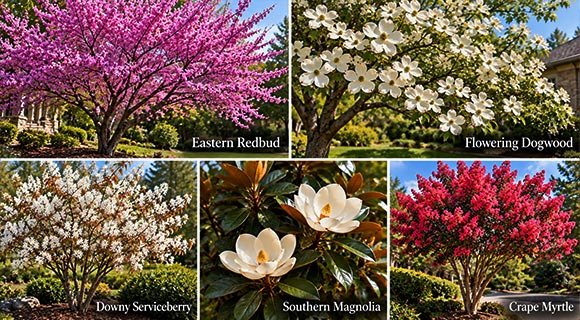
Greens and Trees Roswell Ga gathered information on five desirable flowering tree species that perform well in Roswell, Georgia, including Eastern redbud, flowering dogwood, downy serviceberry, southern magnolia, and crape myrtle. Roswell is generally classified as USDA hardiness Zone 8a on the current 2023 map, although individual properties can have slightly different microclimates. These selections offer different bloom periods, colors, mature sizes, and landscape characteristics, giving homeowners several options for adding seasonal interest to their property.
Key Takeaways for 5 Flowering Tree Species for Roswell, Georgia
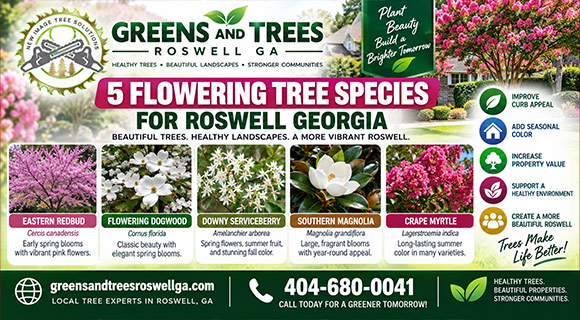
Roswell’s climate provides excellent opportunities for flowering trees, but choosing a species requires more than considering flower color. Before planting, consider tree size, soil conditions, sunlight, water availability, disease resistance, pest pressure, and maintenance requirements.
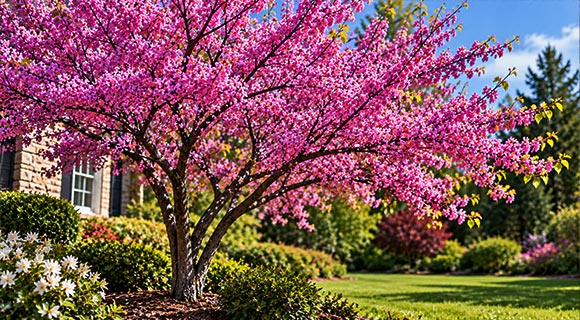
Eastern redbud is an excellent small native tree for landscapes desiring spring color without planting a massive shade tree. Its pinkish-purple or lavender flowers appear in early spring, often before leaves emerge. It generally reaches approximately 20 to 30 feet tall with an 18 to 25 foot canopy. Eastern redbud tolerates a variety of sites but performs best with adequate moisture and good drainage.
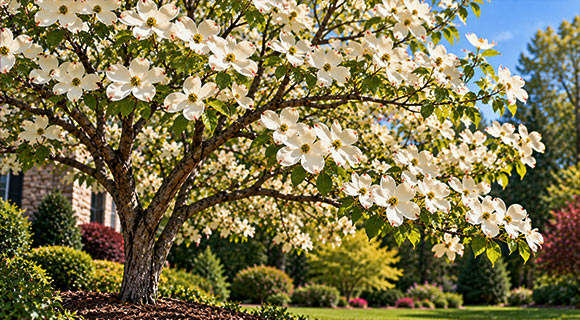
Flowering dogwood is another classic Georgia native. It typically reaches 15 to 25 feet tall and spreads to 15 to 30 feet, with a broader form when grown in shade. White, pink, or rose-colored spring blooms generally appear from March through April. Dogwoods prefer light shade, adequate moisture, and well-drained soil. Powdery mildew and anthracnose can become concerns, particularly when growing conditions are unfavorable.
Downy serviceberry provides spring flowers, summer fruit, and fall color. It generally reaches 15 to 25 feet tall with a 15 to 20 foot spread. It prefers moist, well-drained, acidic soil and can grow in full sun or light shade. White flowers appear in early spring, followed by edible fruit that also attracts birds.
Southern magnolia provides a dramatically different landscape appearance. This evergreen native can become a large specimen tree, reaching approximately 60 to 80 feet tall with a 40 to 50 foot spread. It produces large, fragrant white flowers and prefers moist, well-drained acidic soil.
Crape myrtle is one of Georgia’s most popular summer-flowering landscape trees. Cultivar selection determines mature size, with forms ranging from small plants to trees exceeding 20 feet. Flowers can be white, pink, lavender, purple, or red. Full sun, adequate drainage, and appropriate watering encourage stronger flowering. Powdery mildew, Cercospora leaf spot, aphids, and crape myrtle bark scale are potential concerns.
Proper maintenance is important for every selection. Prune according to flowering habits. UGA Extension recommends pruning spring-flowering trees such as dogwood and redbud after flowering, while summer-flowering plants such as crape myrtle can generally be pruned during dormancy before spring growth begins.
1. Eastern Redbud
Scientific name: Cercis canadensis
Mature height: Approximately 20-30 feet
Canopy spread: Approximately 18-25 feet
Soil preference: Moist, well-drained soil; adaptable to many landscape conditions
Water needs: Moderate, particularly during establishment and extended dry periods
Pruning and care: Prune after flowering when necessary. Remove dead, damaged, crossing, or poorly positioned branches. Avoid unnecessary heavy pruning.
Disease and infestation issues: Can experience canker, verticillium wilt, leaf spots, and insect problems under stressful conditions.
Flowering season: Early spring, generally once annually
Bloom color: Pink, lavender, or occasionally white
Eastern redbud is particularly useful when a property owner wants spring color without committing to a large canopy. UGA lists it as a Georgia-hardy flowering tree and reports a mature size around 20 to 30 feet.
Its flowers appear directly on branches and twigs, creating an especially noticeable spring display. Planting in well-drained soil with adequate moisture can support healthy growth.
2. Flowering Dogwood
Scientific name: Cornus florida
Mature height: Approximately 15-25 feet
Canopy spread: Approximately 15-30 feet
Soil preference: Moist, well-drained, acidic soil
Water needs: Moderate; supplemental water may be needed during dry periods.
Pruning and care: Prune after flowering for routine shaping and maintenance. Remove dead or diseased branches when needed. Mulching helps maintain more consistent root temperatures and moisture.
Disease and infestation issues: Powdery mildew and anthracnose can occur. Stress and poor site conditions can increase problems.
Flowering season: March-April, generally once annually
Bloom color: White, pink, or rose
Flowering dogwood is one of the most recognizable flowering trees in Georgia. UGA Extension recommends light shade and adequate moisture, cautioning against wet planting sites.
Dogwoods also provide seasonal interest through red fruit and attractive fall foliage.
3. Downy Serviceberry
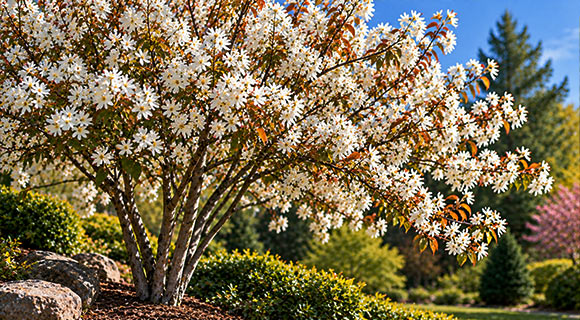
Scientific name: Amelanchier arborea
Mature height: Approximately 15-25 feet
Canopy spread: Approximately 15-20 feet
Soil preference: Acidic, well-drained soil with adequate moisture
Water needs: Moderate; maintain moisture during establishment and dry weather
Pruning and care: Prune selectively after flowering when needed. Remove dead, damaged, or crossing branches and maintain natural form.
Disease and infestation issues: Rust, powdery mildew, fruit rot, leaf miners, borers, mites, and other pests can occur.
Flowering season: Early spring, generally once annually
Bloom color: White
Downy serviceberry is an excellent option for homeowners seeking several seasons of interest from one small tree. UGA describes it as a flowering specimen tree with white flowers in early April, followed by purplish-blue fruit and potentially attractive fall color.
Its relatively modest size also makes it easier to incorporate into smaller residential landscapes.
4. Southern Magnolia
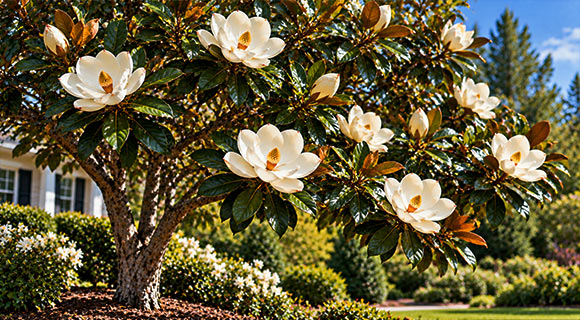
Scientific name: Magnolia grandiflora
Mature height: Approximately 60-80 feet
Canopy spread: Approximately 40-50 feet
Soil preference: Moist, well-drained, acidic soil
Water needs: Moderate; young trees need consistent moisture while established trees can tolerate some variation.
Pruning and care: Allow adequate room for mature growth. Remove dead or problematic branches and prune selectively when necessary.
Disease and infestation issues: Generally has few serious pest problems, although magnolia scale can become significant.
Flowering season: Late spring through summer, with recurring flowers
Bloom color: Large, fragrant white
Southern magnolia is a major landscape specimen rather than a small ornamental tree. UGA notes that it adapts well to a variety of soils and has relatively few pest problems. It prefers moist, well-drained acidic soil and can tolerate some wet-dry fluctuations.
Because mature magnolias can become very large, homeowners should plan carefully before planting one near buildings, driveways, utility lines, or other structures.
Magnolia scale is a pest worth monitoring. Heavy infestations can contribute to branch dieback and produce honeydew that encourages sooty mold.
5. Crape Myrtle
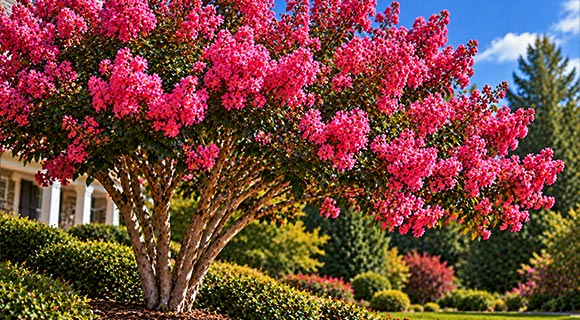
Scientific name: Lagerstroemia indica
Mature height: Approximately 6-30 feet, depending on cultivar
Canopy spread: Approximately 4-15 feet, depending on cultivar
Soil preference: Well-prepared, well-drained soil
Water needs: Moderate during establishment; established trees tolerate drought.
Pruning and care: Prune during late winter or early spring when needed. Remove suckers, dead branches, and crossing limbs. Avoid severe topping.
Disease and infestation issues: Powdery mildew, Cercospora leaf spot, aphids, sooty mold, root rot, and crape myrtle bark scale can occur.
Flowering season: Summer, with cultivars offering extended flowering periods
Bloom color: White, pink, lavender, purple, red
Crape myrtle offers one of the longest and most reliable periods of summer color among popular Georgia flowering trees. UGA notes that cultivar selection can dramatically change mature size, while newer varieties can provide improved disease resistance.
One important maintenance rule is to avoid aggressive topping. Proper pruning preserves natural structure and reduces problems associated with excessive suckering and weak growth.
When Should a Roswell Property Owner Call an Arborist?
An arborist can help when a homeowner is uncertain about tree health, structural stability, pruning requirements, or appropriate removal. Professional evaluation is particularly important when a tree has significant deadwood, cavities, trunk cracks, storm damage, disease symptoms, pest infestations, exposed roots, or branches threatening buildings and utility lines.
Property owners should also consider professional assistance before planting a large tree near a structure. Selecting the right species and location can prevent future conflicts and reduce expensive corrective pruning.
If a tree has experienced storm damage or developed significant structural concerns, avoid climbing or attempting major removal work yourself. Large branches and unstable trees can create serious hazards.
When To Fertilize, Prune, or Remove Trees and Shrubs
Fertilization should be based on plant needs and site conditions, not an automatic schedule. Soil testing can help determine whether nutrients are actually needed. Over-fertilizing can create excessive growth without solving underlying problems.
Prune according to plant biology. Prune spring-flowering trees (redbud and dogwood) after flowering. Crape myrtle, which flowers on new growth, can generally be pruned during dormancy before spring growth begins.
Consider removal when a tree becomes hazardous, severely diseased, structurally unsound, dead, or poorly positioned and cannot be reasonably managed through pruning or treatment.
Call Greens and Trees Roswell Ga 404-680-0041

Greens and Trees Roswell Ga, together with New Image Tree Solutions, provides professional tree care and landscape services for property owners throughout Northwest Metro Atlanta.
Choosing, planting, pruning, fertilizing, treating, or removing trees requires an understanding of plant biology and local growing conditions. Greens and Trees Roswell Ga can help property owners evaluate landscape trees and determine appropriate maintenance strategies.
Professional tree services can help address pruning needs, disease and pest concerns, storm damage, hazardous trees, and removal projects. An arborist evaluation can also provide valuable information when a homeowner is uncertain whether a tree should be treated, pruned, monitored, or removed.
Call Greens and Trees Roswell Ga at 404-680-0041 for professional tree care assistance.
Flowering Trees for Roswell Landscapes
You discovered five flowering tree species that can work well in Roswell landscapes: Eastern redbud, flowering dogwood, downy serviceberry, southern magnolia, and crape myrtle. You also learned their scientific names, mature dimensions, soil and water preferences, pruning requirements, common disease and pest concerns, flowering periods, and bloom colors. Roswell’s current USDA Zone 8a climate provides a favorable environment for these selections when the right tree is planted in the right site.
Choosing an appropriate flowering tree and providing proper care can give a Roswell property years of seasonal color, wildlife value, shade, structure, and curb appeal. Correct planting location, appropriate irrigation, timely pruning, proper fertilization, and routine professional evaluation can help trees remain healthy while reducing avoidable maintenance problems.
Ignoring mature size, soil conditions, water needs, disease risks, or pruning requirements can lead to weak growth, reduced flowering, pest and disease problems, property conflicts, and premature tree removal. Before planting or making major changes to an established landscape, consider having a qualified tree professional evaluate site conditions and tree health. Call Greens and Trees Roswell Ga at 404-680-0041 for assistance with maintaining healthier, safer, and more attractive landscapes.
(404) 680-0041


Leave a Reply