Category: Tree Species

  • 5 Flowering Tree Species for Roswell Georgia

    5 Flowering Tree Species for Roswell Georgia

    Choosing the right flowering tree for your Roswell landscape can beautify your landscape and increase your home’s curb appeal. Knowing which flowering trees are best suited for Roswell, along with their mature size, water requirements, pruning needs, and common problems, can guide property owners to make better planting decisions.

    Greens and Trees Roswell Ga gathered information on five desirable flowering tree species that perform well in Roswell, Georgia, including Eastern redbud, flowering dogwood, downy serviceberry, southern magnolia, and crape myrtle. Roswell is generally classified as USDA hardiness Zone 8a on the current 2023 map, although individual properties can have slightly different microclimates. These selections offer different bloom periods, colors, mature sizes, and landscape characteristics, giving homeowners several options for adding seasonal interest to their property.

    Key Takeaways for 5 Flowering Tree Species for Roswell, Georgia
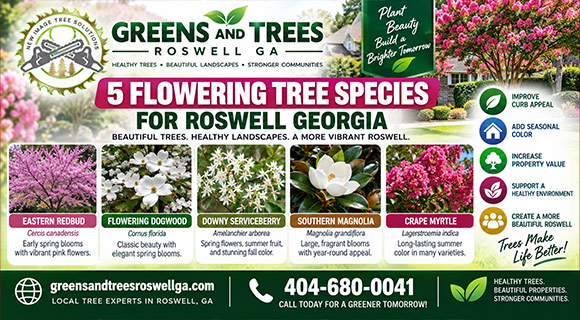
    flowering trees for roswell georgia landscapes infographic

    Roswell’s climate provides excellent opportunities for flowering trees, but choosing a species requires more than considering flower color. Before planting, consider tree size, soil conditions, sunlight, water availability, disease resistance, pest pressure, and maintenance requirements.

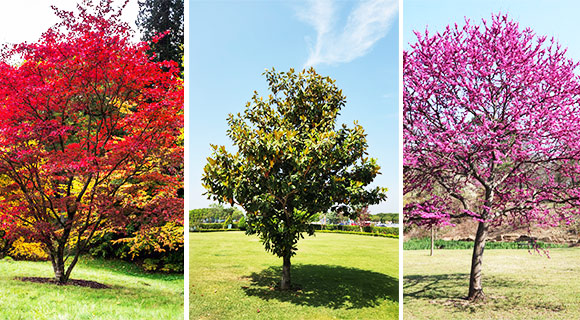
    Eastern redbud is an excellent small native tree for landscapes desiring spring color without planting a massive shade tree. Its pinkish-purple or lavender flowers appear in early spring, often before leaves emerge. It generally reaches approximately 20 to 30 feet tall with an 18 to 25 foot canopy. Eastern redbud tolerates a variety of sites but performs best with adequate moisture and good drainage.

    Flowering dogwood is another classic Georgia native. It typically reaches 15 to 25 feet tall and spreads to 15 to 30 feet, with a broader form when grown in shade. White, pink, or rose-colored spring blooms generally appear from March through April. Dogwoods prefer light shade, adequate moisture, and well-drained soil. Powdery mildew and anthracnose can become concerns, particularly when growing conditions are unfavorable.

    Downy serviceberry provides spring flowers, summer fruit, and fall color. It generally reaches 15 to 25 feet tall with a 15 to 20 foot spread. It prefers moist, well-drained, acidic soil and can grow in full sun or light shade. White flowers appear in early spring, followed by edible fruit that also attracts birds.

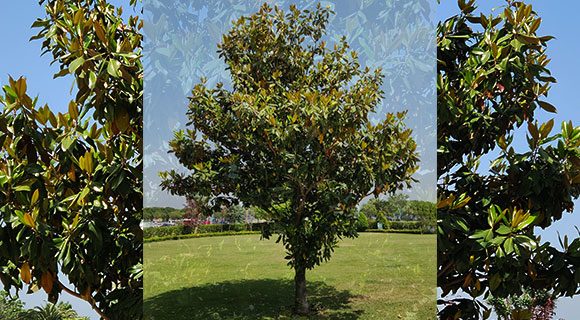
    Southern magnolia provides a dramatically different landscape appearance. This evergreen native can become a large specimen tree, reaching approximately 60 to 80 feet tall with a 40 to 50 foot spread. It produces large, fragrant white flowers and prefers moist, well-drained acidic soil.

    Crape myrtle is one of Georgia’s most popular summer-flowering landscape trees. Cultivar selection determines mature size, with forms ranging from small plants to trees exceeding 20 feet. Flowers can be white, pink, lavender, purple, or red. Full sun, adequate drainage, and appropriate watering encourage stronger flowering. Powdery mildew, Cercospora leaf spot, aphids, and crape myrtle bark scale are potential concerns.

    Proper maintenance is important for every selection. Prune according to flowering habits. UGA Extension recommends pruning spring-flowering trees such as dogwood and redbud after flowering, while summer-flowering plants such as crape myrtle can generally be pruned during dormancy before spring growth begins.

    1. Eastern Redbud
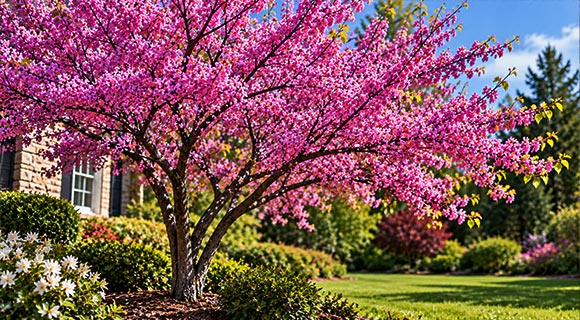
    flowering trees for roswell georgia landscapes cercis canadensis

    Scientific name: Cercis canadensis

    Mature height: Approximately 20-30 feet
    Canopy spread: Approximately 18-25 feet
    Soil preference: Moist, well-drained soil; adaptable to many landscape conditions
    Water needs: Moderate, particularly during establishment and extended dry periods
    Pruning and care: Prune after flowering when necessary. Remove dead, damaged, crossing, or poorly positioned branches. Avoid unnecessary heavy pruning.
    Disease and infestation issues: Can experience canker, verticillium wilt, leaf spots, and insect problems under stressful conditions.
    Flowering season: Early spring, generally once annually
    Bloom color: Pink, lavender, or occasionally white

    Eastern redbud is particularly useful when a property owner wants spring color without committing to a large canopy. UGA lists it as a Georgia-hardy flowering tree and reports a mature size around 20 to 30 feet.

    Its flowers appear directly on branches and twigs, creating an especially noticeable spring display. Planting in well-drained soil with adequate moisture can support healthy growth.

    2. Flowering Dogwood
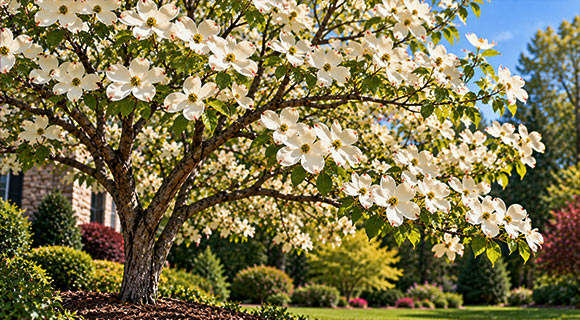
    flowering trees for roswell georgia landscapes cornus florida

    Scientific name: Cornus florida

    Mature height: Approximately 15-25 feet
    Canopy spread: Approximately 15-30 feet
    Soil preference: Moist, well-drained, acidic soil
    Water needs: Moderate; supplemental water may be needed during dry periods.
    Pruning and care: Prune after flowering for routine shaping and maintenance. Remove dead or diseased branches when needed. Mulching helps maintain more consistent root temperatures and moisture.
    Disease and infestation issues: Powdery mildew and anthracnose can occur. Stress and poor site conditions can increase problems.
    Flowering season: March-April, generally once annually
    Bloom color: White, pink, or rose

    Flowering dogwood is one of the most recognizable flowering trees in Georgia. UGA Extension recommends light shade and adequate moisture, cautioning against wet planting sites.

    Dogwoods also provide seasonal interest through red fruit and attractive fall foliage.

    3. Downy Serviceberry
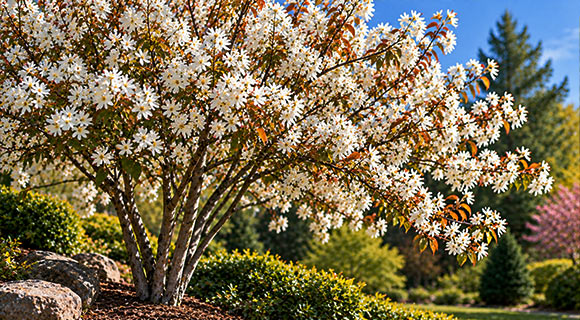
    flowering trees for roswell georgia landscapes amelanchier arborea

    Scientific name: Amelanchier arborea

    Mature height: Approximately 15-25 feet
    Canopy spread: Approximately 15-20 feet
    Soil preference: Acidic, well-drained soil with adequate moisture
    Water needs: Moderate; maintain moisture during establishment and dry weather
    Pruning and care: Prune selectively after flowering when needed. Remove dead, damaged, or crossing branches and maintain natural form.
    Disease and infestation issues: Rust, powdery mildew, fruit rot, leaf miners, borers, mites, and other pests can occur.
    Flowering season: Early spring, generally once annually
    Bloom color: White

    Downy serviceberry is an excellent option for homeowners seeking several seasons of interest from one small tree. UGA describes it as a flowering specimen tree with white flowers in early April, followed by purplish-blue fruit and potentially attractive fall color.

    Its relatively modest size also makes it easier to incorporate into smaller residential landscapes.

    4. Southern Magnolia
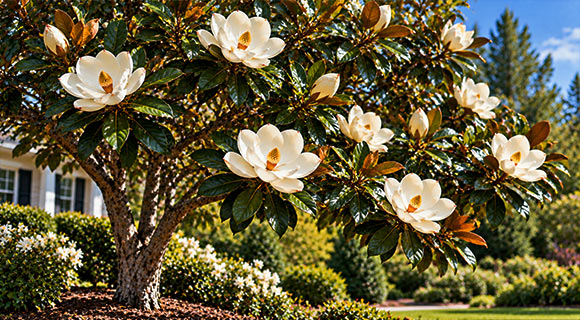
    flowering trees for roswell georgia landscapes magnolia grandiflora

    Scientific name: Magnolia grandiflora

    Mature height: Approximately 60-80 feet
    Canopy spread: Approximately 40-50 feet
    Soil preference: Moist, well-drained, acidic soil
    Water needs: Moderate; young trees need consistent moisture while established trees can tolerate some variation.
    Pruning and care: Allow adequate room for mature growth. Remove dead or problematic branches and prune selectively when necessary.
    Disease and infestation issues: Generally has few serious pest problems, although magnolia scale can become significant.
    Flowering season: Late spring through summer, with recurring flowers
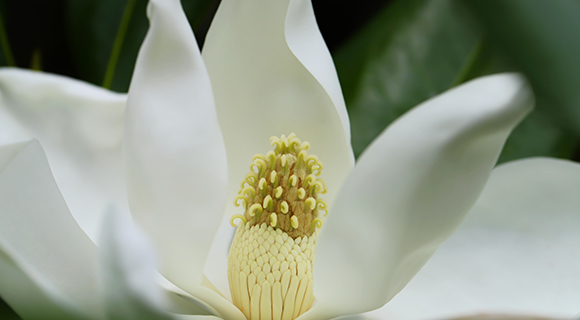
    Bloom color: Large, fragrant white

    Southern magnolia is a major landscape specimen rather than a small ornamental tree. UGA notes that it adapts well to a variety of soils and has relatively few pest problems. It prefers moist, well-drained acidic soil and can tolerate some wet-dry fluctuations.

    Because mature magnolias can become very large, homeowners should plan carefully before planting one near buildings, driveways, utility lines, or other structures.

    Magnolia scale is a pest worth monitoring. Heavy infestations can contribute to branch dieback and produce honeydew that encourages sooty mold.

    5. Crape Myrtle
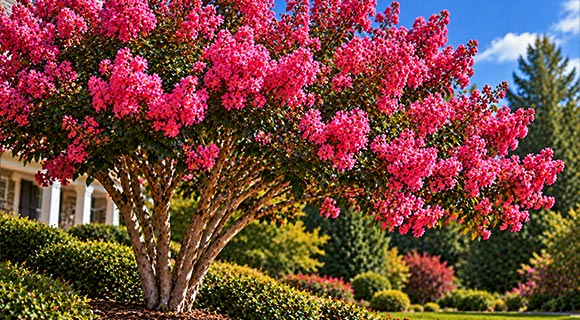
    flowering trees for roswell georgia landscapes crape myrtle

    Scientific name: Lagerstroemia indica

    Mature height: Approximately 6-30 feet, depending on cultivar
    Canopy spread: Approximately 4-15 feet, depending on cultivar
    Soil preference: Well-prepared, well-drained soil
    Water needs: Moderate during establishment; established trees tolerate drought.
    Pruning and care: Prune during late winter or early spring when needed. Remove suckers, dead branches, and crossing limbs. Avoid severe topping.
    Disease and infestation issues: Powdery mildew, Cercospora leaf spot, aphids, sooty mold, root rot, and crape myrtle bark scale can occur.
    Flowering season: Summer, with cultivars offering extended flowering periods
    Bloom color: White, pink, lavender, purple, red

    Crape myrtle offers one of the longest and most reliable periods of summer color among popular Georgia flowering trees. UGA notes that cultivar selection can dramatically change mature size, while newer varieties can provide improved disease resistance.

    One important maintenance rule is to avoid aggressive topping. Proper pruning preserves natural structure and reduces problems associated with excessive suckering and weak growth.

    When Should a Roswell Property Owner Call an Arborist?
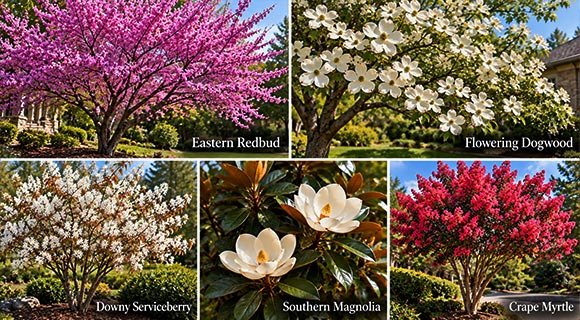
     

    flowering trees species for roswell georgia landscapes

    An arborist can help when a homeowner is uncertain about tree health, structural stability, pruning requirements, or appropriate removal. Professional evaluation is particularly important when a tree has significant deadwood, cavities, trunk cracks, storm damage, disease symptoms, pest infestations, exposed roots, or branches threatening buildings and utility lines.

    Property owners should also consider professional assistance before planting a large tree near a structure. Selecting the right species and location can prevent future conflicts and reduce expensive corrective pruning.

    If a tree has experienced storm damage or developed significant structural concerns, avoid climbing or attempting major removal work yourself. Large branches and unstable trees can create serious hazards.

    When To Fertilize, Prune, or Remove Trees and Shrubs

    Fertilization should be based on plant needs and site conditions, not an automatic schedule. Soil testing can help determine whether nutrients are actually needed. Over-fertilizing can create excessive growth without solving underlying problems.

    Prune according to plant biology. Prune spring-flowering trees (redbud and dogwood) after flowering. Crape myrtle, which flowers on new growth, can generally be pruned during dormancy before spring growth begins.

    Consider removal when a tree becomes hazardous, severely diseased, structurally unsound, dead, or poorly positioned and cannot be reasonably managed through pruning or treatment.

    Call Greens and Trees Roswell Ga 404-680-0041

    flowering trees for roswell georgia landscapes

    Greens and Trees Roswell Ga, together with New Image Tree Solutions, provides professional tree care and landscape services for property owners throughout Northwest Metro Atlanta.

    Choosing, planting, pruning, fertilizing, treating, or removing trees requires an understanding of plant biology and local growing conditions. Greens and Trees Roswell Ga can help property owners evaluate landscape trees and determine appropriate maintenance strategies.

    Professional tree services can help address pruning needs, disease and pest concerns, storm damage, hazardous trees, and removal projects. An arborist evaluation can also provide valuable information when a homeowner is uncertain whether a tree should be treated, pruned, monitored, or removed.

    Call Greens and Trees Roswell Ga at 404-680-0041 for professional tree care assistance.

    Flowering Trees for Roswell Landscapes

    You discovered five flowering tree species that can work well in Roswell landscapes: Eastern redbud, flowering dogwood, downy serviceberry, southern magnolia, and crape myrtle. You also learned their scientific names, mature dimensions, soil and water preferences, pruning requirements, common disease and pest concerns, flowering periods, and bloom colors. Roswell’s current USDA Zone 8a climate provides a favorable environment for these selections when the right tree is planted in the right site.

    Choosing an appropriate flowering tree and providing proper care can give a Roswell property years of seasonal color, wildlife value, shade, structure, and curb appeal. Correct planting location, appropriate irrigation, timely pruning, proper fertilization, and routine professional evaluation can help trees remain healthy while reducing avoidable maintenance problems.

    Ignoring mature size, soil conditions, water needs, disease risks, or pruning requirements can lead to weak growth, reduced flowering, pest and disease problems, property conflicts, and premature tree removal. Before planting or making major changes to an established landscape, consider having a qualified tree professional evaluate site conditions and tree health. Call Greens and Trees Roswell Ga at 404-680-0041 for assistance with maintaining healthier, safer, and more attractive landscapes.

    Greens and Trees Roswell Ga

     Roswell, GA 
    (404) 680-0041
  • 3 Small Trees for Compact Roswell Landscapes

    3 Small Trees for Compact Roswell Landscapes

    Limited yard space can create a real challenge for homeowners wanting shade, beauty, and structure without overwhelming their property. Large trees can crowd foundations, interfere with utilities, and require constant maintenance (incorrect species selection can lead to root damage or canopy overgrowth). Knowing which small trees thrive in compact landscapes can help you avoid costly mistakes and create a balanced outdoor space that remains manageable and visually appealing.

    Greens and Trees Roswell gathered information about small tree species suitable for compact Roswell landscapes to help property owners make informed planting decisions. This article outlines three ideal tree options, detailing growth habits, maintenance needs, and potential risks so you can confidently choose trees that enhance your property without creating long-term issues.

    Key Takeaways for Small Tree Species in Compact Roswell Yards

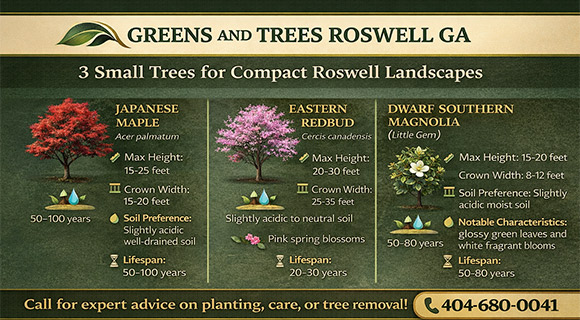
    infographic 3 small tree species for roswell ga compact properties

    Choosing appropriate trees for compact yards requires careful evaluation of growth characteristics, soil compatibility, and maintenance demands. Small trees provide visual interest and environmental benefits without overwhelming limited space, but selecting the wrong species can lead to overcrowding, root intrusion, or structural conflicts.

    One key takeaway is that mature size matters more than initial planting size. Many homeowners choose young trees without considering eventual height or canopy spread. Even trees labeled as small can exceed expectations if not properly maintained. Understanding mature dimensions helps ensure adequate spacing from structures, driveways, and utility lines.

    Soil conditions in Roswell also influence tree performance. Most residential areas feature clay-based soils with moderate drainage. Selecting species that tolerate slightly acidic to neutral pH levels improves establishment and long-term health. Amending soil during planting can enhance root development, but species selection remains the primary factor in success.

    Maintenance requirements vary significantly between species. Some trees require minimal pruning and naturally maintain a compact form, while others demand regular shaping to prevent overcrowding. Property owners should consider the time and cost associated with upkeep before planting. Trees with strong branch structure and slower growth rates often perform better in confined areas.

    Disease resistance and pest tolerance are equally important. Trees prone to fungal infections or insect infestations may struggle in the humid Georgia climate. Selecting resilient species reduces the need for chemical treatments and ongoing intervention. Monitoring for early signs of stress, such as leaf discoloration or branch dieback, allows for timely corrective action.

    Proper placement enhances both aesthetics and functionality. Trees should complement existing landscape design while providing shade, privacy, or seasonal interest. Strategic positioning can reduce energy costs by shading structures during summer while allowing sunlight penetration in cooler months.

    Finally, professional guidance ensures optimal results. Arborists can evaluate site conditions, recommend suitable species, and provide ongoing care strategies. Investing in expert advice at the planting stage prevents future complications and maximizes the long-term value of landscape improvements.

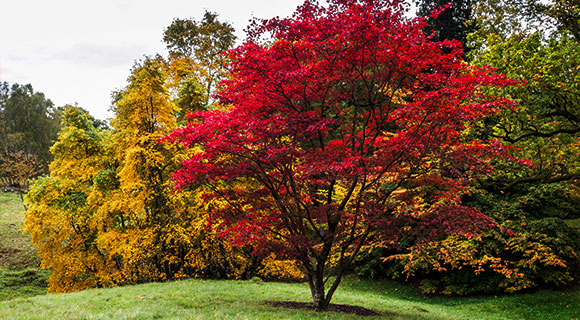
    1. Japanese Maple

    3 small tree species for roswell ga compact properties Japanese maple

    Scientific Name: Acer palmatum
    Maximum Height: 15 – 25 feet
    Typical Crown Width: 15 – 20 feet
    Preferred Soil Type and pH: Well-drained loamy soil with slightly acidic pH between 5.5 and 6.5
    Pruning Requirements: Minimal pruning needed – remove dead or crossing branches during the dormant season
    Evergreen or Deciduous: Deciduous

    Notable Characteristics: Japanese Maple is highly valued for its delicate foliage and vibrant seasonal color. Leaves display shades ranging from deep red to bright green, depending on cultivar. Its graceful branching pattern makes it ideal for focal points in small yards.

    Lifespan: 50 – 100 years with proper care

    Disease and Pest Problems: Susceptible to root rot in poorly drained soil. Aphids and scale insects may occasionally appear. Leaf scorch can occur during extreme heat or drought conditions.

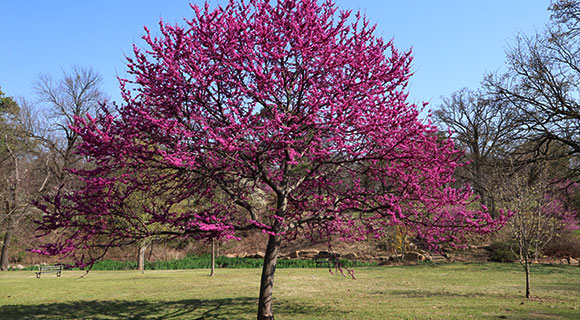
    2. Eastern Redbud

    3 small tree species for roswell ga compact properties eastern redbud

    Scientific Name: Cercis canadensis
    Maximum Height: 20 – 30 feet
    Typical Crown Width: 25 – 35 feet
    Preferred Soil Type and pH: Adaptable to various soils, including clay – prefers slightly acidic to neutral pH between 6.0 and 7.0
    Pruning Requirements: Light pruning required to maintain structure and remove weak branches
    Evergreen or Deciduous: Deciduous

    Notable Characteristics: Eastern Redbud produces striking pink-to-purple blooms in early spring before leaves emerge. Heart-shaped leaves provide soft texture throughout the growing season. This tree works well as an ornamental accent in compact spaces.

    Lifespan: 20 – 30 years

    Disease and Pest Problems: Prone to canker diseases and verticillium wilt. Proper watering and pruning help reduce stress-related issues.

    3. Dwarf Southern Magnolia

    3 small tree species for roswell ga compact properties southern magnnolia

    Scientific Name: Magnolia grandiflora ‘Little Gem’
    Maximum Height: 15 – 20 feet
    Typical Crown Width: 8 – 12 feet
    Preferred Soil Type and pH: Moist well-drained soil with slightly acidic pH between 5.0 and 6.5
    Pruning Requirements: Minimal pruning – occasional shaping to maintain compact form
    Evergreen or Deciduous: Evergreen

    Notable Characteristics: This compact magnolia offers glossy green leaves and fragrant white blooms. Its narrow growth habit makes it ideal for tight spaces or privacy screening.

    3 small tree species for roswell ga compact properties magnnolia grandiflora flower

    Lifespan: 50 – 80 years

    Disease and Pest Problems: Generally resistant, but may experience scale insects or leaf spot. Good airflow reduces disease risk.

    Call Greens and Trees Roswell Ga 404-680-0041

    3 small tree species for roswell ga compact properties

    Professional evaluation becomes essential when tree health, placement, or maintenance needs exceed typical homeowner knowledge. Greens and Trees Roswell Ga together with New Image Tree Solutions, provides expert arborist services, including tree selection, planting guidance, pruning, and removal.

    You should call when:

    • Trees show signs of disease, such as discoloration or dieback
    • Branches grow too close to structures or power lines
    • Root systems begin affecting foundations or walkways
    • Storm damage compromises stability
    • You need help selecting trees for a limited space

    Arborists assess soil conditions, structural integrity, and overall health to recommend appropriate solutions. This ensures trees remain safe, healthy, and well-suited to your landscape.

    When to Have Trees, Shrubs, and Plants Fertilized, Pruned, or Removed

    3 small tree species for roswell ga compact properties pruning trimming and removal

    Proper maintenance timing plays a critical role in plant health and landscape performance.

    Fertilization
    Fertilize during early spring or late fall when roots actively absorb nutrients. Avoid over-fertilization, which can stress plants and encourage weak growth.

    Pruning
    Prune during the dormant season for most species to promote healthy growth. Remove dead or damaged branches immediately, regardless of the season. Light shaping throughout the growing season may be necessary for ornamental trees.

    Removal
    Removal becomes necessary when:

    • The tree shows extensive disease that cannot be treated
    • Structural damage creates a safety hazard
    • Root systems cause property damage
    • The tree outgrows its available space
    • Infestation spreads beyond control

    Timely removal prevents further damage and allows replacement with more suitable species.

    Small Trees for Compact Landscapes

    This article explored three small tree species well-suited for compact Roswell landscapes, including Japanese Maple, Eastern Redbud, and Dwarf Southern Magnolia. You learned how each tree grows, what conditions it prefers, and how to manage potential risks related to disease, pests, and maintenance. Understanding these factors allows for informed decisions that support both aesthetics and functionality.

    Applying this knowledge leads to a well-balanced landscape that enhances property value while remaining easy to maintain. Proper tree selection, placement, and care create a visually appealing environment that thrives in limited space without causing structural or maintenance challenges.

    Ignoring these considerations can result in overcrowded landscapes, unhealthy trees, and costly repairs. Poor species selection often leads to excessive pruning, disease issues, or premature removal, reducing long-term value and increasing frustration for property owners.

    Greens and Trees Roswell Ga

     Roswell, GA 
    (404) 680-0041
  • Three Pine Tree Species for Roswell, Georgia, Yards

    Three Pine Tree Species for Roswell, Georgia, Yards

    Want to enhance your yard with year-round greenery and natural shade? Choosing the right pine tree species for Roswell, Georgia, can transform your landscape with height, texture, and lasting beauty, while boosting property value and curb appeal.

    greensandtreesroswellga.com gathered details on soil conditions, spacing, watering, and pruning for three resilient pine tree species well-suited to thrive in the Roswell, Georgia, region.

    Roswell, Georgia, Pine Trees

    roswell georgia pine tree species information

    Roswell homeowners often face a challenge when selecting trees for their landscapes, notably pines. Planting the wrong pine species can lead to excessive maintenance, disease problems, pest infestations, or even hazardous falling branches during storms. This not only costs time and money but can also damage property and reduce curb appeal. Identifying which pine species thrive in Roswell’s USDA Hardiness Zone 7b helps property owners avoid these issues while enhancing the beauty and value of their yards. Consider the following tree species:

    1. Loblolly Pine (Pinus taeda)

    roswell georgia pinus taeda pine tree species

    Loblolly pine is one of Georgia’s most common and fastest-growing pines. Known for its tall, straight trunk and medium to dark green needles, it makes an excellent choice for creating privacy screens or windbreaks.

    • Height: 60–90 feet
    • Crown Width: 25–35 feet
    • Advantages: Rapid growth, strong adaptability to various soil types, and provides excellent shade and habitat for birds.
    • Disadvantages: Vulnerable to ice damage during winter storms; large size may be unsuitable for small yards.
    • Pest and Disease Threats: Southern pine beetle, fusiform rust, needle blight.
    • Expected Lifespan: 70–100 years under proper conditions.
    • Maintenance Requirements: Regular inspections for pest detection and pruning of lower limbs to improve airflow.

    2. Eastern White Pine (Pinus strobus)

    roswell georgia pinus strobus pine tree species

    Eastern white pine is a graceful tree with soft, bluish-green needles and an airy, open crown. It grows relatively fast and is valued for its ornamental appeal in residential landscapes.

    • Height: 50–80 feet
    • Crown Width: 20–40 feet
    • Advantages: Elegant appearance, relatively low maintenance, provides year-round greenery.
    • Disadvantages: Susceptible to wind damage; may struggle in extremely compacted or clay-heavy soils.
    • Pest and Disease Threats: White pine blister rust, pine sawfly, and weevil infestations.
    • Expected Lifespan: 100–200 years in optimal conditions.
    • Maintenance Requirements: Occasional structural pruning, regular mulching to conserve moisture, and pest inspections in spring and summer.

    3. Longleaf Pine (Pinus palustris)

    roswell georgia pinus palustris pine tree species

    Longleaf pine is a historically significant tree in Georgia, valued for its resilience and distinctive long needles. It has a slow start but matures into a sturdy, long-lived tree.

    • Height: 60–110 feet
    • Crown Width: 30–40 feet
    • Advantages: Extremely durable, drought-tolerant once established, resistant to many pests and diseases.
    • Disadvantages: Requires patience due to slow early growth; may not be suitable for homeowners seeking quick results.
    • Pest and Disease Threats: Rarely affected by severe infestations; occasional bark beetle issues are possible.
    • Expected Lifespan: 150–300 years.
    • Maintenance Requirements: Minimal once established; periodic removal of dead lower branches recommended for safety.

    When to Call an Arborist

    roswell georgia arborist for pine tree species

    An arborist should be called when:

    • A pine tree shows sudden yellowing or browning needles
    • There is visible pest activity, such as boring holes or sawdust
    • Storm damage causes leaning or broken limbs
    • Tree roots interfere with foundations, driveways, or sidewalks
    • Large branches threaten power lines or structures
    • Prompt professional assessment can prevent safety hazards and preserve tree health.

    Why Call New Image Tree Solutions 404-680-0041

    New Image Tree Solutions offers expert tree care tailored to Roswell’s unique environmental conditions. The company provides:

    • Certified arborists with decades of experience
    • Comprehensive tree health assessments
    • Pruning, trimming, and safe removals
    • Emergency storm damage response
    • Eco-friendly disposal and recycling practices

    Their team understands the growth patterns and maintenance needs of Georgia’s native and ornamental pines, ensuring every tree receives the right care at the right time.

    When to Prune or Remove Trees, Shrubs, and Plants for Safety

    • Prune: Late winter to early spring before new growth begins; summer pruning may be needed for hazardous limbs.
    • Remove: Immediately if a tree is dead, structurally unsound, or poses an imminent threat to property or safety.
    • Shrubs and Plants: Trim after flowering or as needed to prevent overgrowth that obstructs walkways or visibility.

    Pruning enhances air circulation, reduces disease risks, and improves a tree’s appearance, while timely removal prevents damage during severe weather.

    Key Considerations for Hardy Pine Trees in Roswell, Georgia

    roswell georgia hardy pine tree species

    Pine trees can give year-round greenery, a wildlife habitat, and value. However, ensuring long-term health and safety requires attention to species selection, placement, and care.

    1. Climate and Soil Compatibility

    Roswell falls within USDA Hardiness Zone 7b, where winters are mild and summers are hot and humid. Choosing pines adapted to this climate, like loblolly, eastern white, and longleaf, ensures stronger growth. For overly compacted clay, Soil pH and drainage must also be considered to avoid stressing root systems.

    2. Space Requirements

    Pines need adequate spacing to allow air movement between branches, which helps reduce fungal issues. Crowding trees too closely increases competition for nutrients and sunlight, leading to weakened growth.

    3. Pest and Disease Prevention

    Regular inspections detect early signs of pine beetles, fungal infections, or needle diseases. Early intervention reduces tree loss and prevents pests from spreading to healthy trees.

    4. Storm Preparedness

    Roswell experiences seasonal thunderstorms, which can cause heavy branch drop. Proactive pruning reduces the weight of overextended limbs and lowers the risk of storm-related damage.

    5. Lifespan Planning

    Different pine species have varying lifespans. Homeowners should plan for the replacement of shorter-lived pines while preserving heritage species, like longleaf pines, for future generations.

    6. Professional Maintenance

    Working with a certified arborist ensures proper pruning techniques, problem diagnosis, and safe tree removal (when necessary). Partnering with a trusted local provider, like New Image Tree Solutions, gives homeowners peace of mind.

    Pine Trees for Roswell, Georgia

    In this article, you discovered important soil, spacing, watering, and pruning details for three resilient pine tree species suited to Roswell, Georgia, within USDA Plant Hardiness Zone 7b.

    Selecting and planting the right pine trees in the right location adds long-lasting shade, natural beauty, and increased curb appeal that can enhance your property for decades.

    Ignoring zone suitability or proper placement risks tree failure, costly landscape damage, and expensive removal services that could have been avoided with the right choices from the start.

    Sources:
    plants.ces.ncsu.edu/plants/pinus-taeda
    hort.ifas.ufl.edu/trees/PINSTRA.pdf
    edis.ifas.ufl.edu/publication/ST469

    Greens and Trees Roswell Ga

     Roswell, GA 
    (404) 680-0041

  • Hardy Tree Species for Roswell Georgia

    Hardy Tree Species for Roswell Georgia

    Looking to add dimension and volume to your landscape? Knowing which tree species to plant in Roswell, Georgia, will help you achieve a beautiful, structured, and shaded landscape, increasing your home’s value and curb appeal.

    greensandtreesroswellga.com gathered information about soil, spacing, watering, and pruning for three hardy tree species in the Roswell, Georgia, region.

    Hardy Trees for Roswell Landscapes

    Roswell, GA, experiences a warm climate with mild winters and hot, humid summers. Located in USDA Hardiness Zone 7b, this region calls for trees that thrive under seasonal heat and occasional cold snaps. Garden enthusiasts seek resilient, low-maintenance trees that add beauty and structure to outdoor spaces. Consider the following tree species for your Roswell, Georgia landscape:

    1. Eastern Redbud (Cercis canadensis)

    Roswell georgia hardy tree species cercis canadensis

    Eastern Redbud stands out as a small ornamental tree, admired for heart-shaped leaves and striking pink blossoms emerging in early spring. This species offers vibrant color and a delicate structure suited for yards and gardens across Roswell.

    Planting & Growing Tips:

    Timing: Plant early spring after frost risk ends. This promotes strong root establishment.
    Soil: Choose a well-draining substrate; mix organic compost to boost nutrient content.
    Spacing: Provide ample room for canopy expansion; ensure sufficient air circulation.
    Watering: Water regularly during the first growing season; let the soil dry between sessions.
    Pruning: Prune in late winter before bud break; remove dead or weak branches to encourage healthy growth.

    Common Diseases & Treatments:

    Canker: Look for sunken, discolored lesions on the bark. The remedy involves removing infected limbs and applying the appropriate fungicide.
    Leaf Spot: Brown spots may appear on foliage. Improve air circulation and avoid overhead watering; use fungicide when symptoms intensify.

    2. Southern Magnolia (Magnolia grandiflora)

    Roswell georgia hardy tree species magnolia grandiflora

    Southern Magnolia brings evergreen elegance with glossy, dark green leaves and large, creamy blossoms. This stately tree lends year-round visual interest while tolerating the heat and humidity in Roswell.

    Planting & Growing Tips:

    Timing: Plant early spring to support root establishment before summer heat arrives.
    Soil: Require well-draining, slightly acidic substrate; mix in organic amendments to enhance fertility.
    Spacing: Ensure ample room for canopy development; This promotes healthy branch spread.
    Watering: Water deeply during establishment; once mature, reduce frequency while ensuring deep, occasional soaking.
    Pruning: Prune in late winter or early spring; remove damaged or crossing branches to shape the canopy and improve airflow.

    Common Diseases & Treatments:

    Leaf Scorch: Brown, wilted edges on leaves may indicate water stress. The remedy involves adjusting watering practices and applying mulch to conserve moisture.
    Powdery Mildew: White, powdery coating sometimes appears on foliage under humid conditions. Increase air circulation and treat with fungicide when necessary.

    3. Crape Myrtle (Lagerstroemia indica)

    Roswell georgia hardy tree species lagerstroemia indica

    Crape Myrtle is a deciduous tree with long-lasting summer blooms and attractive bark. Ideal for all landscapes, its vibrant clusters provide seasonal color and are well-suited for Roswell’s warm, humid climate.

    Planting & Growing Tips:

    Timing: Plant during late spring when temperatures stabilize; supports strong root formation.
    Soil: Use a well-draining substrate; mix in compost to improve structure and fertility.
    Spacing: Space trees to avoid overcrowding; ensures ample light penetration and air circulation.
    Watering: Maintain regular watering during the first year; later, adopt deep, infrequent watering to promote drought resistance.
    Pruning: Prune in late winter before bud break; Remove crossing branches and thin out the canopy to shape the tree and enhance airflow.

    Common Diseases & Treatments:

    Powdery Mildew: White, dusty spots on leaves may appear, especially when humidity remains high. The remedy includes proper spacing, avoiding overhead watering, and applying fungicide when symptoms emerge.
    Canker: Discolored, sunken areas on the trunk and branches signal canker infection. Remove affected portions promptly and treat affected areas with a suitable fungicide to prevent spread.

    Roswell, GA USDA Plant Hardiness Zone

    Roswell, GA, is in USDA Plant Hardiness Zone 7b, where winters remain gentle, and summers bring high temperatures and humidity. This climate demands trees that thrive in heat while tolerating occasional cold snaps. Understanding local conditions helps choose species that flourish and maintain vibrant turf year-round.

    The USDA Hardiness Zone Map helps in selecting species adapted to local weather. Roswell, GA, sits in Zone 7b, with mild winters and summers that deliver high heat and humidity. This vital information guides choices toward trees that flourish with minimal fuss.

    Read more about the USDA Plant Hardiness Zone map and use its interactive tool HERE.

    Hardy Trees for Roswell, Georgia

    Roswell georgia hardy tree species zone 7b

    Selecting hardy tree species well adapted to local conditions transforms outdoor spaces into beautiful, sustainable landscapes. Eastern Redbud, Southern Magnolia, and Crape Myrtle each bring distinctive beauty and practical benefits. Embracing detailed planting and growing tips ensures strong establishment and long-term health. Regular watering during early stages, adequate spacing to reduce humidity buildup, and timely pruning help promote vigorous growth and resilience.

    Professional disease management further supports thriving trees. Early detection and treatment of canker, leaf spot, leaf scorch, and powdery mildew reduce damage and maintain tree vigor. Adhering to recommended cultural practices—like choosing well-draining substrates, applying organic compost, and scheduling pruning before active growth—ensures trees remain healthy and visually appealing throughout seasonal changes.

    Contact the professionals at New Image Tree Solutions for your tree care needs and arborist services.

    The USDA Hardiness Zone Map proves invaluable when selecting trees suited to Roswell, GA, conditions. Home gardeners benefit from understanding that Zone 7b presents unique challenges and opportunities. With informed decisions and proactive care, each tree can become a lasting centerpiece in residential landscapes, contributing beauty, shade, and habitat for local wildlife.

    Investing in quality tree selections enhances curb appeal and supports ecological balance. By following detailed planting, watering, and pruning guidelines, homeowners create outdoor spaces that endure environmental stresses while offering seasonal splendor. Embrace Eastern Redbud, Southern Magnolia, and Crape Myrtle to build a resilient landscape that delights throughout the year.

    Roswell Georgia Hardy Tree Species

    In this article, you discovered soil, spacing, watering, and pruning information on three hardy tree species for Roswell, Georgia, USDA Plant Hardiness Zone 7b.

    Planting the right trees in the right place provides decades of enjoyment, shade, beauty, and curb appeal.

    Failure to plant trees where they are free to grow and are hardiness zone appropriate can result in costly damages and removal fees when they fail.

    Sources:
    planthardiness.ars.usda.gov
    extension.uga.edu/publications/detail.html?number=C1013&title=shade-trees-for-georgia
    hort.ifas.ufl.edu/database/documents/pdf/tree_fact_sheets/maggraa.pdf
    plants.ces.ncsu.edu/plants/lagerstroemia-indica

    Greens and Trees Roswell Ga

     Roswell, GA 
    (404) 680-0041