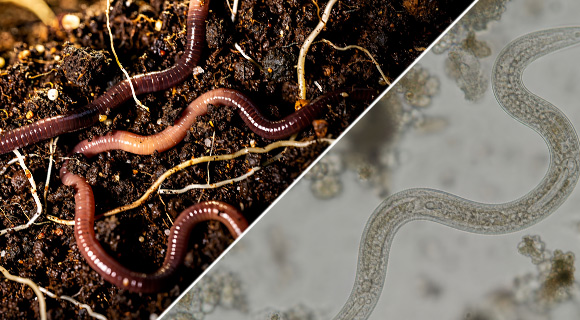
Healthy soil does more than keep plants upright. When soil is compacted, depleted, excessively wet, or biologically inactive, trees, shrubs, and landscape plants can struggle. Understanding how worms and beneficial nematodes contribute to soil health can help property owners recognize problems earlier and create conditions that support stronger roots, healthier plants, and more resilient landscapes.
Greens and Trees Roswell Ga gathered information about the benefits worms and nematodes provide in healthy soil, what nematodes are, how to keep beneficial soil organisms thriving, and warning signs that indicate soil biology may be under stress. This guide also explains when property owners should call an arborist and when trees, shrubs, and plants may benefit from fertilization, pruning, or removal.
Key Takeaways for Worms and Nematodes in Healthy Soil
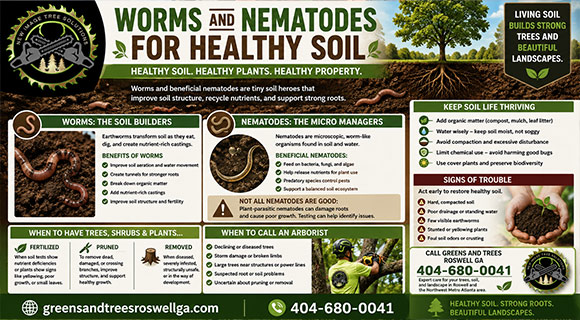
Worms and nematodes represent two important groups within a healthy soil ecosystem. Although they are very different organisms, both contribute to biological activity that helps soil support plants.
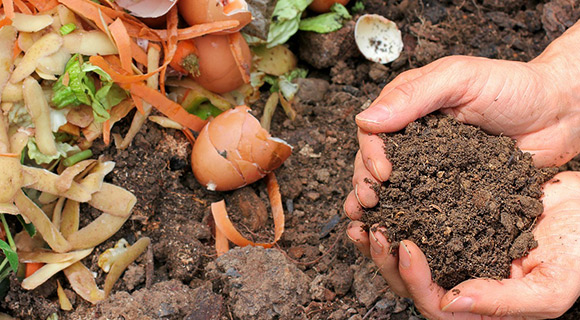
Earthworms move through soil as they feed and create channels. These channels can improve aeration, water movement, and root penetration. Their castings also contain nutrients and organic material that can benefit plants. As worms consume decomposing material, they help break larger organic particles into forms that microorganisms can process more easily.
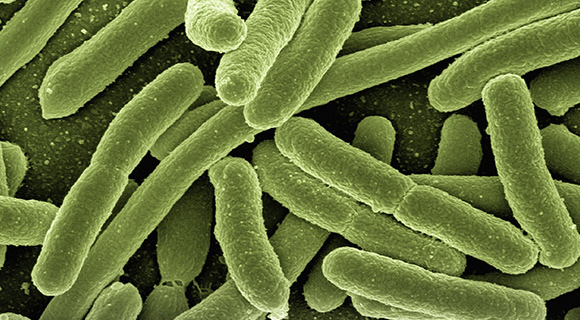
Nematodes are microscopic, worm-shaped organisms that live throughout soil and water. Not all nematodes are harmful. Beneficial species feed on bacteria, fungi, algae, and other microscopic organisms. Predatory nematodes can feed on other small soil organisms, contributing to natural biological regulation. Some nematodes, however, attack plant roots and can cause significant damage.
A diverse soil ecosystem generally provides greater biological balance. Organic matter, moderate moisture, adequate oxygen, and reduced soil disturbance help create favorable conditions for beneficial organisms.
Property owners should avoid assuming that every soil nematode represents a threat. Laboratory testing may be necessary to determine whether plant-parasitic nematodes are present. Root damage, stunted growth, yellowing foliage, and unexplained decline may warrant professional evaluation.
Worm populations can decline when soil becomes extremely dry, waterlogged, compacted, contaminated, or depleted in organic matter. Beneficial nematodes can also become less active when environmental conditions become unfavorable.
Improving soil conditions can help restore biological activity. Adding appropriate organic matter, reducing unnecessary soil disturbance, maintaining proper irrigation, improving drainage, and avoiding indiscriminate pesticide use can support a healthier soil food web.
Healthy soil should not be viewed as sterile soil. A living community of microorganisms, worms, nematodes, insects, fungi, and other organisms contributes to nutrient cycling and soil structure.
Property owners should also remember that more organisms do not automatically mean healthier soil. Balance matters. A sudden decline in plant health may result from disease, insects, nutrient deficiencies, poor drainage, root damage, compacted soil, or plant-parasitic nematodes.
Professional evaluation can help identify the actual cause rather than treating symptoms.
What Do Worms Do for Soil?
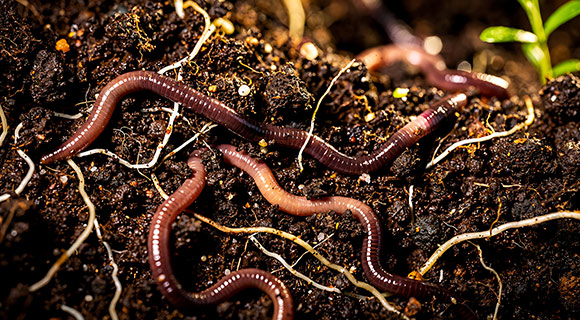
Earthworms are among the most recognizable soil organisms. Their activity can influence soil structure and nutrient cycling in several ways.
Improve Soil Aeration
Worm tunnels create pathways through soil. These channels can allow air and water to move more effectively through root zones.
Improved aeration is particularly important for plant roots because roots require oxygen for healthy function.
Improve Water Movement
Healthy worm activity can create channels that allow water to infiltrate soil rather than simply running across its surface.
This can reduce certain forms of runoff while helping moisture reach deeper root zones.
Process Organic Material
Earthworms consume organic material and produce castings containing nutrients and microorganisms.
Their activity helps integrate organic material into soil while supporting decomposition.
Improve Soil Structure
Worm movement and casting production can contribute to aggregation, creating soil particles that hold together while maintaining spaces for air and water.
Good aggregation can help prevent soil from becoming excessively dense.
What Are Nematodes?
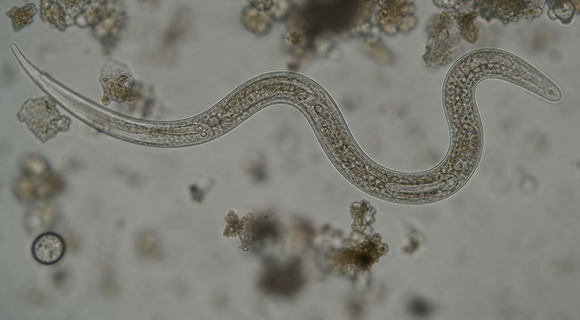
Nematodes are microscopic roundworms found in soil, freshwater, marine environments, plants, and animals.
In soil, nematodes occupy different positions within the food web.
Some feed primarily on bacteria. Others consume fungi, while predatory species feed on other microscopic organisms. Plant-parasitic nematodes use specialized mouthparts to feed on plant tissues, particularly roots.
Beneficial nematodes can contribute to nutrient cycling because they consume microorganisms and release nutrients through their waste.
Plant-parasitic nematodes represent a different concern. Certain species can damage roots, interfere with water and nutrient uptake, and contribute to symptoms such as stunted growth and yellowing foliage.
Because different nematode species behave differently, testing can provide more useful information than simply assuming nematodes are responsible for declining plants.
How to Keep Worms and Beneficial Nematodes Thriving
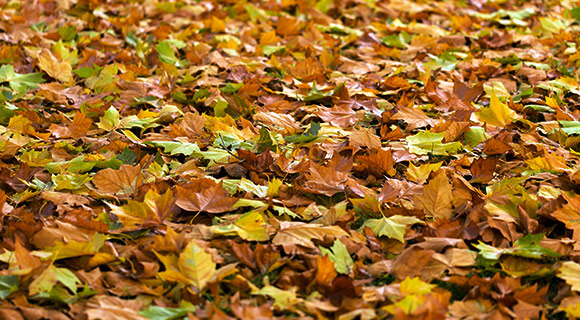
Healthy soil biology depends upon suitable environmental conditions.
Maintain Organic Matter
Compost, leaf litter, aged organic material, and other appropriate amendments can provide food sources for organisms within the soil food web.
Organic matter also improves soil structure and moisture retention.
Avoid Excessive Soil Disturbance
Repeated digging, tilling, and heavy equipment traffic can disrupt soil structure and biological communities.
Limit unnecessary disturbance around established trees and landscape plants.
Maintain Appropriate Moisture
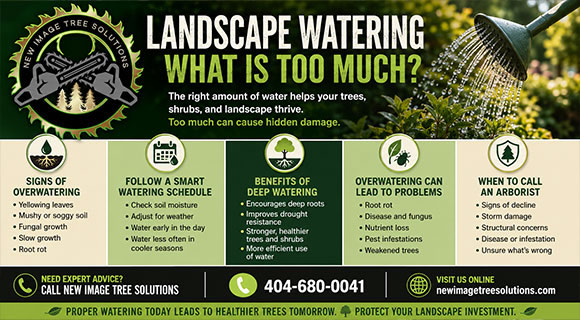
Soil organisms need moisture, but excessive water can eliminate oxygen from soil pores.
Avoid allowing soil to remain saturated for extended periods. At the same time, prolonged drought can reduce biological activity and threaten sensitive organisms.
Improve Compacted Soil
Compaction reduces pore space and restricts movement of air and water.
Aeration, organic matter management, and reducing foot or vehicle traffic can help restore healthier soil conditions.
Use Chemicals Carefully
Broad or unnecessary pesticide applications can affect non-target organisms, including beneficial soil life.
Use pest control products according to label instructions and consider whether treatment is actually necessary before applying chemicals.
Signs Soil Organisms May Be in Trouble
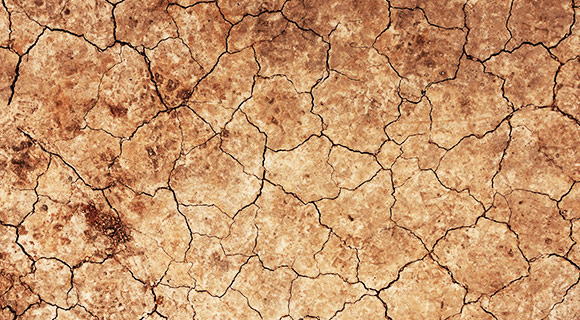
You cannot always determine soil biological health simply by looking at the surface. However, several clues can indicate that soil conditions require attention.
Potential warning signs include:
- Very dry soil
- Persistent standing water
- Hard, compacted ground
- Poor drainage
- Low organic matter
- Few visible earthworms
- Reduced plant growth
- Repeated plant decline
- Foul soil odors
- Excessive runoff
- Soil crusting
- Poor root development
A lack of visible worms does not automatically mean soil is unhealthy. Earthworm populations vary by soil type, moisture, organic material, temperature, and other environmental conditions.
Likewise, beneficial nematodes cannot be evaluated reliably through casual observation because they are microscopic.
What To Do Before Beneficial Soil Life Declines
If soil appears stressed, start by identifying why.
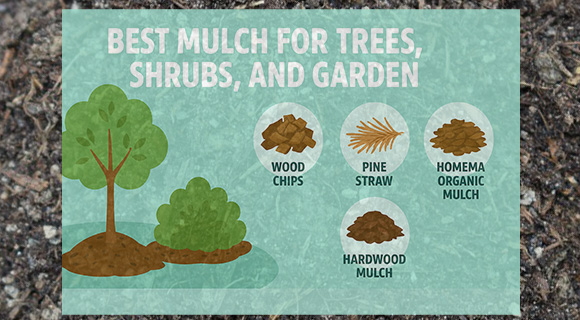
Check irrigation practices, drainage, compaction, organic matter, mulch depth, sunlight exposure, and plant health.
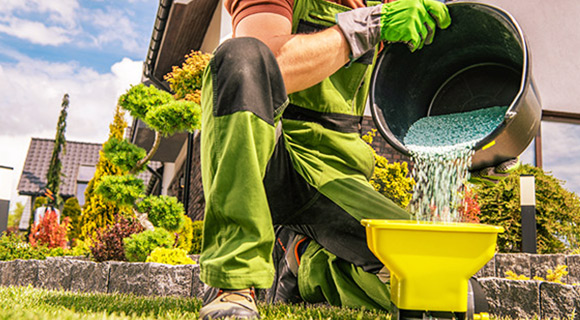
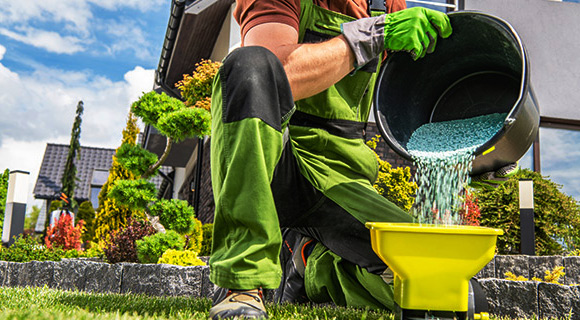
Avoid immediately applying fertilizer because a plant looks unhealthy. Fertilizer cannot correct every soil problem and may worsen certain conditions when applied unnecessarily.
A soil test can provide information about pH and nutrient levels. Additional laboratory testing may help identify suspected plant-parasitic nematodes.
Improving soil conditions gradually is usually more beneficial than making dramatic changes.
When To Have Trees, Shrubs, and Plants Fertilized, Pruned, or Removed
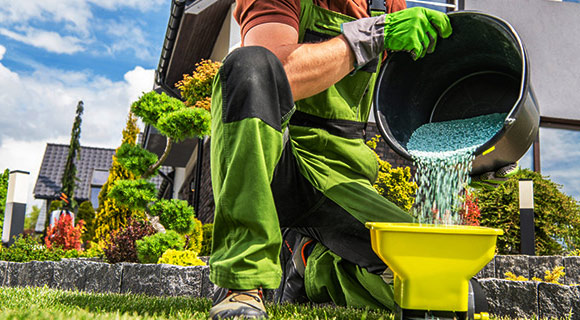
Different landscape situations require different types of care.
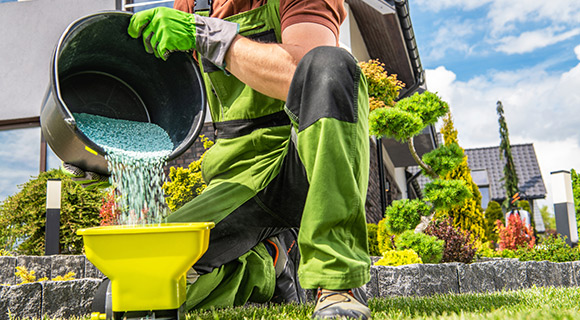
Fertilization
Plants may benefit from fertilization when soil testing or professional evaluation identifies nutrient deficiencies.
Signs that may justify further evaluation include:
- Poor growth
- Pale foliage
- Reduced flowering
- Premature leaf drop
- Nutrient deficiency symptoms
Fertilizer should match plant requirements and soil conditions rather than follow a one-size-fits-all schedule.
Pruning
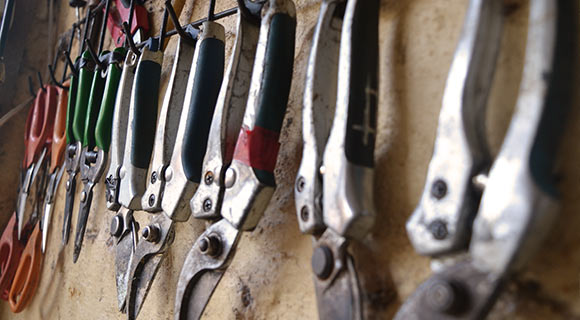
Pruning can improve structure, remove dead or damaged branches, improve clearance, and address certain growth problems.
Common reasons for pruning include:
- Dead branches
- Storm damage
- Poor branch structure
- Branches blocking structures
- Clearance issues
- Excessive growth
- Diseased limbs
Improper pruning can damage trees, so significant pruning should be handled by trained professionals.
Tree and Shrub Removal
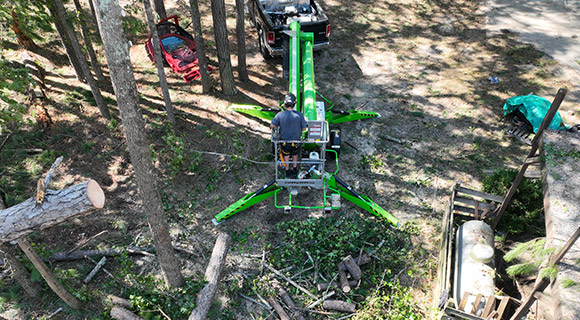
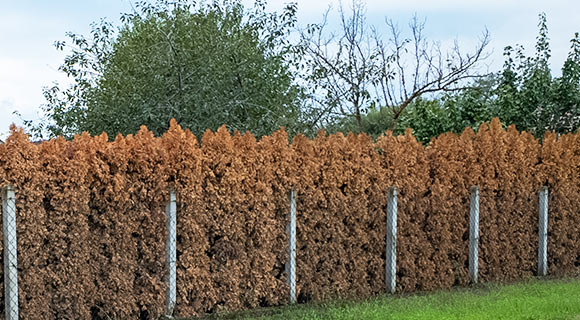
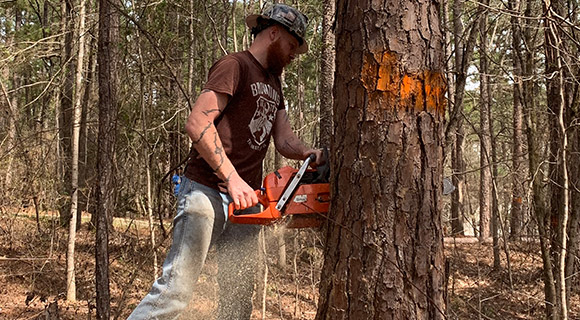
Removal may become necessary when a plant has severe structural problems, advanced disease, extensive pest damage, or a location creating an unacceptable risk.
Examples include:
- A tree with major trunk decay
- A severely compromised root system
- A tree with extensive storm damage
- A dead tree near a structure
- A tree with severe structural instability
- A plant with an infestation that cannot be reasonably managed
Removal decisions should consider safety, plant health, location, species, and potential value.
When Property Owners Should Call an Arborist
An arborist can provide valuable guidance when landscape conditions become complicated.
Call an arborist when:
- A mature tree is declining unexpectedly
- Disease is suspected
- Insect infestation is present
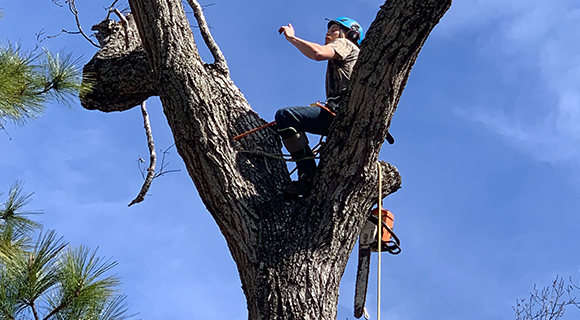
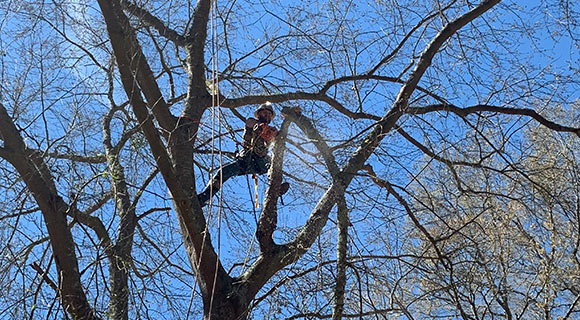
- Large branches require pruning
- A tree has storm damage
- Roots appear damaged
- A tree is leaning
- Structural defects are visible
- Soil problems appear to affect mature trees
- Plant-parasitic nematodes may be involved
- You are uncertain whether a tree should be removed
Professional evaluation is especially important when work involves large trees, structures, utility lines, steep terrain, or potentially hazardous branches.
Call Greens and Trees Roswell Ga 404-680-0041
Roswell Ga together with New Image Tree Solutions, provides professional tree care and landscape services for property owners throughout Northwest Metro Atlanta.
Experienced professionals can evaluate trees, shrubs, soil conditions, pruning requirements, storm damage, disease concerns, and potential removal needs.
If your landscape appears unhealthy despite regular watering and routine care, the underlying problem may involve soil structure, drainage, roots, pests, disease, or nutrient availability.
Call Greens and Trees Roswell Ga at 404-680-0041 to discuss your property and determine whether professional arboricultural evaluation makes sense.
Worms and Nematodes in Healthy Soil Ecosystems
Worms and nematodes play important roles within healthy soil ecosystems. This article explained how earthworms can improve soil structure, aeration, water movement, and organic material processing while beneficial nematodes contribute to nutrient cycling and biological balance. You also learned how poor moisture conditions, compaction, inadequate organic matter, excessive disturbance, and unnecessary chemical use can negatively affect soil biology.
Maintaining healthy soil conditions can support stronger roots, improved water movement, better nutrient cycling, and more resilient trees, shrubs, and landscape plants. Appropriate organic matter, balanced irrigation, reduced compaction, careful chemical use, and professional evaluation when problems arise can help maintain a productive soil environment.
Ignoring soil problems can allow plant decline to continue while underlying conditions become more difficult to correct. Poor drainage, compaction, drought, nutrient deficiencies, disease, infestations, and plant-parasitic nematodes can all contribute to declining landscape health. Addressing warning signs early gives property owners a better opportunity to protect valuable plants and maintain a healthier landscape.
(404) 680-0041