Tag: Soil Care

  • How To Repair Muddy Spots in Your Landscape

    How To Repair Muddy Spots in Your Landscape

    Muddy spots can quickly turn a beautiful yard into a frustrating mess. Standing water, slippery ground, dead grass, and damaged plants can make outdoor spaces less enjoyable and reduce curb appeal. Fortunately, understanding why muddy areas develop and learning how to repair them can help property owners restore healthy, attractive landscapes while preventing future drainage problems.

    Greens and Trees Roswell Ga gathered information about repairing muddy spots in your landscape to help homeowners identify underlying causes and select effective solutions. The information in this article explains how muddy areas form, practical repair methods, maintenance recommendations, and situations when professional arborist services may be necessary.

    Key Takeaways for Repairing Muddy Spots in Your Landscape
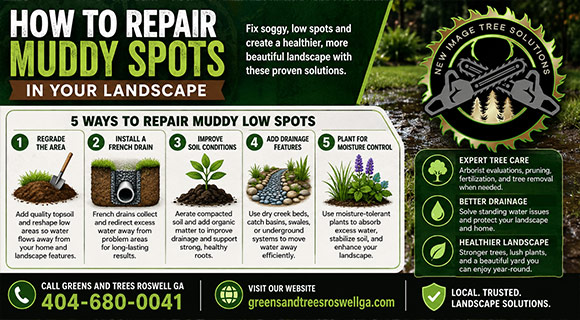
    information about repairing muddy spots on your landscape

    Muddy low spots develop when water accumulates faster than the soil can absorb it. Poor drainage, compacted soil, heavy foot traffic, improper grading, clogged drainage systems, and excessive irrigation are common contributors. Once water collects in a low area, grass roots often weaken and die, leaving bare soil exposed to even more erosion and saturation.

    One important step toward correcting muddy areas is identifying the source causing excess moisture. Some properties experience drainage issues due to the natural terrain; others develop problems from landscape changes, construction projects, or aging drainage infrastructure. Understanding the root cause helps ensure repairs provide long-term results rather than temporary improvements.

    Adding soil and regrading affected sections can often eliminate shallow depressions where water gathers. Proper grading encourages water movement away from structures, patios, walkways, and planting beds. In many situations, small elevation adjustments dramatically improve drainage performance.

    Drainage improvements may also be necessary. French drains, catch basins, dry creek beds, and drainage pipes help redirect water away from problem areas. These systems can significantly reduce standing water while protecting grass, shrubs, and nearby tree roots.
    Improving soil structure is another effective solution. Compacted clay soils commonly found throughout many Georgia landscapes absorb water slowly. Aeration, organic matter additions, and soil amendments improve infiltration rates and encourage healthier root development.

    Ground cover plants can help stabilize damp areas. Certain ornamental grasses, moisture-tolerant perennials, and erosion-control plants help absorb water while reducing soil displacement during heavy rain events. Establishing healthy vegetation often improves landscape appearance and functionality.

    Property owners should also evaluate irrigation practices. Overwatering contributes to muddy conditions and may create unnecessary stress on trees, shrubs, and turfgrass. Adjusting watering schedules based on seasonal conditions helps maintain appropriate soil moisture levels.

    Tree roots can occasionally influence drainage patterns. Large roots may redirect runoff or create uneven surfaces that contribute to low spots. Conversely, damaged trees or declining root systems may lead to erosion and soil movement. Professional arborist evaluations help determine whether trees are contributing to landscape drainage challenges.

    Regular maintenance prevents many muddy spot issues. Cleaning drainage systems, maintaining healthy turf, pruning vegetation, and monitoring landscape changes help identify concerns before they become costly repairs.

    By combining proper drainage, healthy soil management, appropriate plant selection, and professional guidance when necessary, homeowners can successfully restore muddy landscape areas and enjoy healthier outdoor environments year-round.

    How Do Muddy Spots Form?
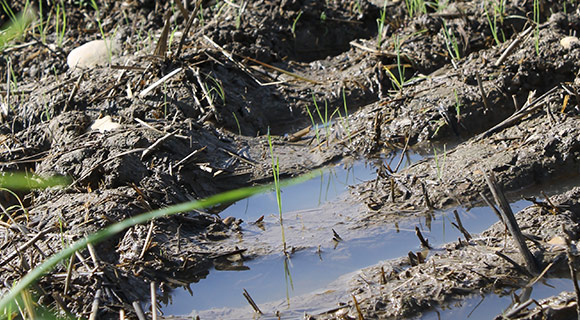
    repairing low muddy spots on your landscape

    Several factors can contribute to muddy low spots within a landscape:

    • Poor Drainage – Improper grading prevents water from flowing away naturally. Rainwater accumulates in depressions, creating saturated soil conditions.
    • Compacted SoilHeavy foot traffic, vehicles, construction equipment, and dense clay soils reduce pore space within soil. Water remains near surface level rather than infiltrating underground.
    • Excessive Irrigation – Overwatering lawns and planting beds can overwhelm soil absorption capacity and create chronically wet conditions.
    • Roof Runoff – Downspouts that discharge water directly into landscape beds often create muddy areas near foundations and walkways.
    • Tree and Root Activity – Large roots can alter water flow patterns, and declining root systems may contribute to erosion and soil settling.

    5 Ways To Repair Muddy Low Spots in a Landscape

    1. Regrade the Area

    Adding quality topsoil and reshaping terrain is often the simplest solution. Regrading helps eliminate depressions where water naturally collects. Water should gently flow away from structures and landscape features.

    2. Install a French Drain

    French drains use perforated piping surrounded by gravel to collect and redirect excess water. This method works particularly well for persistent drainage issues.

    3. Improve Soil Conditions

    Core aeration, compost incorporation, and soil amendments improve drainage and increase water infiltration. Healthier soil supports stronger root growth and reduces muddy conditions.

    4. Add Drainage Features

    Dry creek beds, catch basins, swales, and underground drainage systems can efficiently move water away from saturated areas while enhancing landscape appearance.

    5. Establish Moisture-Tolerant Plants

    Certain plants thrive in damp conditions and help stabilize soil. Deep-rooted vegetation absorbs excess moisture while reducing erosion.

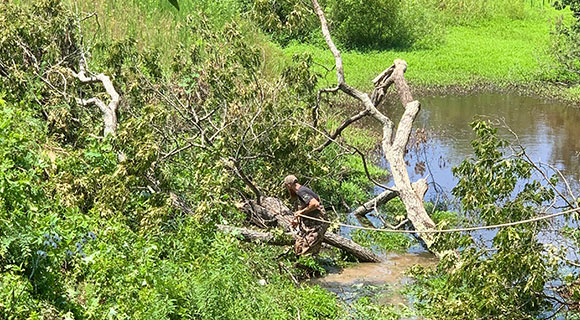
    When Should a Property Owner Call an Arborist?
    repairing muddy spots on your landscape call an arborist

    Professional arborists should be contacted when:

    • Trees show signs of decline near muddy areas
    • Root systems appear exposed or damaged
    • Soil erosion threatens tree stability
    • Standing water remains near mature trees
    • Construction or grading may affect tree health
    • Large roots appear to contribute to drainage concerns
    • Property owners are unsure whether tree removal is necessary

    Arborists evaluate tree health, root conditions, soil quality, and drainage patterns, and recommend solutions that protect valuable landscape assets.

    When To Fertilize Trees, Shrubs, and Plants

    Most trees and shrubs benefit from fertilization during early spring and fall. These periods support healthy root development and seasonal growth. Soil testing provides valuable information regarding nutrient deficiencies and helps prevent over-fertilization.

    Flowering plants, ornamental shrubs, and landscape beds may require customized fertilization schedules depending on species, soil conditions, and growth objectives.

    When To Prune Trees, Shrubs, and Plants

    Pruning schedules vary based on plant type:

    • Deciduous trees are often pruned during dormant winter months.
    • Spring flowering shrubs are typically pruned shortly after blooming.
    • Summer flowering shrubs are frequently pruned during late winter or early spring.
    • Dead, damaged, or hazardous branches should be removed whenever identified.
    • Proper pruning improves appearance, promotes healthy growth, and reduces safety risks.

    When Removal May Be Necessary

    Tree, shrub, or plant removal may be appropriate when:

    • Severe disease cannot be corrected
    • Structural defects create safety concerns
    • Roots damage hardscapes or utilities
    • Dead vegetation affects landscape health
    • Overcrowding limits growth potential

    Professional evaluations help determine whether preservation or removal provides the best outcome.

    Call Greens and Trees Roswell GA 404-680-0041

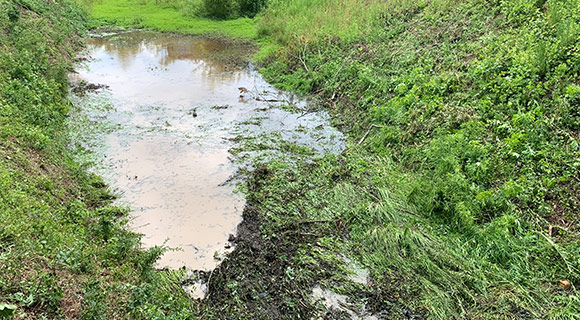
    repairing muddy spots on your landscape

    Muddy landscape areas often indicate larger drainage, soil, or vegetation concerns that require professional attention. Greens and Trees Roswell Ga together with New Image Tree Solutions, provides landscape assessments, drainage solutions, tree care services, pruning, fertilization, and removal services designed to improve landscape health and appearance. Whether your property has standing water, unhealthy trees, compacted soil, or recurring drainage problems, experienced professionals can identify causes and recommend effective solutions. Call Greens and Trees Roswell at 404-680-0041 to schedule an evaluation and start restoring your landscape.

    Fixing Muddy Landscape Spots

    Repairing muddy spots begins with identifying drainage problems, improving soil conditions, correcting grading issues, installing appropriate drainage systems, and selecting plants suited for moisture conditions. Readers also learned how muddy areas form, when arborist services may be needed, and proper timing for fertilization, pruning, and vegetation removal.

    Taking corrective action can create healthier lawns, stronger trees, improved drainage performance, enhanced curb appeal, and more enjoyable outdoor living spaces. Well-maintained landscapes are easier to manage and better equipped to withstand changing weather conditions.

    Ignoring muddy areas can lead to erosion, plant health decline, turf damage, standing water, increased maintenance expenses, and potential safety hazards. Addressing these issues early helps protect landscape investments and prevents larger problems from developing over time.

    Greens and Trees Roswell Ga

     RoswellGA 
    (404) 680-0041
  • Summer Landscape Soil Requirements

    Summer Landscape Soil Requirements

    Summer heat can quickly damage lawns, shrubs, flower beds, and trees when soil conditions are poor or improperly maintained. Many property owners notice dry patches, poor plant growth, yellowing leaves, compacted ground, or excessive moisture loss during warmer months without fully understanding why these problems develop. High temperatures, heavy foot traffic, drought conditions, and poor drainage can weaken landscape soil and create unhealthy growing environments for trees and plants. Understanding how to prepare and maintain soil during summer can help homeowners protect their landscapes and encourage healthier long-term growth.

    Greens and Trees Roswell Ga gathered information about summer soil preparation, fertilization methods, aeration practices, mulching strategies, earthworm activity, and tree canopy benefits to help property owners maintain healthy landscapes during hot weather. This article explains several important ways to improve landscape soil for summer months, when to contact an arborist, and when trees, shrubs, and plants should be fertilized, pruned, or removed.

    Key Takeaways for Summer Landscape Soil

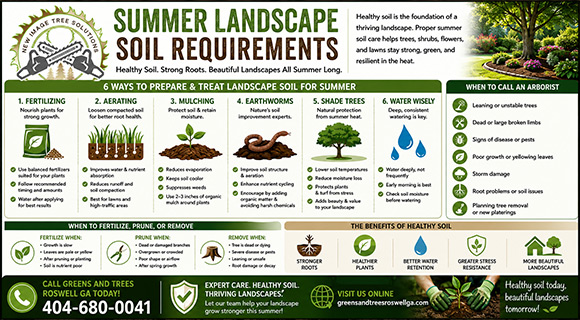
    requirements for landscape soil infographic

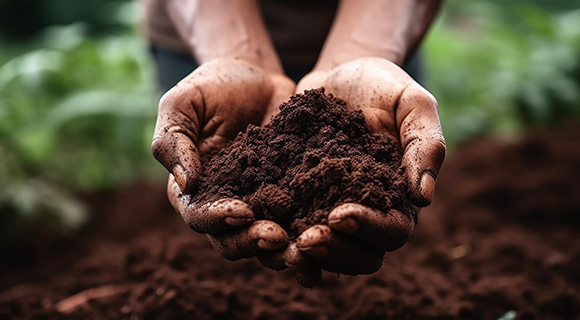
    One major takeaway is that healthy soil creates a strong foundation for every successful landscape. Trees, shrubs, flowers, and turfgrass rely on nutrient-rich soil with proper drainage, balanced moisture levels, and sufficient oxygen availability. Summer heat can rapidly dry compacted or nutrient-deficient soil, causing stress throughout entire landscapes.

    Another important takeaway involves soil aeration. Compacted soil prevents water, oxygen, and nutrients from reaching root systems efficiently. Aeration loosens dense ground and improves root development, particularly in lawns and heavily trafficked areas. Summer soil that receives proper aeration generally retains moisture more effectively while supporting stronger plant growth.

    Mulching also provides major benefits during hot weather. Organic mulch helps regulate soil temperatures, reduce evaporation, suppress weeds, and improve moisture retention near roots. Proper mulch placement around trees and planting beds can significantly reduce drought stress during extended heat periods.

    Fertilization plays another critical role in summer landscape health. Trees, shrubs, and lawns require balanced nutrients to support healthy growth and resist environmental stress. However, over-fertilizing during extreme heat may damage roots or stimulate excessive growth that becomes vulnerable during drought conditions. Property owners should follow seasonal fertilization recommendations appropriate for local soil conditions and plant species.

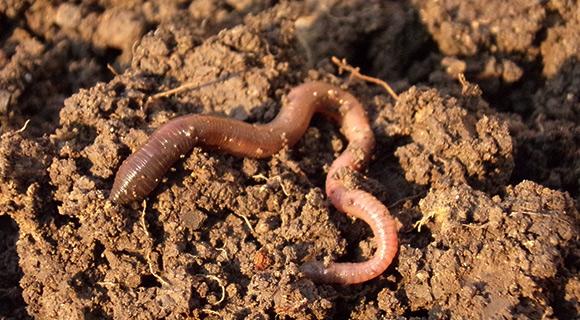
    Earthworms contribute valuable natural benefits to the soil in the landscape as well. Their movement improves soil structure, drainage, and nutrient distribution. Healthy earthworm populations often indicate biologically active soil with strong organic content and improved root support.

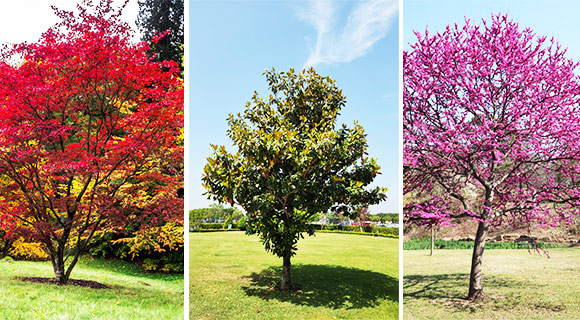
    Shade trees provide natural protection against extreme summer heat by lowering soil temperatures and reducing direct sunlight exposure. Landscapes with mature shade trees often retain moisture more effectively and experience lower stress levels during prolonged hot weather.

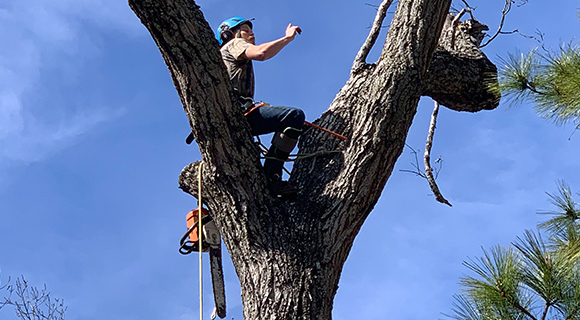
    Finally, professional arborist evaluations can help identify underlying tree health issues before serious decline occurs. Trees suffering from drought stress, disease, structural weakness, or root damage may require pruning, fertilization, treatment, or removal to maintain landscape safety and health.

    Why Summer Soil Preparation Matters

    requirements for vibrant summer landscape soil

    Summer weather places considerable stress on landscapes. High temperatures increase evaporation rates, dry soil rapidly, and limit moisture availability near root systems. Compacted or nutrient-deficient soil struggles to support healthy plant growth during these challenging conditions.

    Healthy soil helps landscapes by:

    • Retaining moisture
    • Supporting root growth
    • Improving nutrient absorption
    • Encouraging beneficial microorganisms
    • Reducing erosion
    • Enhancing drainage

    Without proper summer preparation, landscapes may experience declining health, poor growth, and increased vulnerability to disease or pests.

    Fertilizing Landscape Soil

    requirements for landscape soil fertilizer

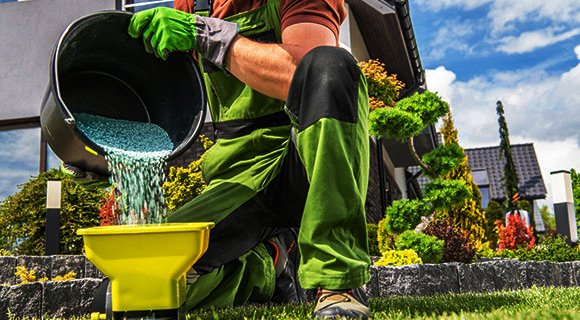
    Fertilization helps replenish nutrients consumed by trees, shrubs, flowers, and turfgrass throughout the growing seasons.

    Benefits of Fertilization

    • Improved root development
    • Healthier foliage growth
    • Increased drought resistance
    • Better disease tolerance
    • Enhanced soil fertility

    Summer Fertilization Tips

    • Use balanced fertilizers appropriate for soil conditions
    • Avoid overfertilizing during extreme heat
    • Water thoroughly after application
    • Follow professional recommendations for timing and dosage

    Trees and shrubs often benefit from slow-release fertilizers that provide nutrients gradually during warmer months.

    Aerating Soil During Summer

    aeration for landscape soil

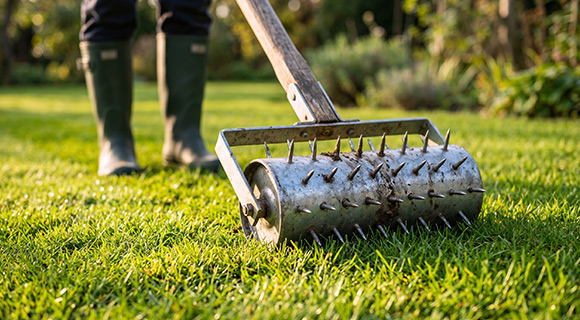
    Soil compaction remains a common problem in residential and commercial landscapes. Foot traffic, vehicles, and heavy equipment compress soil particles and reduce oxygen flow near roots.

    Benefits of Aeration

    • Improved water penetration
    • Better oxygen circulation
    • Stronger root development
    • Reduced runoff
    • Increased nutrient absorption

    Signs Soil Needs Aeration

    • Standing water after rainfall
    • Hard compacted ground
    • Thin turfgrass growth
    • Poor drainage
    • Weak plant development

    Professional aeration services can significantly improve landscape performance during summer heat.

    Using Mulch To Protect Soil

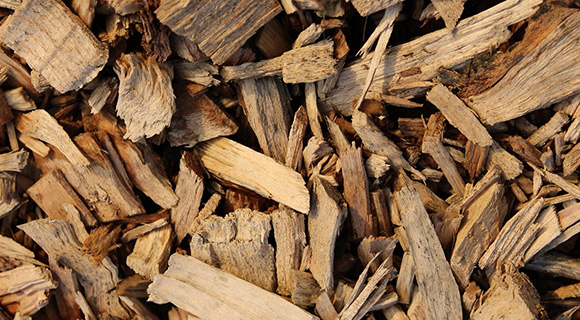
    mulch requirements for landscape soil

    Mulch serves as an important protective barrier for soil and root systems.

    Benefits of Mulching

    • Moisture retention
    • Weed suppression
    • Reduced soil temperature fluctuations
    • Improved soil quality over time
    • Reduced erosion

    Proper Mulch Practices

    • Apply mulch evenly around trees and planting beds
    • Avoid excessive mulch depth
    • Keep mulch away from direct trunk contact
    • Refresh mulch periodically as material decomposes

    Organic mulch materials gradually improve soil quality as they break down naturally.

    Earthworms and Soil Health

    earthworm requirements for landscape soil

    Earthworms provide valuable natural soil improvement through tunneling and decomposition.

    Benefits of Earthworms

    • Increased soil aeration
    • Improved drainage
    • Better nutrient cycling
    • Enhanced microbial activity
    • Stronger soil structure

    Healthy earthworm populations often indicate biologically active soil conditions that support strong plant growth.

    Encouraging Earthworm Activity

    • Reduce chemical overuse
    • Add organic material to the soil
    • Maintain proper moisture levels
    • Avoid excessive soil disturbance

    Natural soil ecosystems contribute significantly to long-term landscape health.

    Using Shade Trees To Reduce Heat Stress

    shade tree requirements for landscape soil

    Shade trees help protect landscapes from extreme summer temperatures.

    Benefits of Shade Trees

    • Lower soil temperatures
    • Reduced evaporation
    • Improved moisture retention
    • Enhanced outdoor comfort
    • Protection for turfgrass and shrubs

    Landscapes with mature tree canopies often experience healthier soil conditions during prolonged heat exposure.

    Recommended Shade Tree Maintenance

    • Inspect trees regularly
    • Prune dead limbs
    • Monitor root health
    • Evaluate structural stability
    • Maintain healthy canopy growth

    Healthy shade trees provide long-term environmental and landscape benefits.

    When To Call an Arborist

    arborist services requirements for landscape soil

    Professional arborists should evaluate trees whenever structural concerns or health problems appear.

    Contact an Arborist If You Notice:

    • Dead branches
    • Leaning trees
    • Fungal growth
    • Bark splitting
    • Sparse canopy growth
    • Root damage
    • Sudden leaf discoloration
    • Storm-related damage

    Arborists can diagnose problems accurately and recommend treatment, pruning, cabling, or removal when necessary.

    Call Greens and Trees Roswell Ga 404-680-0041

    requirements for landscape soil

    Greens and Trees Roswell provides professional tree care, landscape maintenance, pruning, soil improvement, and arborist services for residential and commercial properties throughout Roswell and surrounding communities.

    Services may include:

    • Tree inspections
    • Soil evaluations/Testing
    • Fertilization programs
    • Tree pruning
    • Emergency removals
    • Storm cleanup
    • Landscape maintenance

    Professional tree and landscape care helps improve your property’s appearance while protecting its long-term plant health.

    When To Have Trees, Shrubs, and Plants Fertilized, Pruned, or Removed

    care for landscape soil

    Seasonal maintenance improves landscape safety and plant performance.

    Trees and Shrubs May Need Fertilization When:

    • Growth appears weak
    • Leaves become discolored
    • Soil lacks nutrients
    • Drought stress develops

    Pruning May Be Necessary For:

    • Dead branches
    • Overgrown canopies
    • Poor airflow
    • Storm-damaged limbs
    • Structural imbalance

    Removal May Be Necessary For:

    • Severe disease
    • Extensive insect infestations
    • Root failure
    • Dangerous leaning
    • Hollow trunks
    • Irreversible storm damage

    Removing hazardous trees can help protect homes, vehicles, and surrounding landscapes from major damage.

    Summer Landscape Soil

    This article explained several important summer landscape soil requirements and how property owners can improve soil health through fertilization, aeration, mulching, earthworm activity, and shade tree management. You learned how summer heat affects soil conditions, when to contact an arborist, and when trees or shrubs may require pruning, treatment, or removal.

    Proper summer soil preparation can improve plant health, strengthen root systems, reduce drought stress, and create healthier landscapes throughout warmer months. Landscapes supported by healthy soil generally experience stronger growth, improved appearance, and greater resistance to environmental stress.

    Ignoring soil maintenance and tree care during summer can lead to declining plant health, severe drought stress, poor drainage, weakened root systems, and increased risk of disease or tree failure. Untreated landscape problems may eventually require expensive repairs, removals, or complete landscape replacement.

    Greens and Trees Roswell Ga

     RoswellGA 
    (404) 680-0041