
Sick of seeing yellow spots on your turf and wilting shrubs and trees in your landscape? Understanding how grub and beetle infestations can silently wreak havoc beneath soil and within bark will help you take proactive measures to eliminate them.
greensandtreesroswellga.com explores grub and beetle species in Roswell, warning signs of infestation, treatment options, and prevention strategies. You’ll also learn when to contact a certified arborist and why New Image Tree Solutions is a trusted local expert.
Grub Species in Roswell, GA

Grubs are the larvae of various beetles, and they primarily feed on roots, weakening turf and ornamentals from below.
1. Japanese Beetle Grub (Popillia japonica)

Japanese beetle grubs are among the most destructive lawn pests. They appear as white, C-shaped larvae with brown heads.
Signs:
- Brown patches in grass that pull up easily, like a carpet
- Increased activity of raccoons, birds, or skunks digging for food
- Wilting or stunted growth in nearby plants
2. May/June Beetle Grub (Phyllophaga spp.)

These grubs are larger than Japanese beetle larvae and feed for up to three years before maturing.
Signs:
- Dead or yellowing grass
- Increased activity of raccoons, birds, or skunks digging for food
- Root systems of turf appear sheared off
- Lawn feels spongy or uneven underfoot
Read more about this grub species at canr.msu.edu/ipm/diseases/may-or-june-beetle
3. Green June Beetle Grub (Cotinis nitida)

These pests prefer moist soil and often emerge during summer, especially after rain.
Signs:
- Holes or mounds on lawn surface caused by large larvae burrowing
- Increased activity of raccoons, birds, or skunks digging for food
- Rapid turf decline in sunny areas
- Tunnels under soil – visible during digging
3 Beetle Species in Roswell, GA
Adult beetles damage foliage, bark, and branches. Some also act as vectors for plant diseases.
1. Southern Pine Beetle (Dendroctonus frontalis)

This native bark beetle targets pine trees, boring through bark to lay eggs and introducing fungi.
Signs:
- Pitch tubes (small, popcorn-like sap masses) on pine bark
- Yellowing or browning of pine needles
- Bark that peels away easily, revealing tunnels underneath
Read THIS for more information about Southern Pine Beetles.
2. Asian Longhorned Beetle (Anoplophora glabripennis)
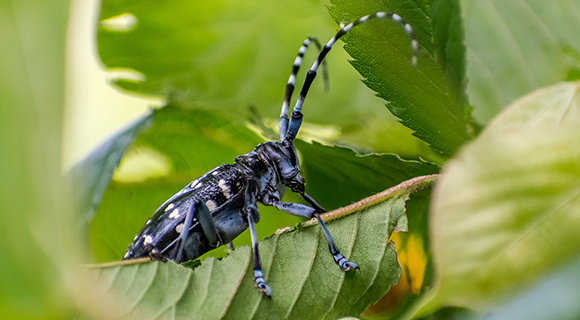
Though still rare in Georgia, this invasive species poses a severe risk to hardwood trees.
Signs:
- Large, round exit holes in trunks or branches
- Sawdust-like frass (excrement and wood shavings) at tree base
- Dieback in the upper crown of host trees like maple and elm
3. Metallic Wood-Boring Beetle (Agrilus)
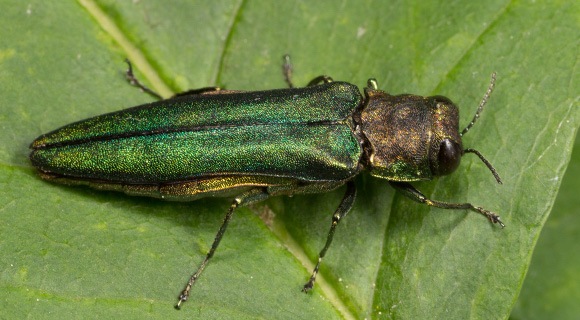
These beetles include Emerald Ash Borer, which is responsible for significant ash tree loss across the U.S.
Signs:
- D-shaped exit holes on bark
- Canopy thinning or dead branches
- Bark splitting over larval galleries
How to Treat Grub and Beetle Infestations
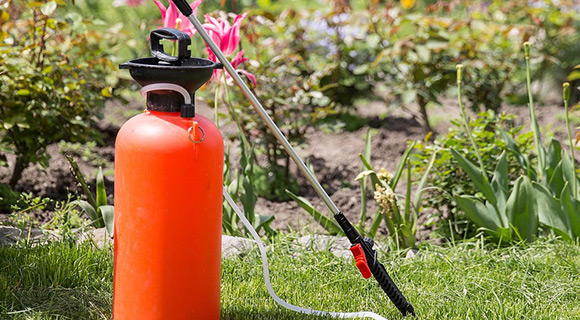
Effective treatment depends on early detection and correct identification.
For grubs:
Chemical controls: Apply insecticides (imidacloprid or chlorantraniliprole) in early summer when grubs are young and near the surface.
Biological controls: Use beneficial nematodes or milky spore to reduce grub populations without harming beneficial insects.
For beetles:
Trunk injections or soil drenches: Apply systemic insecticides to protect trees from beetles that bore or feed on bark and leaves.
Pruning: Remove affected limbs to halt beetles from spreading and prevent further damage.
Sanitation: Remove dead or weakened trees that may attract beetles to new areas.
5 Ways to Prevent Future Infestations
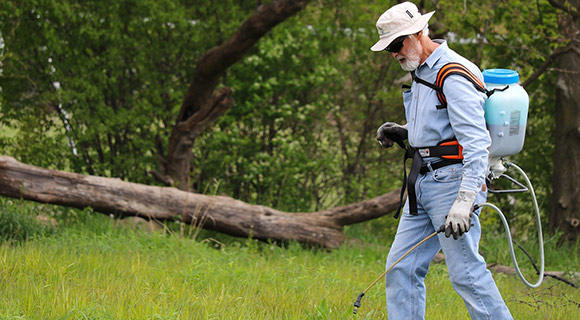
Prevention starts with healthy soil and proper landscape care.
- Aerate soil annually to encourage root growth and make conditions less ideal for grubs.
- Avoid overwatering lawns, which attracts green June beetles.
- Inspect trees and shrubs monthly for signs of insect activity.
- Fertilize based on soil testing to promote plant health.
- Choose native and pest-resistant species for new plantings.
When to Call an Arborist
Call a certified arborist if:
- Tree limbs show unexplained dieback
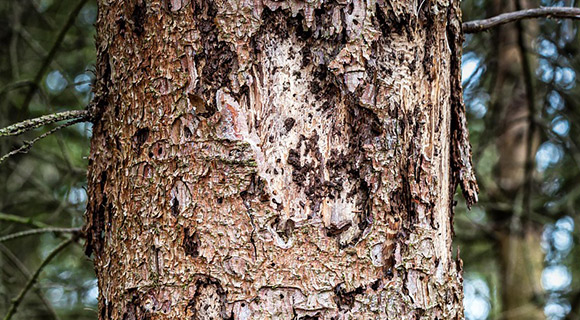
- Bark peels or falls off in chunks
- Soil or mulch appears disturbed/tunneling is evident
- You see pitch tubes or unusual beetle activity
- Dead or damaged trees pose risk to property or structures
Why Call New Image Tree Solutions 404-680-0041

New Image Tree Solutions brings years of experience and ISA-certified arborists to every project. The team is knowledgeable about local weather patterns, soil conditions, and pest cycles. With an emphasis on eco-friendly treatments and science-backed practices, New Image Tree Solutions offers:
- Expert pest and disease diagnosis
- Strategic tree pruning and removal
- Seasonal insecticide applications
- Root and soil health evaluations
- Emergency storm response
Whether protecting a prized hardwood or reclaiming a lawn from grub damage, New Image Tree Solutions provides high-level care with hometown trust.
When to Prune or Remove Trees, Shrubs, and Plants for Safety

Pruning enhances plant structure, removes infected wood, and allows better airflow (reducing future infestations).
Ideal pruning times:
- Winter or early spring, before beetle emergence
- Immediately after storm damage
- When signs of dieback, decay, or pest damage appear
Removal is recommended when:
- The plant or tree is more than 50% damaged
- Pests or disease have compromised structural integrity
- The tree poses risks to nearby buildings or walkways
Key Considerations for Grub and Beetle Infestations
Grub and beetle infestations rarely begin with a dramatic sign. Instead, they develop slowly and often invisibly, gradually undermining the health of trees and turf. Understanding early indicators is critical.
1. Monitoring is crucial. Monthly inspections of bark, canopy, and lawn condition allow property owners to detect pests before irreversible damage occurs. Pay special attention during spring and summer when insect activity increases.
2. Time matters. Treatment timing directly affects success. Grub control products work more efficiently when grubs are newly hatched and close to the surface. Beetle treatments require planning before larvae reach mature stages.
3. Prevention is better than reaction. Healthy soil, smart irrigation, and proper pruning make plants less appealing to pests. Choose pest-resistant plant species and avoid planting trees too close together. This limits airflow and encourages infestation.
4. Integrated Pest Management (IPM) practices offer the most sustainable solution. This includes combining biological, mechanical, and chemical treatments to minimize environmental impact while achieving long-term control.
5. Work with professionals. Arborists can correctly identify pest species, recommend specific treatment plans, and ensure safe removal when necessary.
Taking swift action at the first sign of a problem can protect entire landscapes from widespread damage. Left unchecked, a single pest population can quickly spread across properties, resulting in higher costs and greater risk.
Grub and Beetle Issues in Roswell, Georgia
In this article, you discovered information about grub and beetle species in Roswell, including infestation warning signs, treatment options, and prevention strategies. You also learned when to contact an (ISA certified) arborist and why New Image Tree Solutions is a trusted local expert.
Grub and beetle infestations may start small, but their impact can be significant. With preventive measures, early detection, and expert help from New Image Tree Solutions, Roswell residents can preserve the health, safety, and beauty of their outdoor spaces year-round.
Ignoring grub and beetle infestations will leave your turf with yellow dying patches and your shrubs and trees wilting and failing.
Sources:
extension.uga.edu/programs-services/landscape-pest-management/Nursery-pests/japanese-beetle-popillia-japonica.html
content.ces.ncsu.edu/green-june-beetle-1
cisr.ucr.edu/invasive-species/asian-long-horned-beetle
plu.edu/biology/wp-content/uploads/sites/7/2017/09/final_buprestidae_egge_20170914.pdf
(404) 680-0041
 Greens and Trees Roswell Ga